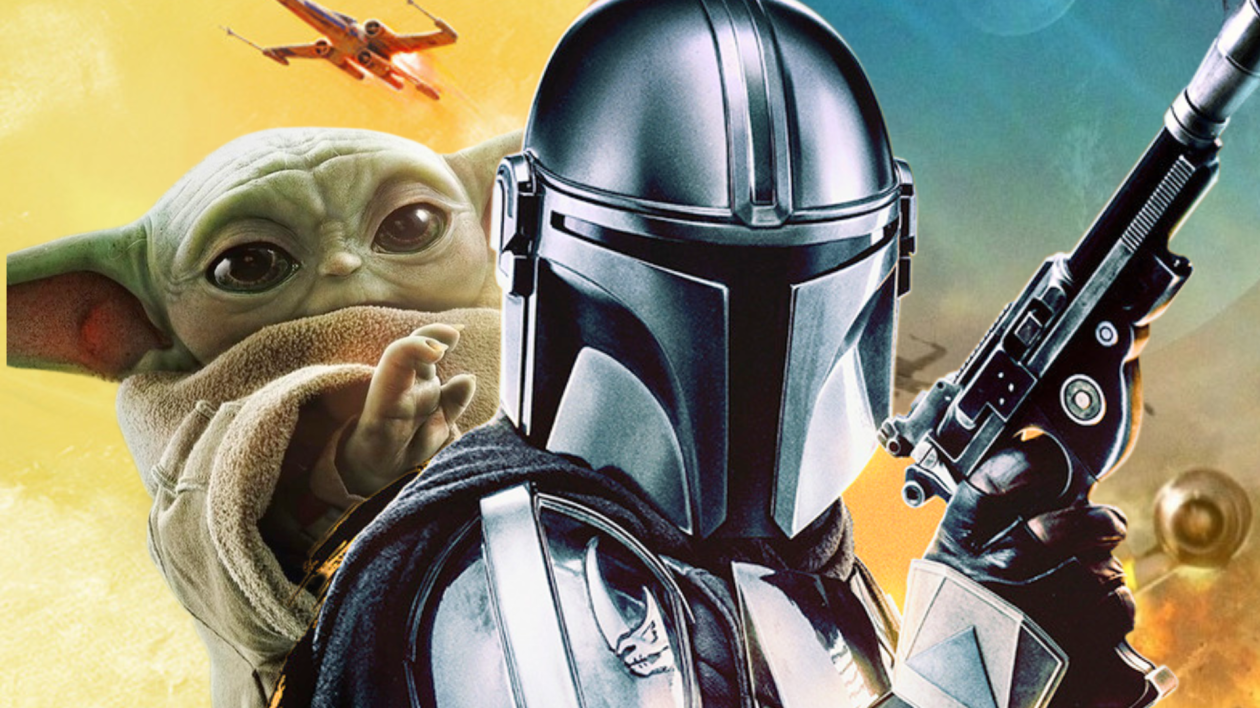
The film The Mandalorian and Grogu stumbles in its second week at the U.S. box office, so Disney isn’t exactly throwing a victory party.
There are at least two pivotal moments in the commercial life of a blockbuster like The Mandalorian and Grogu: the opening weekend, which gauges public enthusiasm for the novelty, and the second weekend, which reveals how long it might actually endure. Hence the barrage of early box-office reports for blockbusters, where life and death can hinge in a matter of weeks—especially in North America, since that’s where a studio like Disney takes the lion’s share of the take (about half, versus a third elsewhere, and a quarter in China).
For Star Wars, the stakes were high with this fourth season of The Mandalorian being transformed into a film. The Mandalorian and Grogu marks the grand return of the saga to theaters after nearly seven years away, since Star Wars: The Rise of Skywalker—the end of an era—before the saga shifted to Disney+ with a flurry of mostly memorable series (Andor, Ahsoka) and some less memorable ones (Obi-Wan, Skeleton Crew).
There was a lot of pressure on Baby Yoda’s cuddly shoulders, and unsurprisingly, it proved a burden. The Mandalorian and Grogu is already stumbling at the North American box office, which does not bode well for what’s ahead.
SE GROGOURRER DE STRATÉGIE
The first big hurdle: for its second weekend, The Mandalorian and Grogu lands in third place at the North American box office, posting $25 million across about 4,300 screens. It trails the horror film Backrooms (about $81 million on roughly 3,400 screens), which just arrived with a vengeance, and Obsession (about $26 million on roughly 2,700 screens) in its third week, turning into an extraordinary case study in durability.
In other words: the new Star Wars movie with a $165 million budget got bested by a small horror film that didn’t even break $1 million to produce, released a week earlier, and shown in far fewer theaters. That’s what you call a defeat.
Second problem: the attendance drop. For its second weekend, The Mandalorian and Grogu suffered a -69% decline, and that’s not insignificant. It invites comparisons to other notable declines like Joker: Folie à Deux (-81%), The Marvels (-78%), Morbius (-73%), Kraven the Hunter (-72%), Madame Web (-61%), or Black Adam (-59%), to help contextualize.
But bear in mind, a drop in attendance isn’t a definitive indicator in itself. It must be weighed against the opening numbers. For example, Spider-Man: No Way Home declined by 67% in its second weekend at the North American box office, worse than Madame Web and Black Adam, but that’s because it had opened to sky-high levels, $260 million at release. The bigger the first weekend, the bigger the second-week tumble. More recently, Scream 7 dropped by -73%, worse than earlier installments in the franchise, but its initial weekend was strong enough to still make it a franchise-wide hit.
And so what about The Mandalorian and Grogu? The problem is real, since it didn’t open with a bang. With $103 million at the North American box office over the four-day holiday weekend (about $84 million over a standard weekend), this Star Wars installment posted figures well below what The Force Awakens did in 2015 (about $247 million), Rogue One (about $155 million), The Last Jedi (about $220 million), The Rise of Skywalker (about $275 million), and even Solo: A Star Wars Story (about $104 million over a long weekend in 2018)—a historic stumble for the saga.
MANDALORIEN À ESPÉRER
Between a tepid start and a steep second-weekend drop, there’s reason to think that The Mandalorian and Grogu won’t go far at the global box office. Worldwide, the film has raked in just over $246 million to date, which even the solo film Solo ($392 million) would struggle to match. It’s clear this isn’t in the same league as Rogue One and Star Wars 9 (the billion-dollar club), Star Wars 8 (about $1.3 billion), or Star Wars 7 (about $2 billion).
The only silver lining for Disney: this Mandalorian and Baby Yoda adventure cost “only” $165 million—excluding marketing. It’s a hefty budget, certainly, but peanuts next to the The Force Awakens (estimated between $440 and $550 million, depending on source), The Rise of Skywalker ($490 million), The Last Jedi (roughly $300–$340 million), Solo ($300 million), and Rogue One (roughly $200–$280 million, depending on source).

That should be enough to cushion the blow, especially since this mission was designed to feed the Star Wars ecosystem. It’s bound to get a second life when it lands on Disney+, and will likely draw audiences to the roughly 250 other Star Wars titles available on Mickey’s platform. All of which is good news for Disney… assuming The Mandalorian and Grogu doesn’t end up costing them more money than it earns, which is not guaranteed yet.
All of which suggests that the pressure will be quite intense for Star Wars: Starfighter, whose budget remains undisclosed and which is set to bow in May 2027. If this outing with Ryan Gosling doesn’t mobilize a broad Star Wars audience at the cinema, there will surely be trouble at Lucasfilm, now led by Dave Filoni and Lynwen Brennan after Kathleen Kennedy’s departure in 2026.
