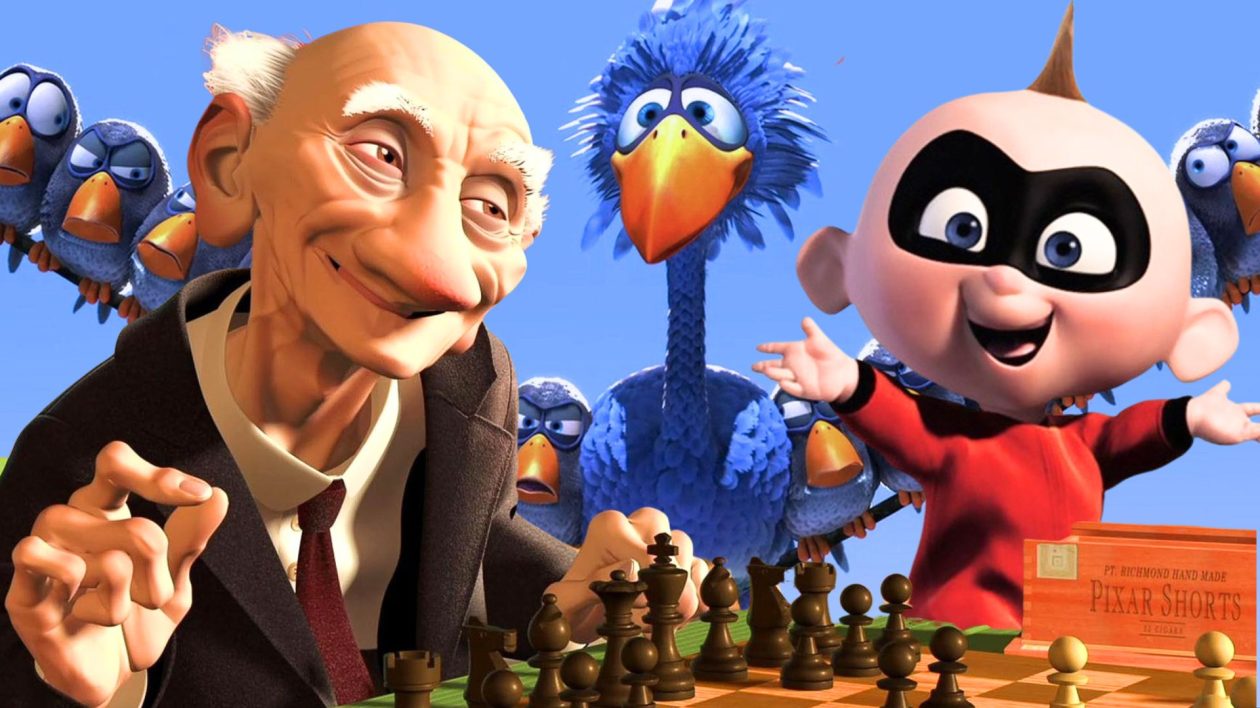
Pixar isn’t just about iconic feature films. It also represents a distinctive take on the short film. Here is our selection of the 10 best, according to Écran Large.
Whether you discovered them in theaters or as bonuses on a DVD (or even on VHS), Pixar’s short films have accompanied many moviegoers since the company began. Beyond being often stunning technological and aesthetic experiments, these preludes have allowed the animation studio to sharpen in just a few minutes a narrative efficiency that is as moving as it is unstoppable.
While venturing into wildly imaginative ideas, Pixar has managed to synthesize, in the manner of a perfect magical formula, a universality of purpose with a powerfully unsuspected reach. Whether it’s laughter or tears, it’s impossible to stay indifferent in the face of these many jewels, which notably gave rise to important authors within the studio’s walls.
The editors of Écran Large thus set out to answer a thorny question: what are the ten best Pixar short films? The ensuing debate led to this result.
Knick Knack, not happy to have been left out at the gates of this list (but we still love it)
10. La Luna
- Release: 2011
- Running time: 7 minutes
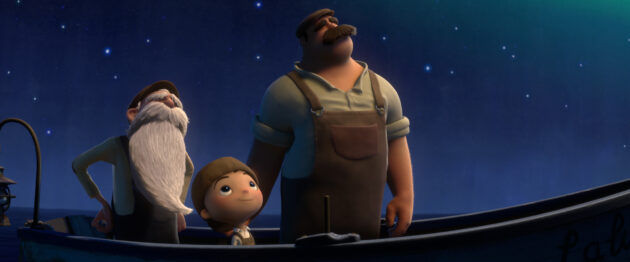 I’m not crying — I just have a speck of stardust in my eye
What’s it about? Three generations—a father, a grandfather, and a young boy—find themselves aboard a boat in the dead of night, before docking on the Moon.
Why is it the most poetic? Before crafting the adorable Luca, Enrico Casarosa explored the design and aesthetic language that would later flourish in his feature film through the beautiful short La Luna. In a sense, it encapsulates all that makes Pixar’s best shorts sing: an original and enchanting concept, storytelling that fully exploits the potential of animation, and a tenderness that sweeps you away in one go.
 A film that shines with color
Admittedly, one could linger on the sensory vertigo its colors and lighting evoke, reminiscent of Van Gogh’s Starry Night. Yet beyond the dreaminess of this weightless proposition, there’s a stunning story of transmission: a child learning the rites and traditions that shape his family across generations. Learning the gestures, or the weight of certain objects (a brilliant design idea that binds the beard of the characters to the type of broom they use), is where La Luna lingers with tenderness.
Casarosa builds a tale as gentle as the rounded edges that comprise his characters. La Luna isn’t merely a technical jewel. It’s a salvificly innocent object, devoted to the sense of wonder that lights up our daily life. What could be more beautiful than sweeping the stars with your family?
9. Baby-Sitting Jack-Jack
- Release: 2004
- Running time: 4m44
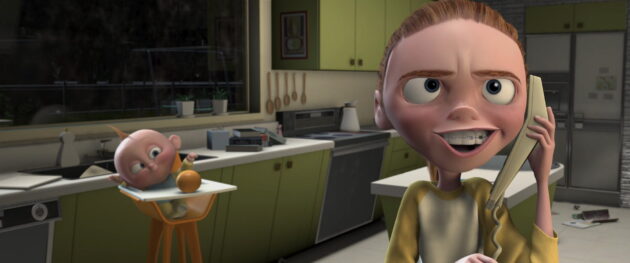 The calm before the storm
What’s it about? While the rest of the Incredibles crew is on a mission, Jack-Jack stays home with Kari, a babysitter overwhelmed by events.
Why is it cool? While many Pixar shorts are standalone stories, others tie directly into the feature films and function as (short) spin-offs. When Baby-Sitting Jack-Jack (Jack-Jack Attack) arrived in 2005, it was only the second short directly derived from a feature film. The first had opened the door in 2002 with Bob’s New Car, adapted from Monsters, Inc.
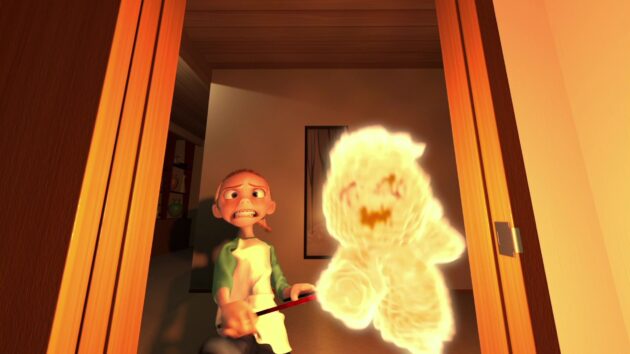 Hot stuff ahead!
The short opens with an interrogation sequence in which Kari, the young babysitter, recounts to government agent Rick Dicker that famous night that ended with Syndrome kidnapping Jack-Jack. Determined to keep the baby entertained, Kari plays Mozart for him. But with this music, everything changes: the baby begins to levitate, teleport, and even walk through walls. The classical score erupts as the adorable infant transforms into a ball of fire.
From one development to the next, Baby-Sitting Jack-Jack turns into a frenetic chase through a cramped space. In addition to its comic engine, the film reveals that the infant is not simply a demon in disguise. Visually close to The Incredibles, the short lets Brad Bird push his burlesque tempo to the max with wildly insane superpowers. The movie doesn’t shine for technical novelty so much as for its concept of a faux cut-scene serving as a teaser before The Incredibles 2, which would land thirteen years later.
8. Luxo Jr.
- Release: 1986
- Running time: 2m18
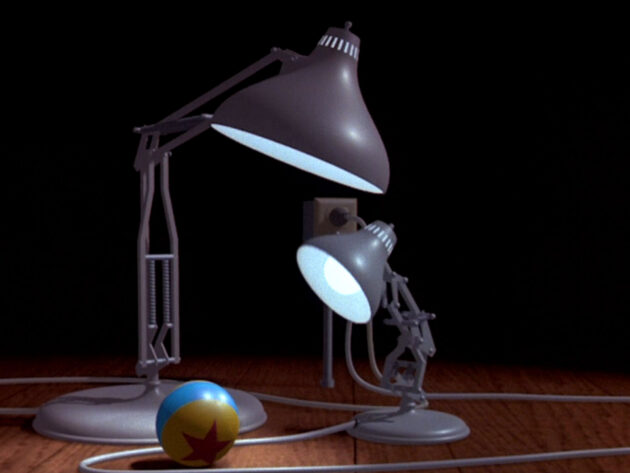 A film that has light at every level
What does it tell? Mom or Dad Lamp and Baby Lamp play with a ball. That’s it, and that’s perfect.
Why is it a pioneering film? If we set aside André and Wally B. (made when Pixar was still a Lucasfilm subdivision), Luxo Jr. is technically the studio’s first short film, designed to showcase what RenderMan could do. John Lasseter and his team chose to tell the simplest story through two desk lamps.
To be more precise, Luxo Jr. was born out of the constraints of an still-undeveloped technology, tasked with transcending its potential. The choice of these two unlikely protagonists explains why Pixar needed to showcase its prowess in shaping shadows and light, while playing with bodies whose movements were easy to animate.
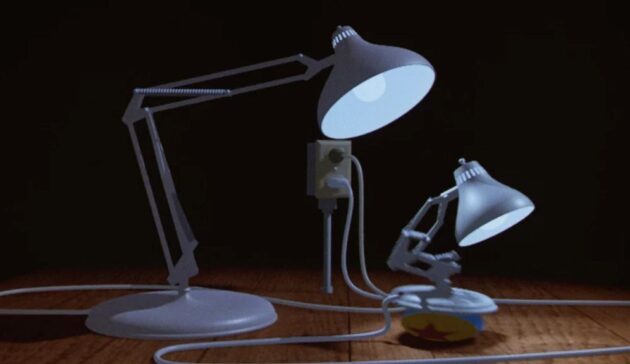 Who hasn’t shared the pain of Luxo Jr.?
From there, one could reduce Luxo Jr. to a cheeky test that ticks its boxes. Yet that would neglect the intelligence of Lasseter, who recaptures with this simple fixed shot a pure cinematic purity that’s intoxicating. The entrances and exits of the little lamp create a rapid, riotous comic tempo—worthy of the burlesque roots of early cinema.
By bringing the most advanced technology back to the basic grammar of cinema, Pixar defined, in the most beautiful way, the animist power of its creations—foundational to the first Toy Story. Faced with no faces and no words, the lamp duo nonetheless conveys clear emotions through simple body language. It makes sense that the studio chose to make this short its mascot, so it remains a jewel of pared-down elegance and a cinema miracle we never tire of.
7. Chatbull
- Release: 2019
- Running time: 8min
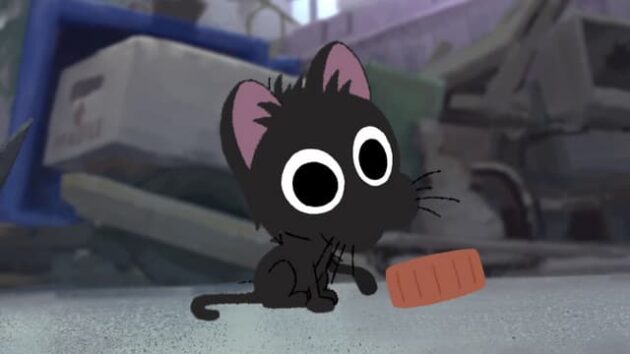 A simple cork to forge the bond
What’s it about? How a stray kitten bonds with a mistreated pit bull owned by an abusive owner. Bring on the tissues.
Why is it the most singular? In 2019, Pixar launched SparkShorts, a series of animated shorts designed to spotlight studio employees under the lamp. A great way to discover new talent while granting them almost total freedom over techniques and themes. The series thus includes works that are more political and provocative, tackling sexism, autism, homosexuality, coming-out struggles, and animal abuse, as in the case of Chatbull.
This third SparkShort was written and directed by Rosana Sullivan, who had previously worked on storyboards for Monsters University and The Incredibles 2. For her first directing job, she chose to move away from Pixar’s DNA and return to a more artisanal, 2D approach—rendering a visually less smooth and uniform look. The short features impressionistic influences with hand-painted pastel backgrounds, while the kitten’s design evokes a blend between a noir mouse and the rounded little one from Studio Ghibli’s universe.
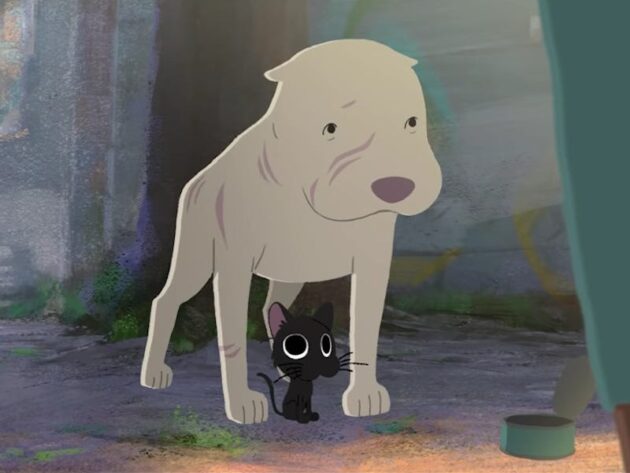 Pixar, this tear-extractor
The kitten’s animation is briskly cartoony and hilariously expressive: its defensive poses, the dilation of its pupils, its fluffy fur, and those quirky, almost inexplicable movements that only cats master. The director drew inspiration from the millions of cat videos on the Internet. Yet beyond the laughs, the film is a genuine shot of emotion that often leaves audiences with tears in their eyes, especially with Andrew Jimenez’s minimalist, soothing score that sometimes feels like a lullaby or a music box.
With a message about adoption, friendship, misperception, the need to open up to others and to step out of one’s comfort zone, all the good feelings are present—but with enough sensitivity and aesthetic to elevate these commonly familiar values in animation. It’s no surprise it earned an Oscar nomination in 2020 for Best Animated Short Film.
6. Bao
- Release: 2018
- Running time: 8min
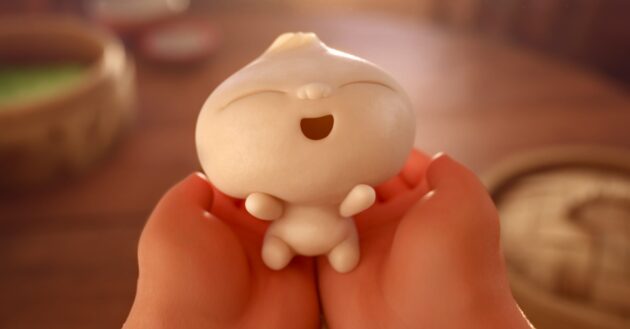 So cute you could almost bite him
What’s it about? A Sino-American woman becomes a mother again when one of her steamed dumplings comes to life. Brace for a flood of tears.
Why is it a masterclass in emotion? With rare exceptions, Pixar shorts touch a form of universality through their lack of dialogue. They can be seen as a kind of testing ground, able to use evocative images, editing, and music to tell slices of life—like the opening montage of Là-Haut (Up).
In and of itself, Bao can be read as a brilliant derivative of Pete Docter’s opening salvo. But Domee Shi’s film, which would later direct the fantastic Turning Red, has its own distinctive flavor, making it a formidable emotional cyclone. The audience doesn’t just experience the improbable motherhood of this woman and her dumpling; from the first fixed frames that embrace the heroine’s solitude in a style reminiscent of Ozu, Bao expresses a void and an absence that the turning point reveals as a punch to the gut.
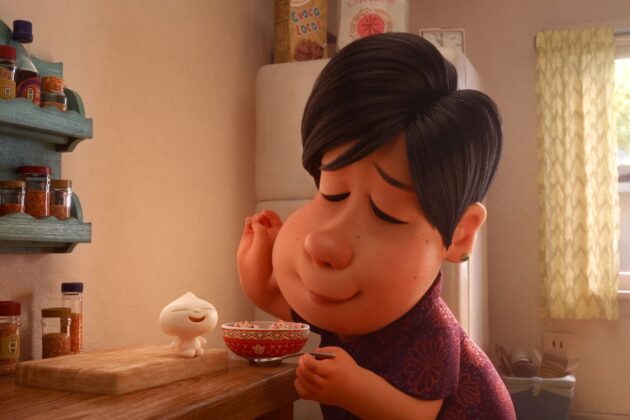 A film that makes you want seconds
In reality, the short is a melancholic chronicle—a gentle yet biting poem on memory and regret. Domee Shi uses this piece to explore the themes that will anchor her feature film later on: the impact of family and culture on a child’s identity. The director also leans on Pixar’s technical prowess to deliver a heartfelt love letter to her Chinese roots, visible in the textures that render an imagined kitchen with exquisite detail.
In homage to her own parents, the filmmaker foregrounds acts of love, even when they overflow into excess. In just seven minutes, Bao manages to condense the ache of every parent: watching your little one fly the nest. Simply heartbreaking.
5. Mon Terrier
- Release: 2020
- Running time: 6min
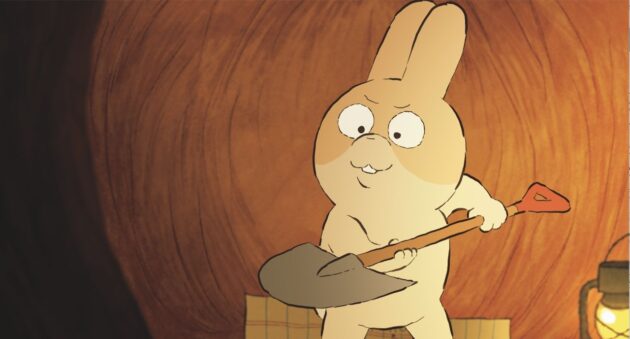 Digging in
What’s it about? A little rabbit digs himself a new home but is soon interrupted by some rather persistent neighbors.
Why is it a very pretty tale? SparkShorts continues to be a refreshing oasis in the otherwise sunlit, large-scale Disney+ era. Within it, many talents and ideas from Pixar’s stable are given room to breathe. As with Chatbull, others opt for 2D animation (not traditional in the old sense), even as Pixar’s 3D approach democratized animation across the board, largely thanks to its shorts.
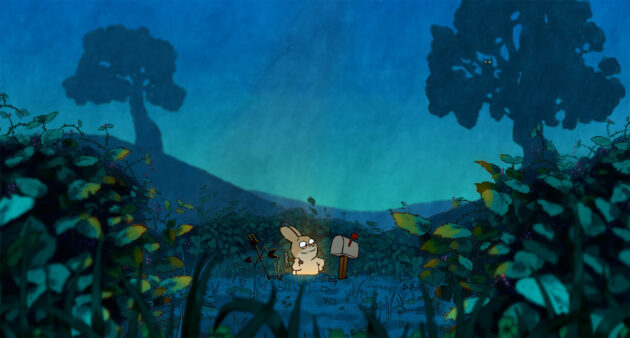 Mission accomplished
And the result is a success, particularly because Mon Terrier is a two-dimensional story. It invites us to explore the surface of a little plot that homes a variety of animals and the mini-societies of their world, as the rabbit must learn to live with others. Given its 6-minute length and the way it presents a constellation of tiny vignettes, pacing is essential. Madeline Sharafian understands this perfectly: ultra-kinetic and crystal-clear, the film is a masterclass in direction.
What a pleasure to watch this little hero traverse so many tiny personal bubbles, microcosms neatly arranged! And how nice to discover a world without a traditional antagonist, where the only challenge is the social boundaries we impose on ourselves! A smart narrative principle that Pixar returns to often, but here it’s presented in a wonderfully simple way, notably through the badger character and the bright final moment. And let’s not forget how unbelievably cute that little rabbit is when he can build his house—AAAH, we melt.
4. The Chess Player
- Release: 1997
- Running time: 4min
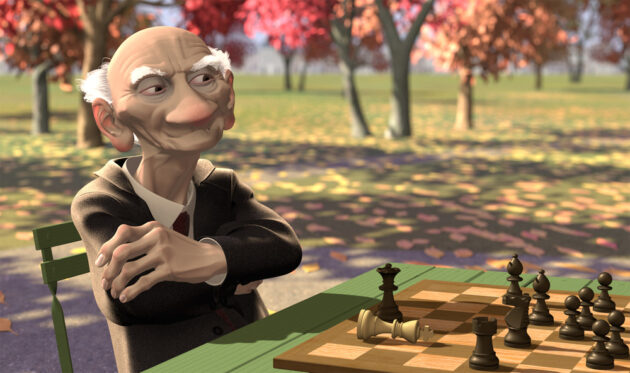 The real game of the queen
What’s it about? An elderly man whom his family forgot to place in a retirement home plays chess alone. It doesn’t end well.
Why is this a gem of staging? With its sequence of inserts on the table where the protagonist sits, the short rapidly imposes a segmented view of the action, revealing shadows and off-screen spaces.
At first glance, one might wonder why CGI animation is used to tell such a simple, naturalistic story. That’s precisely where Pixar wows us: if Luxo Jr. was a homage to the beauty of a fixed shot, The Chess Player uses modern cinema to celebrate the power of editing. Step by step, the montage of images makes it feel as if two different characters are playing at the same table, a visual trick that the animation strength further emphasizes through distinct body language for the opposing forms.
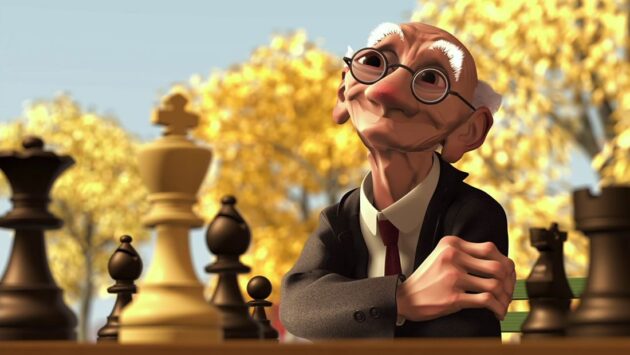 The best Audika mascot
With vigor and humor, the exercise becomes a cinema tour de force, placing at the center of its device how the cutting of a scene shapes the point of view it offers. Behind the funny, light-hearted sketch, The Chess Player still deals with aging and loneliness, while cinema’s tools help the old man retreat into his imagination. Said differently, it’s darker than it first appears—and that’s part of its charm as a bravura piece of filmmaking.
Moreover, the short again pushed Pixar’s technical boundaries, here in its portrayal of a human face. When you think back to the studio’s early experiments (Tin Toy, or even the first Toy Story), The Chess Player marks a significant advance, moving away from the uncanny valley by shaping a truly cartoonish figure with pronounced features and expressive facial movements. It’s also why that CGI grandpa aged so well and why he reappears later as a toy restaurateur in Toy Story 2.
3. Day & Night
- Release: 2010
- Running time: 6min
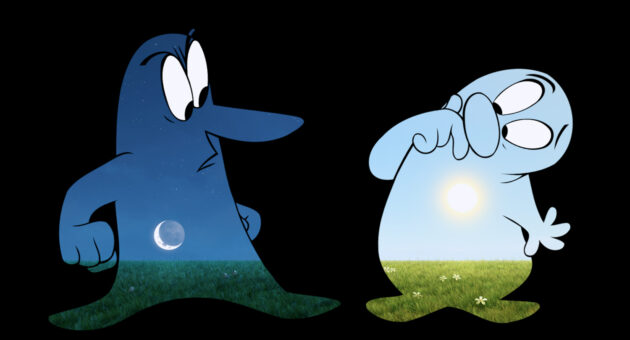 “What Day owes to Night”
What’s it about? Day meets Night. The two are radically different, and a rivalry quickly blossoms as each tries to impress the other with what makes them unique. But their vanity soon draws them together, forging a strange and touching friendship.
Why is it the most inventive? Pixar excels when it gives a more conceptual treatment to familiar animation tropes. Day & Night stands as one of the studio’s artistic and narrative tour de forces. This 2010 short, directed by Teddy Newton and released with Toy Story 3, revisits a core theme for young audiences: friendship, difference, tolerance, and the complementarity that each one offers the other as a new window on the world.
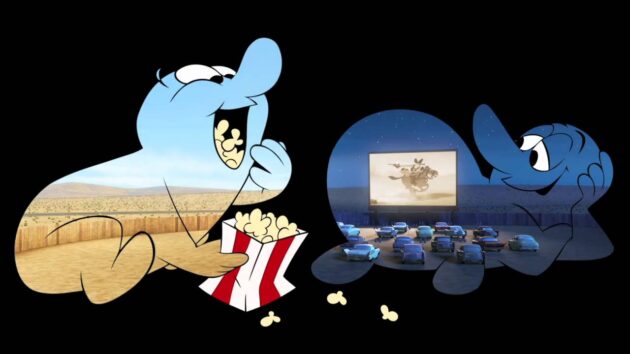 When our perception of the world is challenged
To elevate its argument, the film blends animation techniques and defies studio norms with a clever 2D outline to draw the characters’ silhouettes and 3D to fill them, with Day and Night moving on a black background. And as is common in Pixar’s shorts, there is no dialogue. The story relies entirely on the characters’ gestures, facial expressions, and the elements that pass through their bodies to characterize and unfold the narrative.
It artfully reframes imagery to lend it new narrative meaning. A waterfall becomes a morning pee; a stormy sky becomes a backache. The same treatment is given to sounds, which acquire new meanings: croaks of ducks as a sneering laugh, the hum of a swarm to signal discontent, or a cow’s moo to replace a yawn. Faced with so much inventiveness, the film rightly earned its 2011 Oscar nomination.
2. Lou
- Release: 2017
- Running time: 6min
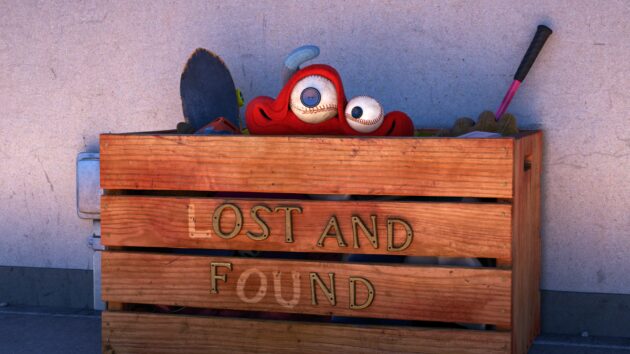 « Ostandfnd
What’s it about? In a schoolyard, a pile of found objects comes to life. While it entertains the kids with the toys it holds, it must confront a thief.
Why is it Pixar’s generosity at its best? On paper, LOU seems to epitomize the studio’s recurring themes and biases: a bunch of ordinary objects come to life and deliver an emotional moral to a rowdy kid. In practice, seven minutes compact all of Pixar’s inventiveness. It’s not just about delivering a lesson to young audiences but about unleashing the full aesthetic and thematic potential of 3D animation.
The short is incredibly rich. It quickly leans into horror tropes with its eerie setup and the unusual design of its titular character, before yielding to pure slapstick. A sequence that would make Buster Keaton and Sam Raimi jealous, as it uses the very composition of this peculiar hero to chain visual gags at a breakneck pace. In Pixar’s best, characters mold the stakes. LOU is one of the finest examples of that principle.
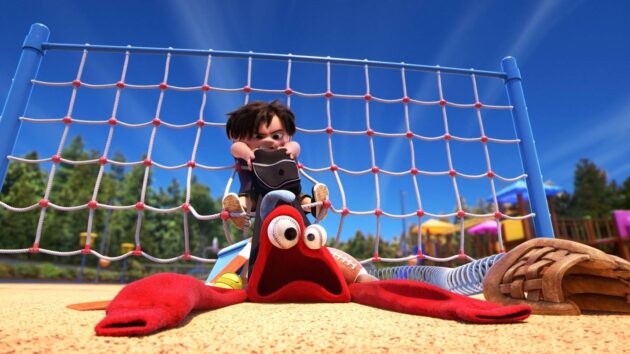 The horror…
Naturally, after such a triumph, the emotional payoff lands with force. It took so many twists and turns to ease this sharing lesson of its moral into something less cloying. It demonstrates that characterization is more about invention than duration.
A win that inevitably echoes the spirit of the Toy Story trilogy, which also chronicles the fraught interactions between children and their anthropomorphic playmates. Both in theirs and in Pixar’s, if the characters ultimately learn about themselves and their relationships, it’s because they embark on an adventure that reaches into their very nature—and it gives Pixar’s gifted animators room to push the studio’s animation to new heights. And indeed, the director of LOU had worked as an animator on some of the studio’s landmark films, including Monsters, Inc., Ratatouille, Up, Inside Out, or Incredibles 2.
1. For the Birds
- Release: 2000
- Running time: 3m25
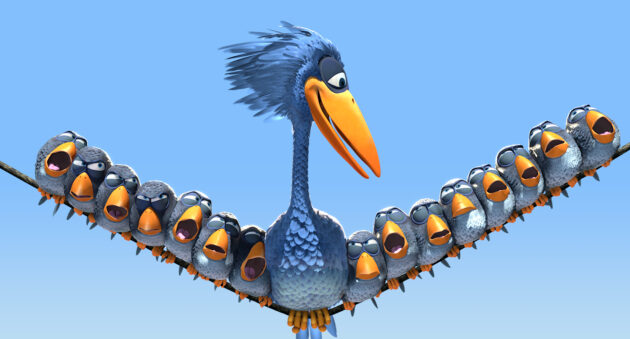 A tense situation
What’s it about? The lives of a flock of quirky birds perched on a high-tension wire.
Why is it a timeless classic? Undoubtedly, it’s the most famous Pixar short (alongside possibly Luxo Jr.). You’ve probably seen it, or at least you’ve revisited this bunch of feathered misfits on a power line. Maybe it’s because it was shown before what was then Pixar’s biggest hit, Monsters, Inc.? Maybe Annecy Festival’s early screening teased it? Maybe it’s also because it won the Academy Award for Best Animated Short Film (a distinction shared by The Chess Player, Piper, and Bao).
Or perhaps its razor-sharp comic tempo and endearing simplicity have etched the birds into popular culture enough to render them legendary? The core gag is as old as cinema itself: the classic “the sprinkler gets sprayed” gag, but reimagined on a bird scale. Yet, at the turn of the 2000s, modeling feathered animals who react to every movement was a monumental technical challenge.
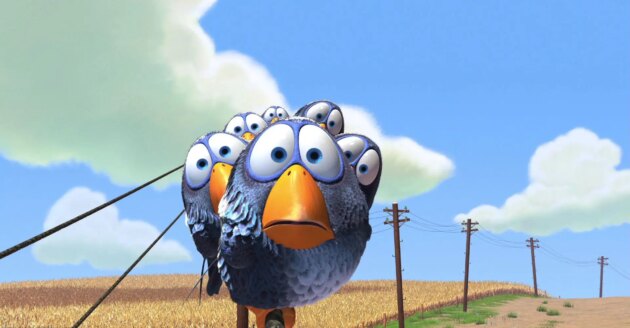 Birds with real expressiveness
That challenge was met with flying colors and foreshadowed Pixar’s obsessive attention to detail that still marks the studio today. For the Birds is thus a remarkable achievement—a short that’s also a brutally funny sketch. It’s a pillar of Pixar’s universe: it appears as a cameo in other films (Cars, Inside Out) and remains one of the most dazzling showcases of Ralph Eggleston’s influence. And as with all the shorts on this list, it’s not merely a two-minute treat to munch between features; it’s a complex piece of art and a playground from which artists worldwide draw inspiration.
