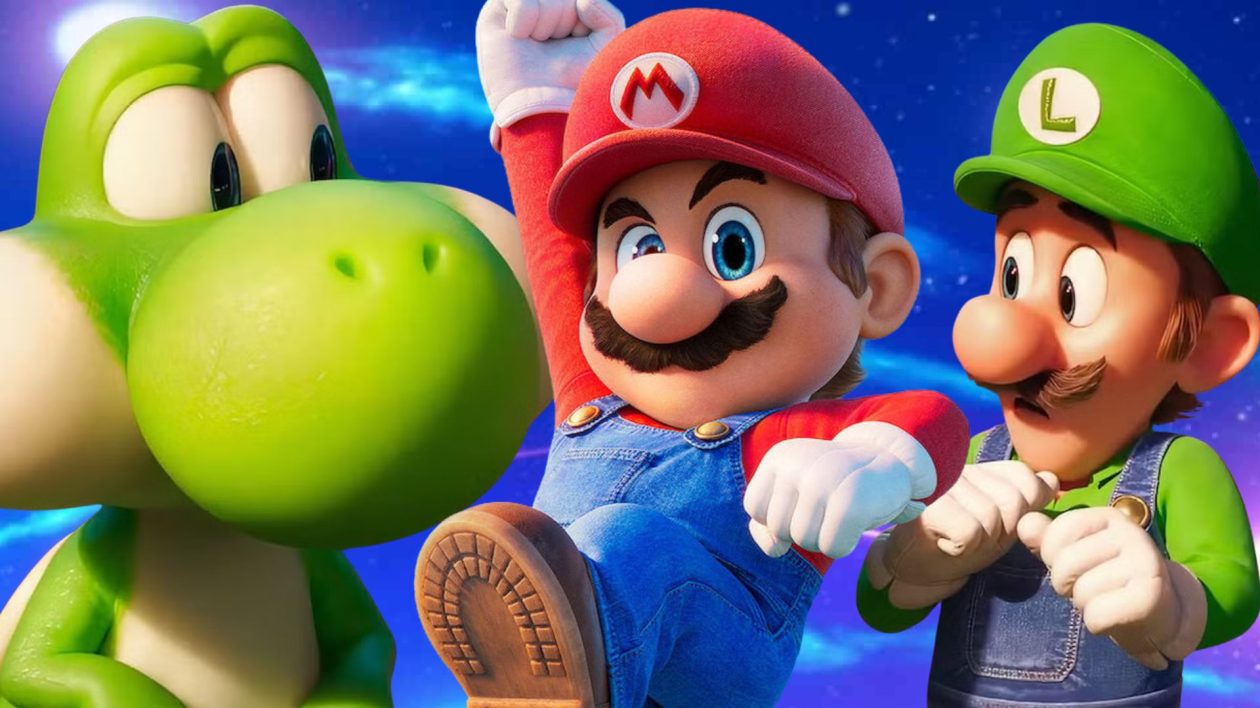
Even if it lags behind the original entry, Super Mario Galaxy is nearing a global box office of about one billion dollars.
Even if the critical reception of the Super Mario Galaxy film is a disaster (37/100 on Metacritic), there was little doubt about its commercial potential. Beyond Nintendo’s enduringly popular license, the first Super Mario movie, released in 2023, arrived at the box office with the force of a bulldozer, and established itself as the year’s second-biggest hit behind Barbie with $1.3 billion worldwide.
To this day, it sits among the top five highest-grossing animated films of all time, and the fourth if you exclude Ne Zha 2, a Chinese film that raked in $2.2 billion but with 99% of its earnings generated in China. No one was wrong to think so, because Super Mario Galaxy is now on track to hit $1 billion at the global box office.
TOUCHING THE STARS
As these lines are written, the worldwide box office for Super Mario Galaxy stands at $992.4 million. Unless fate plays a particularly cruel trick, that number is simply a matter of days away from becoming the first 2026 film to push past that symbolic milestone. You don’t even need a double-digit score to sit atop the year’s charts at this point. For now, the Nintendo-Illumination collaboration sits behind the year’s frontrunners—Michael (849 million) and Last Chance Project (678 million).
Meanwhile, the next Toy Story 5 could quickly seize the crown, bringing Pixar back into the running after the underperformance of Jumpers. Don’t overlook the potential of Minions 3 either, following the $940 million of the second installment and the $1.1 billion the 2015 film pulled in. If we widen to live-action cinema, it’s not hard to imagine remakes like Moana, Spider-Man: Brand New Day, or Avengers: Doomsday sweeping the competition. Moreover, if a massive hit emerges (even with a modest $110 million budget), Super Mario Galaxy would still be trailing the 2023 film’s box office, and could hardly equal its predecessor.
Super Mario Bros. had, in fact, taken only 26 days to cross the billion-dollar threshold, whereas its sequel took nearly two months. The Chinese box office, one of the foreign markets with the heaviest international weight, sits almost identically from one installment to the next, with $24 million and $21 million respectively.
That same slowdown at home is evident too: at the same stage of release, the first film had accrued $566 million domestically, versus $427 million for the sequel. But that isn’t necessarily a signal to slow the franchise down, which already plans a third film, as teased in the post-credits scene. It hasn’t been officially announced by Nintendo and Universal, but Super Mario Galaxy was only confirmed in March 2024—about 11 months after the previous release—despite ongoing hints from Chris Pratt and Universal executives that it was in development.
