
Kill Bill was released in two volumes in cinemas at the turn of the millennium, but the definitive version Kill Bill: The Whole Bloody Affair finally makes its way to the big screen.
Quentin Tarantino hasn’t returned to cinema since 2019’s Once Upon a Time in Hollywood. Has he been idle in the meantime? Not really. He authored two books—one novelizing the adventures of Rick Dalton and Cliff Booth with Once Upon a Time in Hollywood in 2021, and the essay Cinema Speculations in 2023. He also produced two thrillers—One Spoon of Chocolate, directed by rapper RZA, and The Projectionist—co-wrote The Adventures of Cliff Booth for Netflix with David Fincher, and has mostly been at work on his tenth feature.
There was a time when a project titled The Movie Critic floated around, but Tarantino dropped it along the way, unsure if he wanted it to be the final work of his career. Because yes, as a reminder, QT has always explained that he would only make ten films in his career, allegedly to “leave us wanting more” and “go out with a bang.” A chic line, to be sure.
In the meantime, he honors us with finally revealing to the world the official version of his two Kill Bill films led by the excellent Uma Thurman with Kill Bill: The Whole Bloody Affair (presented as the true fourth film from QT). And frankly, it’s worth seeing on the big screen. Here’s why.
kill bill again
For Quentin Tarantino newcomers, it’s important to know that Kill Bill Vol. 1 and Kill Bill Vol. 2 were not originally intended to exist in their current form. When he mapped out Beatrix Kiddo’s story for the cinema, from an idea he’d conjured with Uma Thurman during the filming of Pulp Fiction, Tarantino planned to tell it in a single film. The problem: the cut of that version was far too long to fit a theatrical release.
Unable to trim enough sequences to fashion a coherent single feature, Harvey Weinstein, then the film’s producer, urged Tarantino to split his cut into two distinct films. That gave birth to Kill Bill Vol. 1 and Kill Bill Vol. 2, released in theaters respectively in November 2003 and May 2004 (as far as France is concerned). The second installment had even had its world premiere at the Cannes Film Festival, while Tarantino himself served as festival president that year.
But more importantly, it was on the very last day of that Cannes Festival in 2004 that Tarantino unveiled the official version of his Kill Bill, namely Kill Bill: The Whole Bloody Affair. A lucky few had first chance to see it at the New Beverly Cinema in 2011 (QT’s own cherished LA venue), and that was about it. Since then, fans have waited anxiously to see it, but rights questions kept delaying matters until Tarantino could finally announce, in October 2025, the good news:
“I wrote and directed this film as a single, cohesive opus, and I’m thrilled to offer fans the chance to watch it in its entirety. The best way to experience Kill Bill: The Whole Bloody Affair is certainly in the theater, in glorious 70 mm or 35 mm. Blood and guts on the big screen, in all their splendor!”
After a U.S. release in December 2025, the film finally lands in cinemas in France this July 8, including a 70mm print. And let’s be honest: this is one summer must-see.

blood everywhere
Screen Large had the chance to view Kill Bill: The Whole Bloody Affair in its 70mm cut, running 4h35. Is it strictly necessary to rush to a screening in the 70mm print? To be perfectly honest, probably not.
Indeed, the film stock provides real depth to Tarantino’s aesthetic choices and heightens the color storytelling of certain sequences. The 70mm patina suits the western-tinged moments or the Pai Mei sequence to a tee. But the truth is, the original movie was never shot on film. For the 70mm experience, it’s a perfect treat (especially if you want to savor the 15-minute intermission in the middle), but a screening in digital format is likely just as delightful.
Warning, spoilers ahead about changes to the narrative and editing !

On the whole, there’s no doubt that revisiting the Kill Bill saga in this combined, “definitive” version adds real breadth to the narrative. Beatrix Kiddo’s quest for vengeance feels even more sumptuous and authentic; she is entirely on her own and can’t rely on the audience’s support (in a certain sense) the way the theatrical versions allowed. The editing of this “definitive” cut lets Tarantino reshape the storytelling in parts.
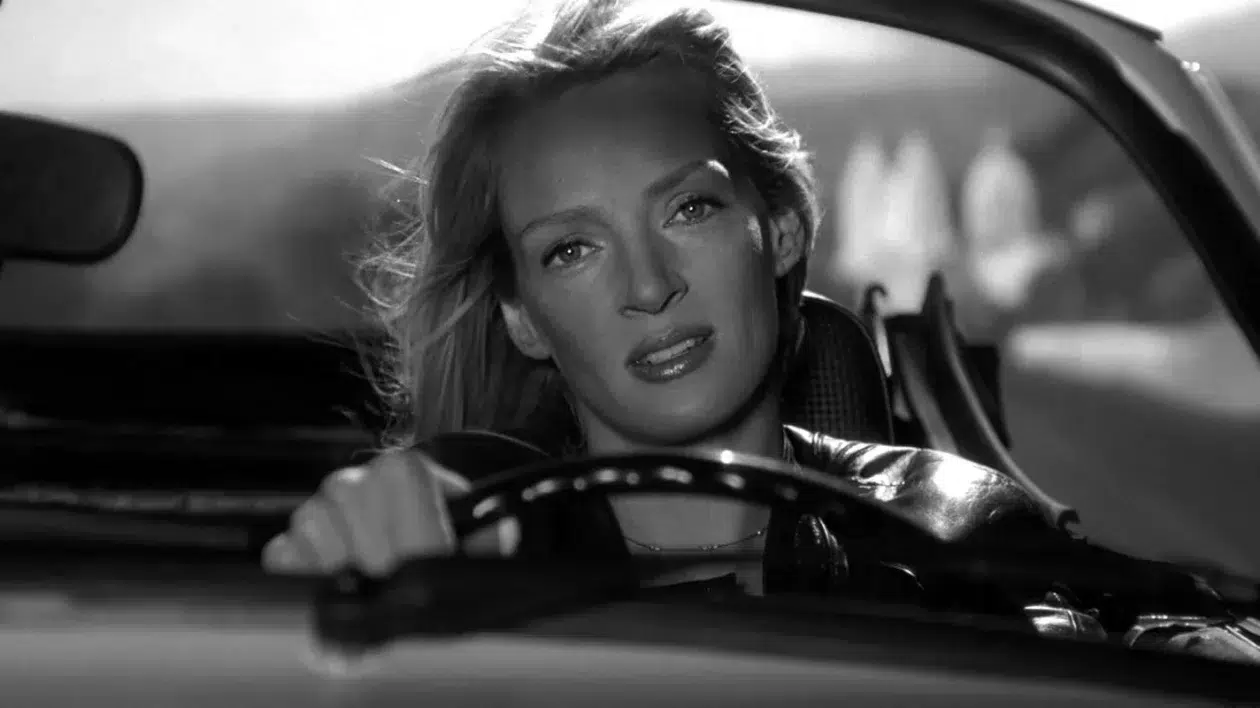
The biggest changes center on the ending of Kill Bill Vol. 1 and the introduction of Kill Bill Vol. 2. The second part, which follows the intermission, entirely removes Beatrix’s on-screen narration as she looks into the camera while driving. Not only does this skip a redundant recap since Part One remains fresh in viewers’ minds, but it also avoids spoiling that Beatrix is on her way to kill Bill after taking out the rest of the Deadly Viper Assassination Squad.
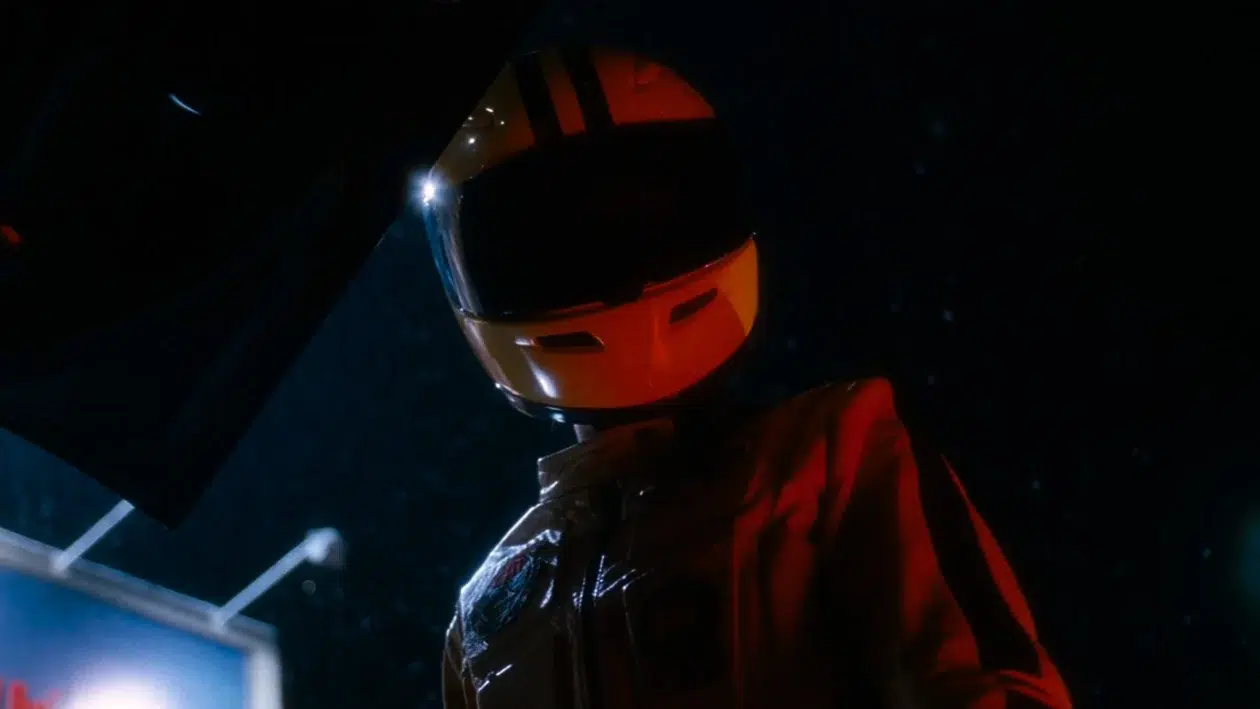
Similarly, and even more captivating, the end of Part One heightens the tension surrounding Beatrix’s vendetta. The original cliffhanger—which revealed that Beatrix’s daughter is alive—has been removed, delivering a genuine surprise at the end of Part Two (for those who haven’t seen the films before). In its place, Tarantino re-centers the violence by showing Beatrix severing Sophie’s second arm in the car trunk (something that was only implied off-screen and verbally referenced in Kill Bill Vol. 1), while declaring, behind her helmet (in a faux look-at-the-camera), her blood-soaked revenge plans.
A sequence that bathes the screen in a stunning red, balancing the hospital’s icy blue where Sophie confides in Bill. Not surprising given the filmmaker’s penchant for stark contrasts; the beloved Crazy 88 sequence’ gore remains a highlight as well. No more black-and-white to hide the splatters—this roughly fifteen-minute action stretch now unfolds in color. The walls get a fresh coat of paint before Beatrix faces O-Ren Ishii in the snow-blanketed final setting of the film.
anime à tuer
Until now, one might think that Kill Bill: The Whole Bloody Affair has little new to offer. On paper, that’s largely accurate—the primary changes are discreet cuts or additions to the editing, recognizable to keen fans (besides the introductory card removing its Klingon proverb and paying homage to Sergio Leone).
However, to overlook the addition of a wild animated sequence within the O-Ren Ishii backstory in Kill Bill Vol. 1 would be a mistake. The title of this combined edition promises to reveal “the whole bloody affair,” and this animated segment is the proof in the pudding.
Just after avenging her parents by killing Boss Matsumoto, O-Ren Ishii intends to finish off the other killer behind their deaths: Pretty Riki. Her pursuit leads her into an elevator, where she aims to end him… but things don’t go as planned. We won’t spoil the rest in detail, but the sequence is ferociously violent, both psychologically and physically. The promised bloodbath is indeed present, and Kill Bill: The Whole Bloody Affair even lavishes the audience with vertigo-inducing animation (a not-so-realistic touch common to anime).
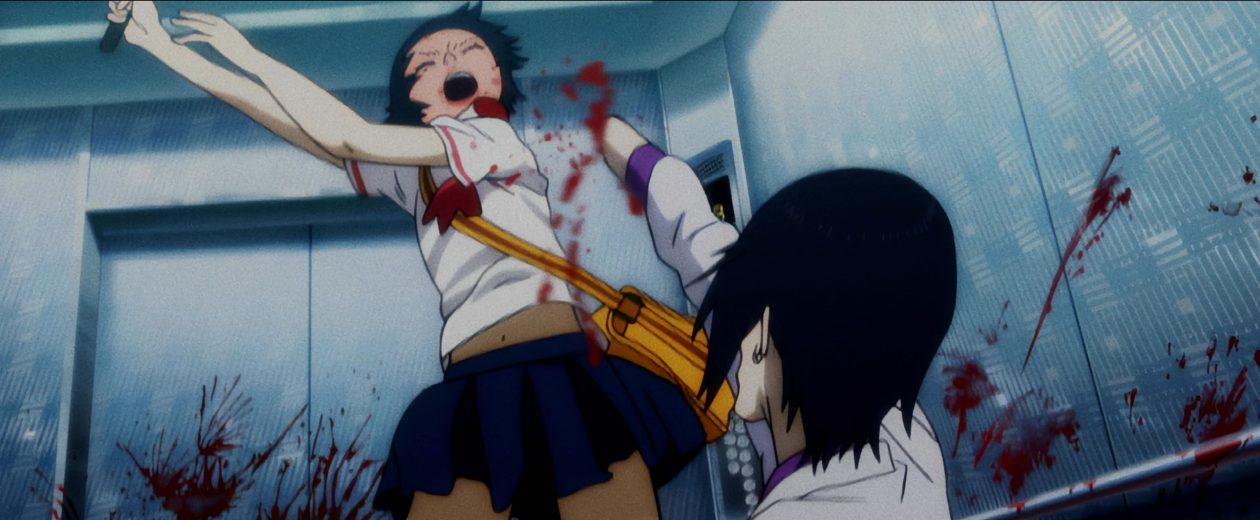
Rien que pour cet ajout exceptionnel, the screening is worth it, especially since the animation quality feels sharper than the rest of the sequence (which runs nearly 16 minutes in total). It was produced by Production I.G, the studio behind the rest of the material, but only in 2014—ten years after the original film. In the end, the expanded sequence reinforces the narrative’s coherence, which, beyond its bloody battles and vengeful chase, ultimately tells the story of women’s exploitation by men.
Whether it’s a young yakuza (O-Ren Ishii), a femme fatal (Elle Driver, Beatrix Kiddo, Karen Kim), a young girl (BB), or adolescent/prostitute women in the Acuña bar sequence, the women drain under patriarchal horror at every level in Kill Bill: The Whole Bloody Affair. Lies, pride, violence… men wield their power with rancid motives, constantly justifying or excusing themselves (Bill’s paternalistic speech in the anti-climax) .
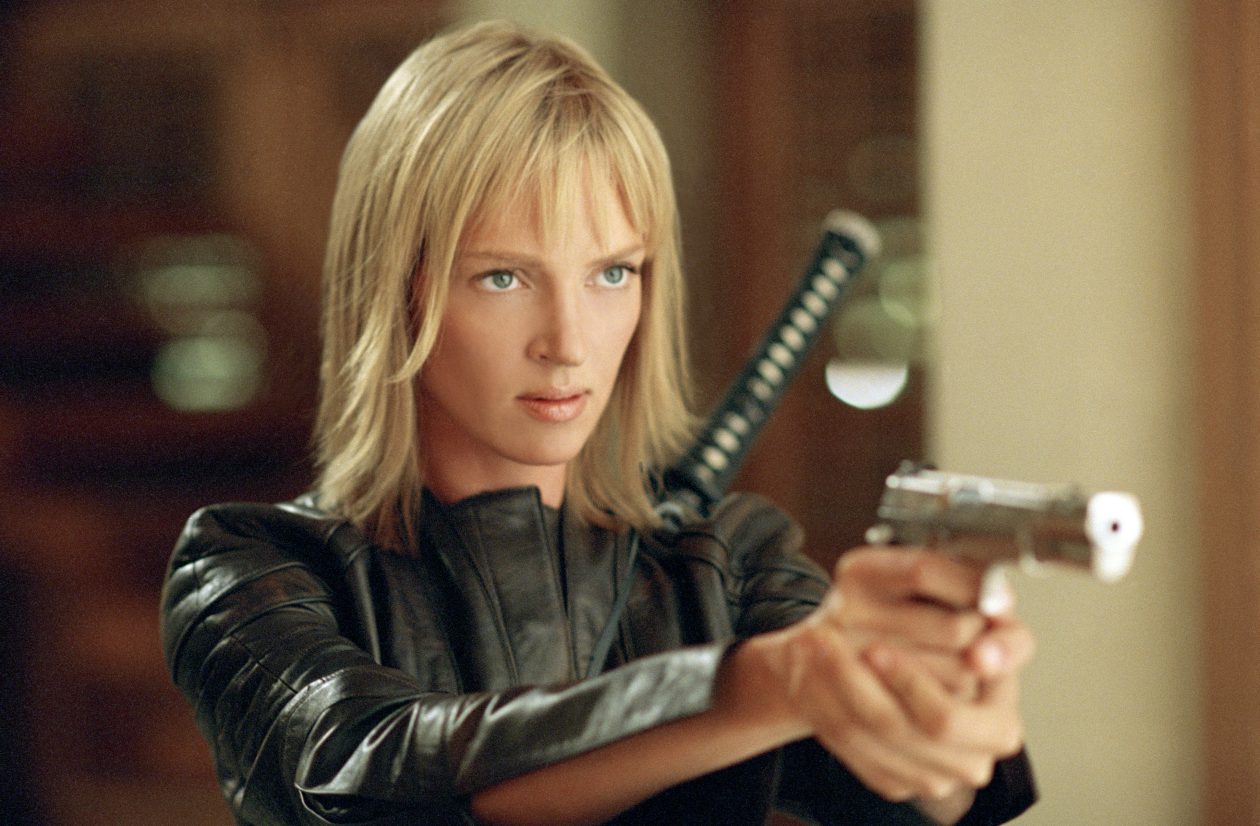
With this version, more than in the original duo, Beatrix Kiddo’s vengeance quest is primarily a quest for identity, a woman who finally aims to shed a relationship of masculine domination by using the men’s own tools when necessary. In short, Kill Bill: The Whole Bloody Affair is a summer must-see, and it would be a real regret to miss it.
A single caveat: the ending of the credits with Tarantino attaching the short film titled The Lost Chapter: Yuki’s Revenge, created with Epic Games and Fortnite. The stakes are playful (Gogo’s twin sister seeks revenge by killing Beatrix in turn), and the idea of transitioning to a new medium, more than twenty years later, isn’t without interest. However, the sequence sticks out somewhat against the rest of the film. If you’re unsure, know that this “lost chapter” is legally available on YouTube.
