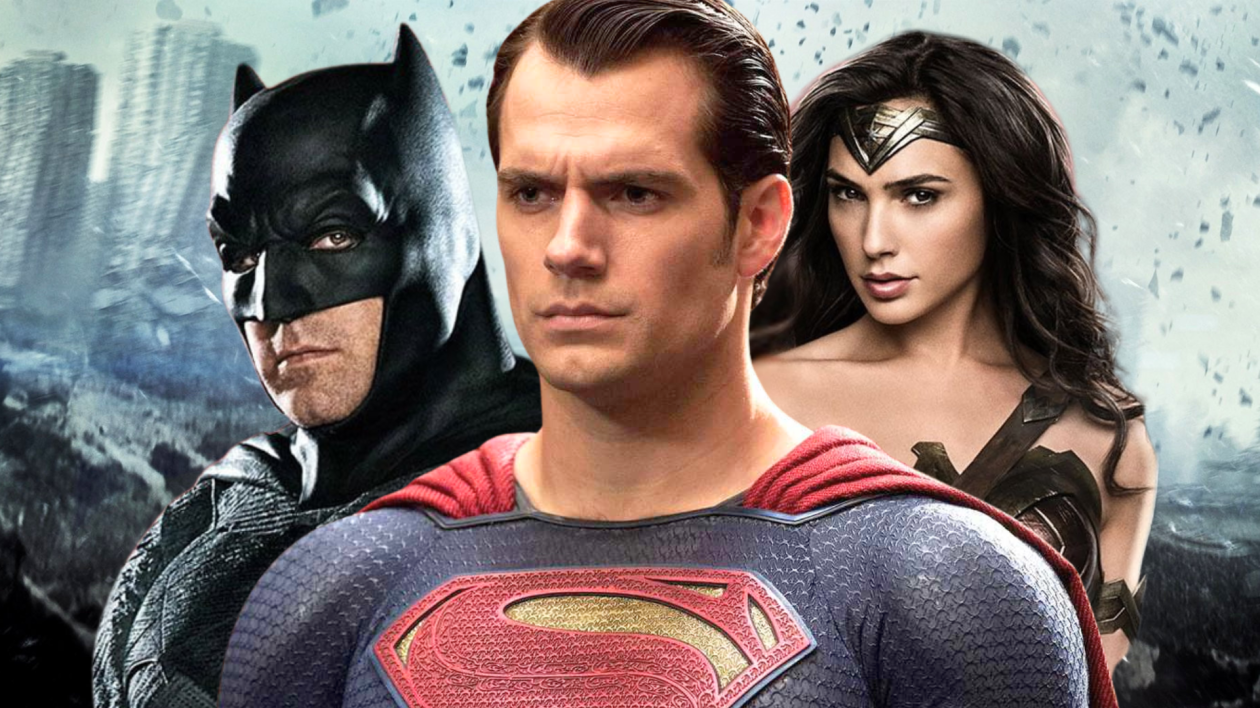
Long before Justice League and the Zack Snyder’s Justice League alias Snyder Cut, Batman v Superman: Dawn of Justice by Zack Snyder divided audiences with ferocity. A look back at this titan clash, led by Ben Affleck and Henry Cavill.
Reprinted for a TV rerun
Batman v Superman was only the beginning. It came right after Man of Steel, at a time when this DCEU was just getting started. And it came before Suicide Squad, Wonder Woman, Aquaman, Shazam, Birds of Prey, Black Adam, The Flash, or Blue Beetle. Before the nightmare of Justice League, before the Snyder Cut, and before the disastrous end of a sprawling shared universe that careened off course.
At Ecran Large as apparently everywhere else, Batman v Superman divided audiences from its release, then again with its extended cut. After our enthusiastic review of the theatrical version of BvS, and even more pleased with the extended cut of Batman v Superman, here’s a look back at this major superhero opus, a three-hour epic in the Ultimate Cut.
YES: THE DAWN OF BATMAN V SUPERMAN
In comics, animation, video games, and cinema… the countless retellings of Bruce Wayne’s origin trauma—the moment he watches his parents die in a grim alley—felt like we’d had enough. Yet Zack Snyder’s penchant for polished openings, his love for meticulously crafted frames, and a sometimes heavy-handed symbolism gave him a way to revisit these familiar images and stamp his own mark on them, as we watch a mourning young Bruce, cloaked in bats, rise from the ground to herald the darkness ahead and the appetite with which Batman will dive into it. This almost-mystical opening is followed by a second, far rougher and more tactile sequence that serves as a counterpoint to the climax of Man of Steel.
Wayne strives to save his colleagues in a Metropolis that has become a battlefield among the stars, as two Kryptonians blast it apart to settle their differences. An allegory of 9/11, a new trauma for Bruce, and the birth of a cold resolve: to neutralize Superman. This second layer gives the film an immersive opening, with gravity that lands with astonishing heft.
GREAT: THE MYTHIC AND POLITICAL CLASH
Zack Snyder may rattle his mythic representations with the finesse of a child in a hyperactive sugar rush, but the enterprise works, thanks to the coherence of the figures he summons. All his characters return to the core of what makes DC Comics unique: treating superheroes as deities dropped among ordinary people. This drive for power, this will to surpass oneself, places all these zealots within a Nietzschean commentary that’s far more nuanced than Snyder usually offers.
For the clash of values between Superman and Batman forces him to view the Dark Knight as what he has become: an allegory of American imperialism, which sees any challenge to its gains or material interests (the emphasis is on the damage caused to Wayne Enterprises) as an unacceptable threat. Batman is preventive war, while Superman points to another fault: the accusation of ideological impurity. No matter that Batman fights for good and achieves results, his methods aren’t accepted by the Kryptonian who seeks submission. A clash of philosophies and civilizations that obviously excites Snyder.
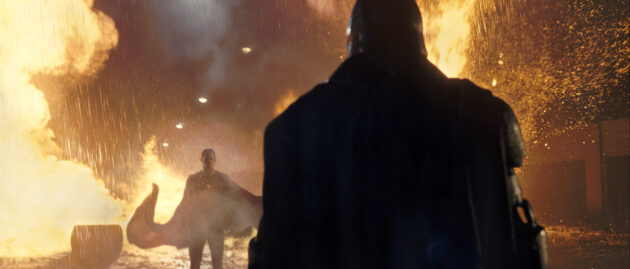
MEH: AN ARTIFICIAL DUEL BETWEEN BATMAN AND SUPERMAN
Superman may have saved the world, but he wrecked a lot of buildings and caused many casualties, so Batman has a problem with him. Batman, on the other hand, may be trying to save Gotham by rooting out its gangsters and human traffickers, but since he doesn’t hesitate to be violent and to rule through fear, Superman has a problem with him.
If the stakes of BvS can be simplified to such an extent as to become ridiculous and crude, it’s because the film doesn’t dig into them—or not enough. They’re presented as facts, as obvious truths the spectator must accept. Batman v Superman is the title, the stake, that’s how it is. You’ll largely have to settle for the film’s opening and a few lines to understand Bruce Wayne’s anger, and even if it’s more developed on the Superman side, it remains light. In a few scenes, Clark discovers Gotham, meets Wayne, encounters Batman, and decides that he must stop him, or take him down if necessary.
It’s all the more striking because BvS is a film that favors dialogue over action, spending a great deal of time listening to its characters. There was thus ample space to spell out these angers, these fears, and to show the moral rifts of the characters. A little more time spent on the evolution and the steps of the “V” between Batman and Superman would have certainly given more heft to their confrontation.
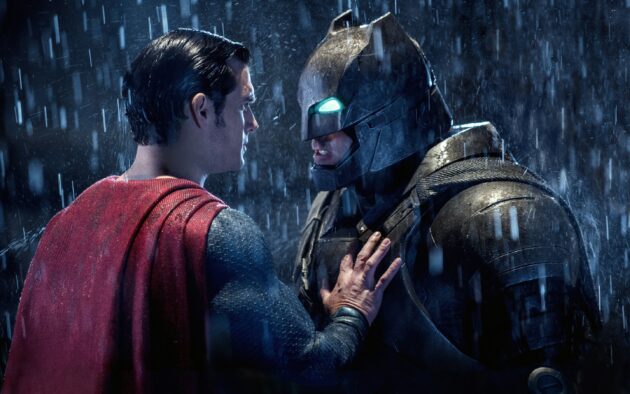
YES: the casting of Ben Affleck as Batman
Casting Ben Affleck was far from trivial. A recognized actor, his experience with superheroes (with Daredevil) had been a painful failure, and despite the buzz around Argo, it was public knowledge that the actor had long struggled with heavy addiction problems, which didn’t help him manage his career at best.
A past like that Affleck carries with him, and which he offers to Bruce Wayne. Despite his undeniable physical power, you sense a man tired, ready to tilt toward malice and cynicism. His former glory is visible only in flashes. Thus a genuine death drive inhabits the protagonist, and makes him a truly unique embodiment of the character, threatened by the shadow ready to swallow him whole.
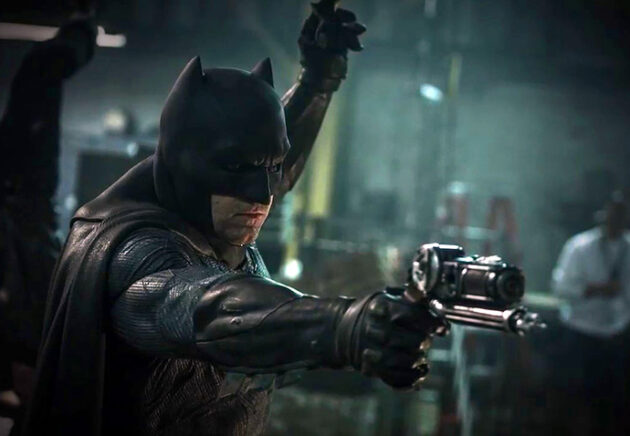
MEH: the writing of Batman
In BvS, Batman spends his time wanting to kill Superman, raging that he can’t achieve it, and blaming himself for not saving so many innocents crushed in Man of Steel. In Justice League, he spends his time regretting Superman’s death, raging and blaming himself for not saving him. The pattern is repetitive, and traps Bruce Wayne in a cloud of artificial sadness, as if he wore a sign reading “Droopy in therapy” around his neck.
A feeling sharpened by how the character is built in Batman v Superman, which traverses a museum of traumas from start to finish. Not only is his parents’ death staged at the outset, but the film heavies the tableau later with a burnt Robin costume, a reference to Gotham that wounds the best of us, and the billionaire seems to carry all the world’s misery on his broad shoulders.
But the film ultimately spends little time exploring, justifying, and staging these pains, preferring to present them as facts in the background. If Batman is here, it’s because he checked all these tragedy boxes. David S. Goyer and Chris Terrio’s screenplay oscillates between heavy-handed (the parents’ death, with slo-mo and shock-cutting) and mere allusion, with Affleck’s grave expression to press the point. Hence the sense of an artificial and forced drama, even tense, that pins the character to the same straight line of anger and despair, inevitably monotone over three hours.
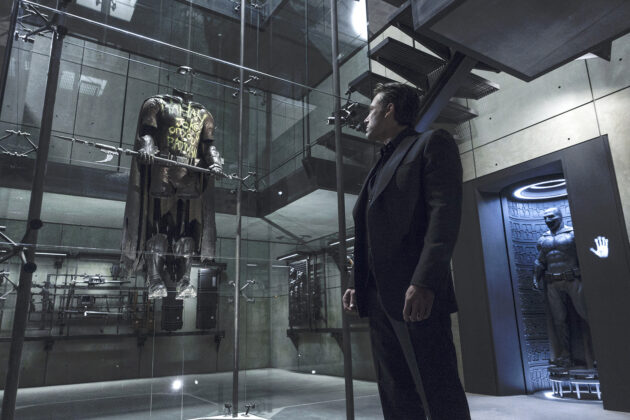
YES: Lex Luthor
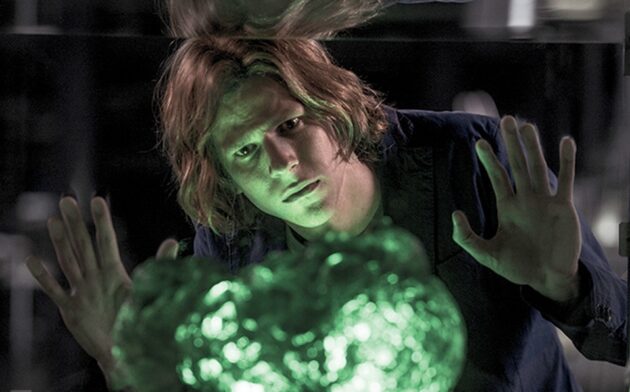
Many viewers were taken aback by this vision of Superman’s sworn foe. Yet, in many respects it stays faithful to the character’s core. A grand capitalist drunk on power, an ambitious human aiming to rise to Olympus, a symbol of social success and eternal schemer.
But rather than merely duplicating his comic-book look, or mimicking Gene Hackman and Kevin Spacey, Snyder plays with the character’s principles for his era. Luthor is no longer just an industrialist, but a small genius of digital entrepreneurship and innovation, a kind of dark Zuckerberg who freely tilts toward caricature. He’s saved by the director’s straight-faced seriousness, which never aims to mock him but rather reveals his pathetic dimension.
A successful reinterpretation also thanks to Jesse Eisenberg, who pours improbable fervor into his performance. Always teetering on the edge of overacting and showmanship, he manages to make Lex a victim of his own ego, a megalomaniac on the verge of implosion capable of distilling a genuine unease, as in the rousing speech he delivers at a charity gala.
Yes: Batman v Superman’s Music
Not to rile fans tired of Hans Zimmer’s melodies (which inevitably began to repeat due to his ubiquity), the Man of Steel score he partly co-composed with Junkie XL was already a miniature marvel, with fantastic tracks like Arcade. For BvS, the duo reunited, and it’s ideal: two titans clash on screen, and the symphony of this duel is orchestrated by two very different artists. If Hans Zimmer represents the archetype of the accomplished Hollywood composer, with a flawless trajectory, Junkie XL is the new guard, coming from electronic and new wave.
This pairing yielded a richly textured score, contributing to the complexity of BvS. Grandiloquent, sensational, melancholic, explosive, the Batman v Superman soundtrack mirrors a film bursting with ambition and moving in several directions.
Hard to miss the unexpected Wonder Woman theme, which stands out from the rest with its lighter tone and Tina Guo’s electronic violin sounds. There’s also Lex Luthor’s theme, with The Red Capes Are Coming, which brilliantly conveys the character’s slightly baroque madness, or New Rules, a more restrained but very beautiful track.
YES: the meaning of “Martha”
For many, the Martha moment felt like an ill-timed joker, a deus ex machina pulled from a hat. Yet it’s the key (and what a key) to Snyder’s grand design. Giants with clay feet, adolescent gods, Batman and Superman allowed themselves to be carried by an egotistical and violent spiral, willing to be manipulated by the one they mistake for a worm.
And when they face off, ready to destroy one another, the one thing that can bring them back to earth—the sole disabler of this crazy machine—has five letters. If “Martha” cools their ardor so quickly, it’s because the surname reveals their true nature: two traumatized orphans who have used their will to power as a crutch, here broken by the memory of their mother.
Moreover, it’s pretty clever of Snyder to lean on maternal figures when the mythologies of the characters have often stressed paternal legacies. A way to surprise, but also to anchor these heroes in a more identifiable and tangible humanity.
MEDIUM: the overplay on “Martha”
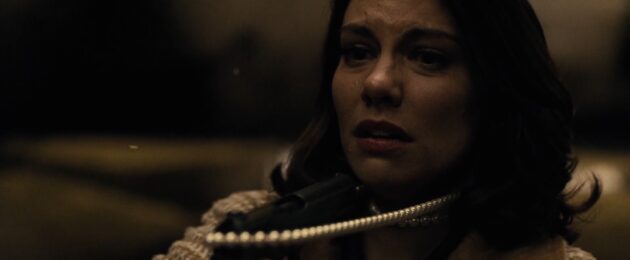
As is often the case in BvS, there’s a gulf between intention and execution. The express humanization of Bruce and Clark makes sense in the script, but it’s written and staged with Batman’s platform-heel finesse. The heavy-handed dialogue (“Find him! Save Martha!”), the heavy-handed flashbacks (the grave, the death, the necklace, the pain), the over-the-top delivery (the line “What did you say that name?!”), and, of course, Lois arriving to subtitle the moment, all wrapped in a melodramatic little score… there’s something heavy and grotesque about this scene.
After 18 months of boiling hatred toward Superman, it only took a moment for Bruce Wayne to lower his arms and open his eyes. Behind the demigod, there is a man. Who has a mother. And a small heart, like his. That foe wasn’t more than a brother, and this battle, a folly.
Again, the idea isn’t inherently problematic, but this moment left a mark; it’s a possible ultimate rupture: for those who were unsettled by the writing, tone, and stakes, it’s the drop that breaks the dam. It raises questions like: why didn’t Superman ever mention Lex at any point, why does this fight drag on when laser eyes could have roasted the bat in seconds, or why is the movie titled Batman v Superman if their confrontation isn’t even the apex and is settled in 30 seconds with Mom’s mention.

NO: Lois LANE (or LAME)
The Martha moment generated so much anger and jokes that Lois Lane’s dullness in the film’s final act nearly became overlooked. Granted, this super-journalist, super-charming, super-naive woman who doesn’t recognize Clark behind glasses has never been the easiest to write in Superman adaptations, and Amy Adams’ version is certainly one of the strongest. The choice of such a talented actress, so far from a damsel, isn’t unrelated.
No matter her humor, her bravery, her intelligence and her career, Lois inevitably returns to the role of the eternal damsel in distress. She tends to end up threatened or killed by the bad guys, used as a pretty prop by the screenwriters to fix the plot (she’s kidnapped to lure Superman, and Superman must rush to her rescue; she’s there at the right moment to look at him with love). A magnificent illustration of this infernal loop: the famous fall and rescue scene repeated in Man of Steel and BvS.
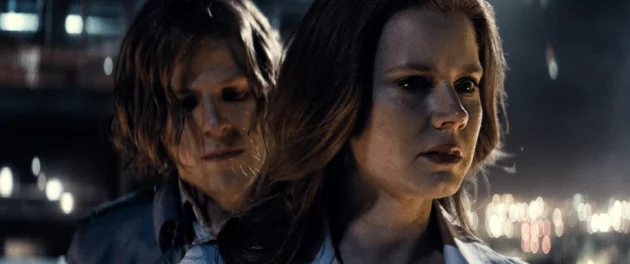
But that isn’t the worst in BvS. Used as bait by Lex, she appears at the exact moment of combat to save Superman and to explain the Martha keyword (which is hardly less silly than her arrival at the station at the end of Man of Steel). Then she handles the Kryptonite spear. Amid the chaos, she goes off to dispose of it and throws it into the water. By the time she resurfaces, the CGI climax has begun: she instantly understands (without credible cause) that Doomsday comes from Krypton, and that the spear could kill him.
So she’s off again, fishing for kryptonite. But everything collapses, she nearly drowns, and Superman comes to save her. There’s the farewell scene before the sacrifice, and the tears at the end. In short, the superhero drama basics, not necessarily awful, never truly interesting, and sometimes ridiculous on purpose.
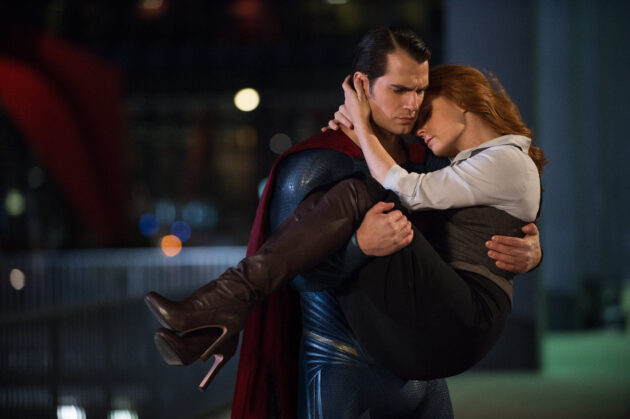
YES: Snyder’s style
The filmmaker belongs to those image-makers whose work is instantly recognizable. His love for slow motion, his desire to begin his narratives with stylized openings pushed to the max, his emphatic relationship with music, his color choices—everything contributes to making him one of the few creators who can still imprint their signature on contemporary blockbusters. And when it’s time to dazzle, you’ll find all of the director’s core traits. But more than pyrotechnics, it’s in his supposedly calm sequences that he shows his verve.
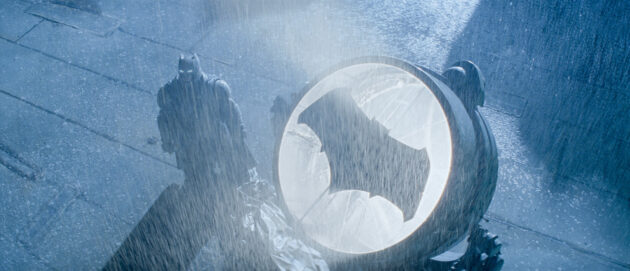
Whether Superman walks the Senate corridors, or Lex greets a politician he despises in his office, Snyder always manages to infuse the whole with epic gravity, despite a large cast, subplots, and “a screenplay that never spares the dialogue.” The bombast that so often threatens him never abandons a grounded, utterly straightforward tone that prevents this epic from losing its aura.
But what truly delights are the grimmer or darker sequences where Zack Snyder reclaims a nearly-horror atmosphere, close to his finds in Army of the Dead. Thus, the nightmare featuring a Batman alter ego hinting at Man-Bat or the first scene unveiling the Dark Knight are deep incursions into horror, which sharply cut against today’s superhero representations. Not only has the director’s cinematic grammar remained intact against this Hollywood bulldozer, but all his facets are summoned here.
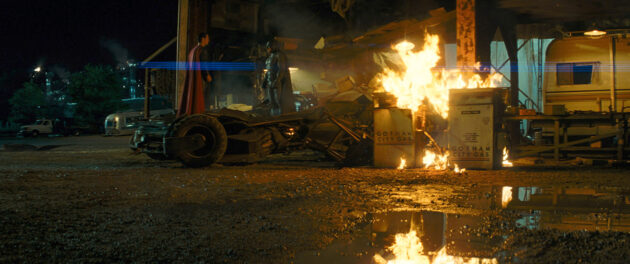
MEH: Snyder’s style when it goes too far
Fans of Zack Snyder’s cinema love his exaggerated colors, blazing lights, extreme slow-motion, and over-the-top stylistic effects. And those who hate Snyder will probably name the same reasons. Batman v Superman naturally triggered the same controversies in its excesses, not surprising either fans or critics.
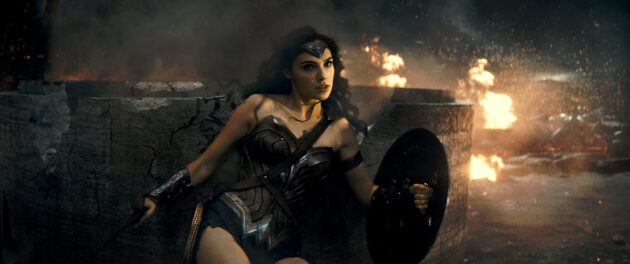
However, even the most sensitive to his style can tremble or snicker. For example, in the opening where Bruce Wayne saves a girl about to be crushed by a cruciform metal pillar, then looks skyward with a affected pout. Or when facing Wonder Woman, half-iconic half-ridiculous with poses that emphasize her hairdo or her scowl.
Zack Snyder constantly tries to marry his love of comics with cinema’s language, to translate the iconic beauty of panels into movement—a quality that was especially evident and exhilarating in Watchmen, precisely criticized for it. Hence a mannerism that sometimes verges on the grotesque, with actors reduced to dehumanized figurines, where everything (acting, pace, coherence) can be sacrificed for image and effect.
YES: the Extended Universe, USB key
To reveal his extended universe, the filmmaker took a bold gamble: a sequence known as Knightmare, whose status is at least somewhat ambiguous, in which Batman leads a desperate insurrection in the middle of a post-apocalyptic world. Perfectly staged, intriguing, spectacular, and capped by a brief spacetime introduction by The Flash, the scene is impressive, and above all, it respects the viewer rather than treating them like a baby who needs everything spoon-fed.
However, for a concept that’s sharp and visually polished, you also have to endure an interminable sub-plot, in which Bruce nicks LexCorp data, spends two centuries reading a USB key’s contents, before tossing a string of micro-teasers. The result is visually an eyesore and narratively hideous, reinforcing the impression of a completely botched and artificial interconnection. This is even more striking given the montage’s poverty, the habit of pairing every new character with a little melody and a logo that feels more like a throwaway Mortal Kombat episode than the birth of a grand mythology.
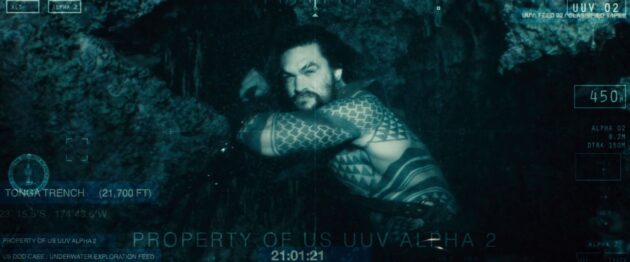
Revisiting BvS is, in a sense, traveling back in time to an era when the film was meant to open a grand universe. Zack Snyder has since hinted that Lois was meant to die, which would have pushed Superman down a slippery slope into the dark side. The director had mentioned the Anti-Life Equation, a pivotal element of the comics sought by Darkseid, which would have allowed mind control. It’s easy to imagine a weakened Superman, manipulated by the villain to frame his invasion. In short, epic adventures.
Knowing Snyder’s appetite for ambitious crossovers, he clearly envisioned a cosmic arc with a Justice League trilogy, partly space-based and with Green Lantern in the wings, and there’s plenty to salivate over when watching Knightmare and imagining the boundless possibilities. The Zack Snyder’s Justice League release that followed only reinforced that bruised dream of an extended universe we were waiting for.
