
After years of slicing up teenagers, Freddy Krueger certainly deserved a little article. Our ranking of the nine Nightmare on Elm Street films, from worst to best.
A red-and-green striped sweater full of holes, a gangster-style hat, a carnivorous grin, skin burned to a crisp and long, deadly claws… Beside his fellow slasher Jason Voorhees (whom he outshines in the crossover), Freddy Krueger is one of the most instantly recognizable boogeymen of the Halloween-era slasher. And unlike some of his counterparts, he doesn’t merely kill the horny teen in a slaughterhouse reel. Haunting the darkest corners of our nightmares, he carries a lush, surreal, almost subconscious imagery along with him.
An universe straight from the mind of Wes Craven at his peak, which allowed the saga to rise above the most mercenary franchises of the genre, before gradually sinking into mediocrity. True, the franchise has had its highs and lows, but it has never ceased to assert its singularity across the 9 films that compose it. Screen Large stocks up on caffeine and heads out to Elm Street, to revisit each installment, in order of preference, from worst to best.
It’s gonna scratch, honey
9. Freddy: A Nightmare on Elm Street (the remake)
Release: 2010 – Runtime: 1h35
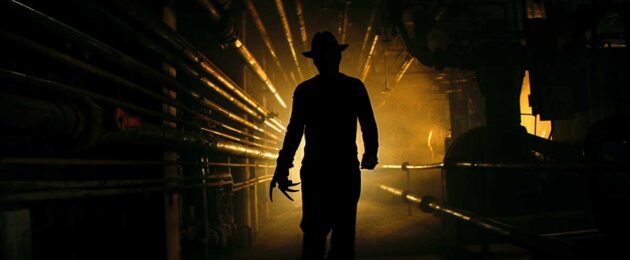 “It’s the plumber….”
What happens in this remake? A group of high school kids discovers their dreams are haunted by the specter of a child molester who can kill them in their sleep. That big bad guy clearly wants revenge on their parents, who put him to death years earlier.
These merry pranksters mostly fail their survival test of the year, with only our heroine and the class nerd managing to get out alive, and they’ll even think they’ve defeated the monster. Until he emerges from a mirror to give the protagonist’s mother a eyeball-in-your-face trick, luring her to hell at his side.
Why is it a nightmare? The first decade of the 2000s was rich in bland remakes of cult horror films. Logically, Wes Craven’s résumé was among the most pillaged, his feature films having shaped the genre across the 70s, and the director himself not shying away from cashing in on Hollywood’s big purges (he even produced The Hills Have Eyes by Alexandre Aja). But this Freddy revisitation was far from a success.
Frankly, almost nothing works in this weak little retelling. And for one essential reason: Freddy, A Nightmare on Elm Street misses what makes the original’s horror so potent—the obscenity of its bogeyman. Sure, you can sometimes perceive the good old Krueger as a joking, gag-driven antagonist, but his crude, provocative edge goes further and makes him scarier because he seems to mock the horrors of every situation, reducing the victims’ tragedies to a tiny theater of the absurd.
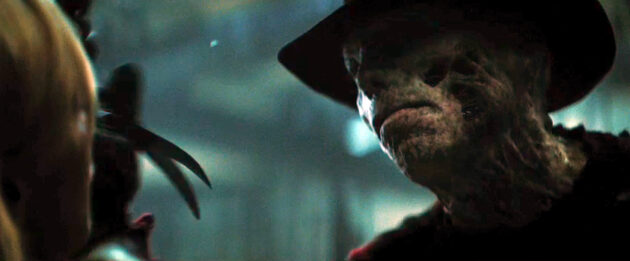 Acne, a daily battle
Or, the remake never tackles this dimension of the saga, and thus it fails to grasp the horror mechanics at play. Sure, the cinematography, framing, and other visual flourishes are sometimes polished, particularly during the dream sequences. But turning the protagonists’ subconscious into a bad progressive-rock clip isn’t quite a vertigo of dread, and the repetition of the film’s visual style condemns it to a seriousness that clashes with the story’s tone.
Why is it watchable at all? Because revisiting the early work of actors who would go on to have bright careers isn’t inherently a bad thing, as with Rooney Mara. More seriously, unlike the original, Freddy isn’t “just” a child killer here; he becomes a sex predator, which could have been an interesting angle if it had been better developed within the plot. Still, the new look for the villain is too restrained to convince or frighten, but the performance by Jackie Earle Haley is outstanding, with a few genuinely memorable moments.
That’s not surprising: Haley brings a chilling charisma, especially in one of the film’s rare sequences where Krueger’s murder is turned into a PTA-barbecue spectacle staged by a parents’ group.
8. Freddy’s Dead: The Final Nightmare
Release: 1991 – Runtime: 1h45
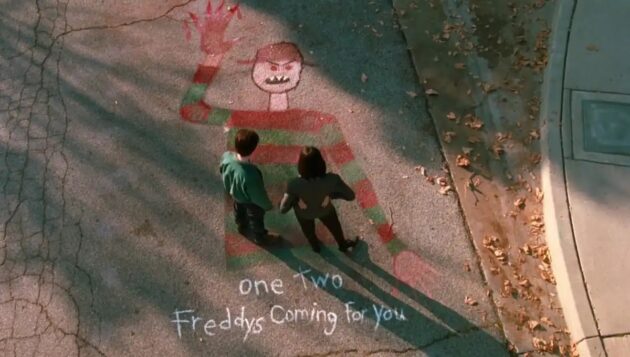 Big chalk promos on Elm Street
What happens in Freddy 6? A teenager manages to escape the dream-king by leaving Springswood. Unfortunately, he also loses his memory. Psychologist Maggie tries to treat him… by bringing him back to Springswood, a town scarred by Krueger’s massacre. Renamed John Doe, he discovers the killer had a child and deduces it’s him. But of course, it isn’t, because he gets killed.
Freddy manages to break out of the town via Maggie’s mind. She learns that she is actually his daughter, and the circumstances of her father’s curse. She ends up defeating him despite the clunky 1990s CGI, before declaring: “Freddy is dead.” Indeed.
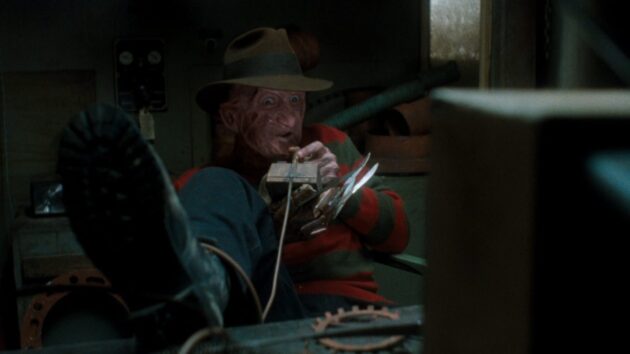 When your little sister puts you in a lock
Why is it the worst entry in the original saga? It’s often said sequels to slashers decline in quality. While Freddy defies this rule in a way (see Freddy’s New Nightmare, far below), the franchise had started to falter in the early 1990s, both artistically and commercially, and it was about time it ended or at least changed its formula. The good news: Freddy’s Dead: The Final Nightmare aims to kill the boogeyman. The bad news: instead of a grand, explosive finale, it delivers one final humiliation.
It’s a painful turnaround when you consider what the potential could have been. Originally, Peter Jackson was brought in from New Zealand, where he was pouring all sorts of fluids into a script under precarious financing to submit a plan. The working title was The Dream Lover, and according to Mad Movies, it would have already hinted at the decline of horror cinema at the end of the 1980s.
360 No scope
Rachel Talalay (who started as the accountant on the first film, remembered Englund, and then became more involved with each installment) and Michael De Luca were brought in to salvage the project, and Jackson was dismissed (only to be later recalled by New Line to pitch a Freddy vs. Jason version and later adapt The Lord of the Rings). Talalay was hired. In hindsight, the anecdote is frustrating.
Arguably the least gory—thanks to the harsh edits on Freddy 5—and the least inventive in the franchise outside the 2000s-era entries, Freddy’s Dead crystallizes all of the franchise’s problems after the original trilogy. Lalalay claimed to have drawn inspiration from Twin Peaks to create “Lynchian-style characters.” Clearly hampered by the native 3D gimmick, she misplaces them in dream sequences that feel grandiose but mostly go on forever, starting with the opening that stacks dream visions (including a Freddy-witch appearance) without giving them a purpose.
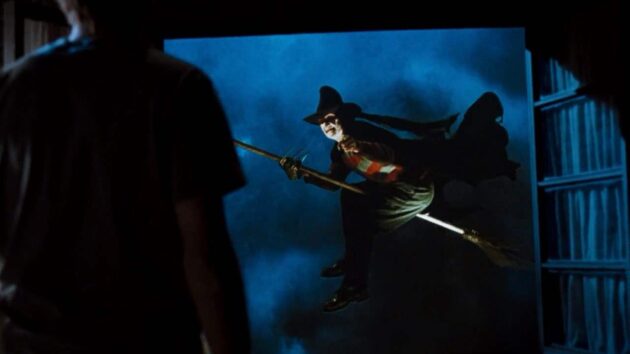 Freddy Krueger at the wizard school
Previous installments turned the visceral, grim fear of the early films into farce, and this entry fuses the worst of both approaches. Sometimes it attempts a quasi-psychoanalytical plot that grabs onto the pedophilia theme, or it toys with our phobias (the Q-tip), while also courting cartoonish humor, complete with sound effects. It culminates in one of the franchise’s worst scenes: the video game gimmick, a pitiful notion that aged faster than the “Power Glove” Freddy is stuck with. A sad finish that resolves with a disappointing climax that’s far from the grand finale it deserved.
Why is it watchable? You do get to see Freddy’s backstory, including a surprising reveal that Freddy had “killed Elvis” (a bold bit of trivia). You also get to see Englund without the makeup in a few shots. Johnny Depp shows up in a funny cameo. And some sequences are still worth watching, such as Carlos’s murder, where Freddy’s night-claw soundtrack haunts a chalkboard.
7. Freddy vs. Jason
Release: 2003 – Runtime: 1h37
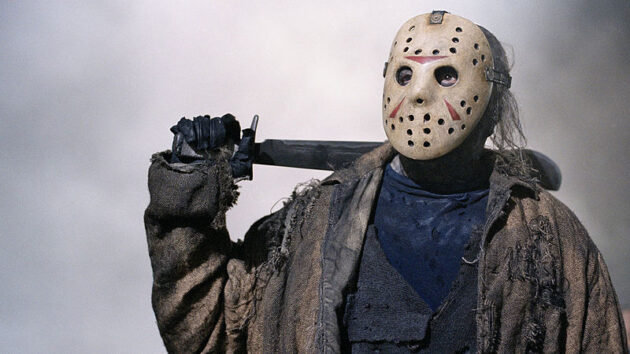 The Book of Eli 2
What happens in Freddy vs Jason? Poor Krueger is trapped in hell. The parents of his victims have found a way to completely suppress his memory in their minds, which blocks him from entering their reality. He thus enlists the help of another tenant of the underworld, Jason, armed with a machete, to restart the carnage and bring Freddy back into the memory and thus into the nightmares.
At his demand, the brute agrees to unleash a fresh spree of massacres that will be attributed to Freddy, allowing him to return to the public eye and their nightmares. But as a scheming little mastermind, he ends up pissing off Jason, who decides to face him. But how can the master of illusion and a giant warrior without fear possibly settle who’s on top? They fight like Mexican wrestlers, tearing each other apart almost completely, and then sink into the depths of Crystal Lake.
Why does this machete-wielding clash wobble? If this sort of improbable confrontation might pique some fans, it also carries several flaws or risks that the film never fully dodges. First, multiplying boogeymen, especially when their mythologies are so different, requires time to connect them and create a shared fictional playing field for them to exist in concert. It’s hard to sustain suspension of disbelief in such conditions.
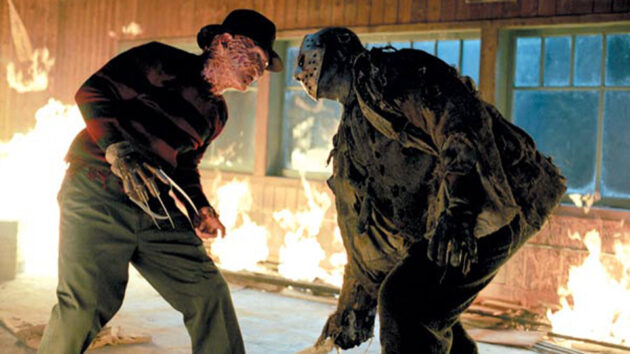 The good old days of Kyo concerts
This problem leads to another: the time spent crafting a pretend justification for the original concept ends up wasting the characters’ own development. Slasher victims are not inherently strong writing material—okay, not true for every film in the genre—but even if victims are stereotyped, you still need to elicit some empathy (or antipathy) so viewers care when they get picked off like fish.
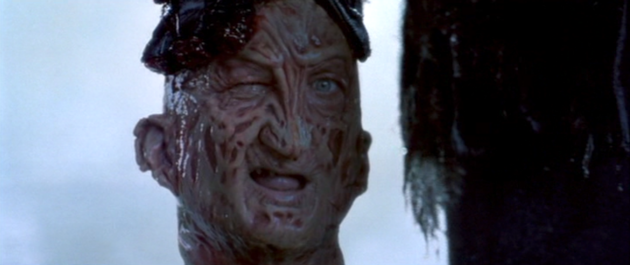 When the writer’s a little soused
Why can you still enjoy it? If you’re nursing a hangover from bad wine, and your head feels ready to explode, watching this might help put your woes into perspective. More seriously, if the film has any redeeming value, it’s largely due to the effervescent Robert Englund, who has rarely had the character’s reins in his hands this tightly and seems to take obvious pleasure in embodying him. Often, it’s him who gives a scene its coherence, or saves a grotesque setup with a rueful grin.
Similarly, you can savor the first third of the film, which is the tightest and most unapologetically exuberant. Jason’s kills verge on parody but remain wonderfully generous, while the illusions conjured by Freddy and his representation of hell also offer welcome discoveries, up to Carroll-esque appearance of a joint-smoking caterpillar. Not exactly groundbreaking, but enough to keep you chewing on it.
6. A Nightmare on Elm Street 5: The Dream Child
Release: 1989 – Runtime: 1h29
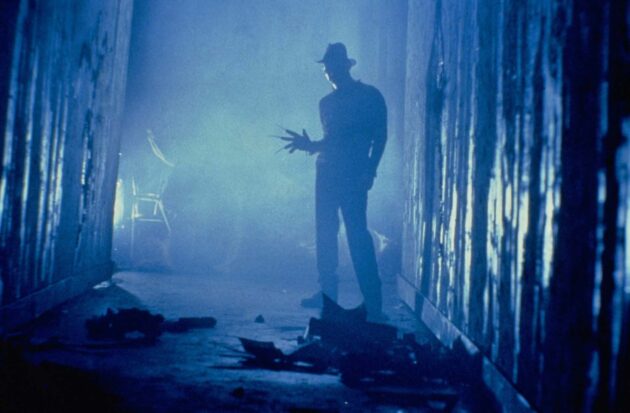 Blue Holocaust
What happens in Freddy 5? Alice, a survivor of the Dream Warriors, and Dan start anew after finishing school. As they celebrate, Alice has a nightmare in which she gives birth to a Freddy who’s practically begging for an abortion. In fact, she’s reliving the nightmare of Freddy’s mother, which means Freddy is back.
After Dan’s death, she learns she’s pregnant. She delves into the past of poor Amanda Krueger, frees her, and defeats the offspring with her unborn son (you follow this? We don’t). All of it, of course, in a dream.
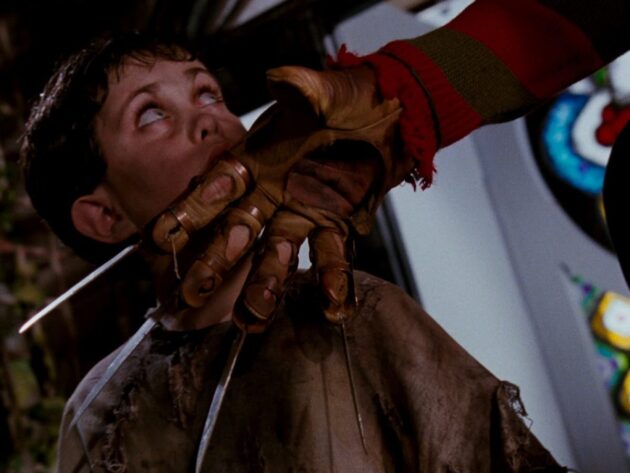 Let the professionals handle it
Why is it the beginning of the end? The Dream Warriors arc began with The Nightmare on Elm Street and reached its limit here. The production suffered from studio anxieties that pushed the schedule and budget, and a young, talented technician shot it in under six months, before going on to Predator 2. The film is not off to the best start, and it isn’t a surprise that it underperformed at the box office, ending the trilogy. It was time for the franchise to end, or at least to change its formula. The good news: A Nightmare on Elm Street 5: The Dream Child would, in theory, kill Freddy. The bad news: instead of a triumphant send-off, it delivers one final humiliation.
Two anecdotes prove frustrating in hindsight: originally, Peter Jackson had been tapped to bring his feverish, budget-busting approach to the project under precarious conditions; the story included a pregnancy angle that studio rejected (and would later be recycled for Freddy’s Revenge), and Wes Craven refused to return after reading the screenplay. Jack Sholder was eventually chosen (he reportedly had little love for horror).
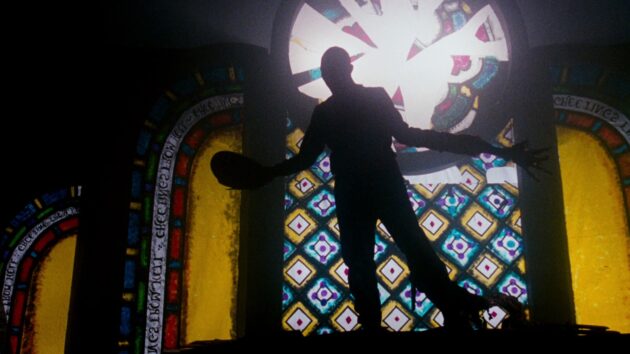 Some nice shots, though
False good ideas pile up, starting with a comic-book pass: in the wake of directors inspired by Sam Raimi, Stephen Hopkins, a storyboard artist, tries to pull one of his heroes into his own comic. The result is a cartoonish, drawn sequence and color play that don’t live up to the setting. Fun ideas, but they don’t quite work.
A sense of misfire is reinforced by the film’s overall preproduction chaos. While teenagers die one after another, the plot thickens to tie to both Freddy’s lineage and the original three films. This results in a muddled ending that overcomplicates the boogeyman’s mythology with a dream-based resolution and the powers of poor Alice. The fantasy world has stopped being a playground for experimentation; it’s become a pretext.
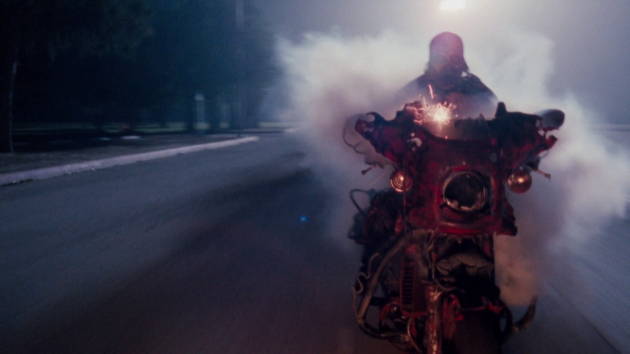 Tsuka(moto)
Why does it still work? Not as strong as its two predecessors, Freddy 5 remains full of bold visual ideas and memorable effects, like the title child animatronic atrocity created by David Miller. The murders dive into the grotesque with a more fantastical approach than the grounded Nightmare on Elm Street, leaning more toward body-horror. The dinner scene, a pastiche of Norman Rockwell and a rapid remake of La Grande Bouffe, features a revoltingly gross binge eating sequence. At the climax, Freddy bursts out of Alice in a striking effect. The death of Dan, though, is arguably inspired by Shin’ya Tsukamoto’s work Tetsuo, if his most famous film hadn’t come out the same year. The poor guy fuses with his bike in a flurry of close-ups Cronenberg would have approved in The Fly.
At this stage, rather than scaring or advancing a more complex mythology, the Freddy films continue to offer pure, unbridled fantasies of horror hampered only by censorship that kept some of the strongest scenes from fully delivering. Still, you can catch some cut scenes on YouTube.
Why is it still entertaining? Not as cohesive as the two films that came before, Freddy 5 nonetheless brims with aesthetic audacity and memorable effects, such as the grotesque, craspec animatronic child head. The killings push into grotesque territory, with a more overt body-horror feel than the first two films.
The dinner scene—a Norman Rockwell pastiche and rapid-fire parody of La Grande Bouffe—features a grossly messy binge. Freddy’s disappearance and the final reveal are well staged. The Dan death, as mentioned, inspires a Tsukamoto-like intensity that Cronenberg could appreciate. The film makes room for a few striking moments, even if the overall packaging feels uneven. The best scenes can still be found in behind-the-scenes cuts on YouTube.
5. A Nightmare on Elm Street 4: The Dream Master
Release: 1988 – Runtime: 1h39
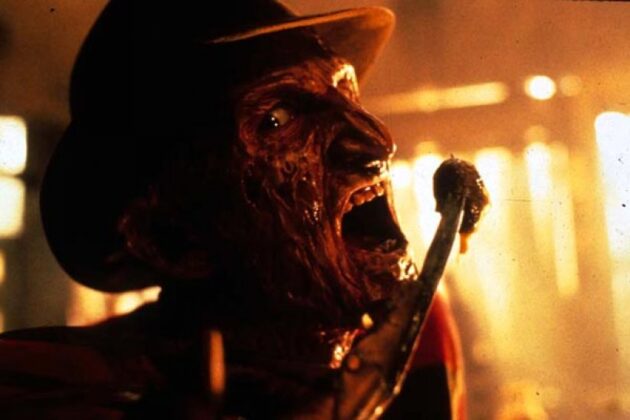 Your heart as a fan hits episode 4
What’s going on in Freddy 4? A year after Freddy 3, Nancy’s survivors Kristen, Roland, and Joey are discharged from the psychiatric hospital and believe Freddy is behind them. But Freddy isn’t done; he wants to finish the slaughter. He kills them, but their new friend Alice steps in.
Thanks to a handy power, she gains her late friends’ abilities and becomes a warrior. She frees all the souls Freddy has trapped, causing him to explode after seeing his monstrous reflection.
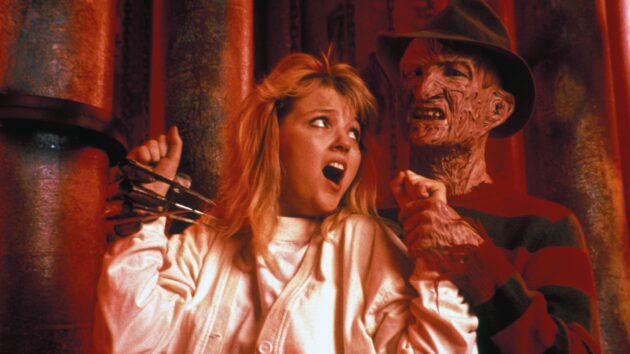 Quick cookin’
Why is Freddy 4 a Freddy who’s starting to derail? By now, the franchise was officially a money machine. The Dream Master was mostly a studio-driven obligation. Patricia Arquette didn’t want to reprise her role as Kristen after The Dream Warriors? She’s replaced by another actress. Wes Craven could have returned with a time-travel dream idea? Best to carry on with the remnants of the third film. There was no director yet, so production would begin without one.
Nevertheless, producers had good instincts in hiring Renny Harlin, a relative outsider who would later take off with Die Hard 2, Cliffhanger, Hard Target, and Blue Steel. Harlin explained to Slashfilm in 2021: “I got the job because I insisted. I kept telling New Line Cinema they should hire me. There was no script—just a skeleton. Then there was a writers’ strike, so they couldn’t hire anyone. They had a release date. We had to make the film. I happened to be in the right place at the right time.”
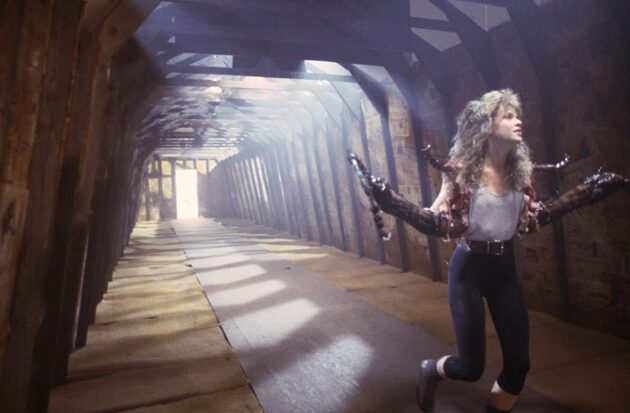 Big Bug
Why is Freddy 4 still a cool Freddy? In the climb toward absurdity, The Dream Master makes a strong case for the franchise. It brings back the characters from the previous film to kill them and introduces a heroine with magical powers to face Freddy. It continues to push the boundaries of taste and sense. It’s basically popcorn porn, in the sense that it obsessively seeks ever more bizarre, absurd, visually offbeat, and funny deaths.
Freddy 4 operates as a tunnel of grandiose, grotesque deaths. The resurrection-skeleton in a toxic dump, Freddy at the beach with sunglasses, the face-dividing pizza, the invisible kung-fu, the wheezy-mummy… Almost no one remembers the plot of Freddy 4, but no one forgets the water mattress or the La Metamorphose/La Mouche remake nod. The film even treats us to a surprisingly noble and cunning time loop, cleverly staged in the middle of the slaughter.
4. Freddy’s Revenge (A Nightmare on Elm Street 2)
Release: 1986 – Runtime: 1h27
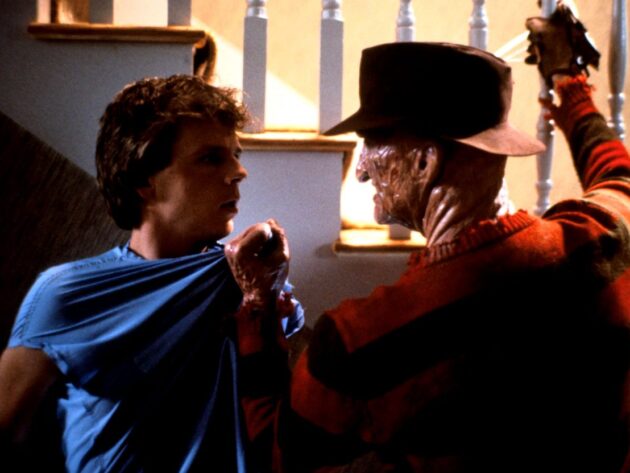 You’re me, or kill me?
What happens in Freddy 2? Five years after the first film, the Walsh family moves into the Thompson house. Son Jesse inherits Nancy’s old room, where Freddy attacks him in dreams. With his neighbor and budding girlfriend Lisa, he discovers Nancy’s diary that mentions Freddy. But the rules have changed: Krueger wants to possess Jesse’s body to manifest in the real world and kill through him.
In the end, Jesse somehow burns Freddy, seemingly defeating him. But, of course, not really.
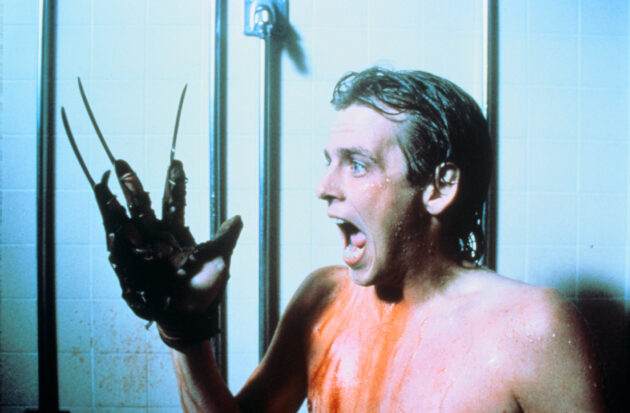 Freddy’s right hand of a teen
Why is this a superb Freddy? Because it’s the most improbable, strangest, and standalone sequel ever, which remains an outlier in the saga. Freddy’s Revenge was born under rough conditions, launched just months after the first film, to cash in on the craze. The development was quick, with an idea of a nightmare pregnancy rejected by the studio (later recycled for Freddy 5: The Dream Child), and Wes Craven refusing to return after reading the script. Jack Sholder (who had little interest in horror) was ultimately chosen to direct.
But beneath its surface of a routine sequel, Freddy’s Revenge stands as a singular case, almost like Halloween 3: The Season of the Witch. Here, Krueger doesn’t haunt dreams to kill—he seeks to possess the body of a teen to join the real world. A special rule in the franchise that breaks the spell of the dream-king’s phantasm. Craven thought the idea was stupid, and the ridiculous pool scene where Freddy is reduced to a run-of-the-mill slasher killing teens gave him the right to think so. Outside his dream realm, Krueger is merely a human-like superman, subject to the shallow laws of reality—almost, since he can still set things on fire and vanish into a hedge.
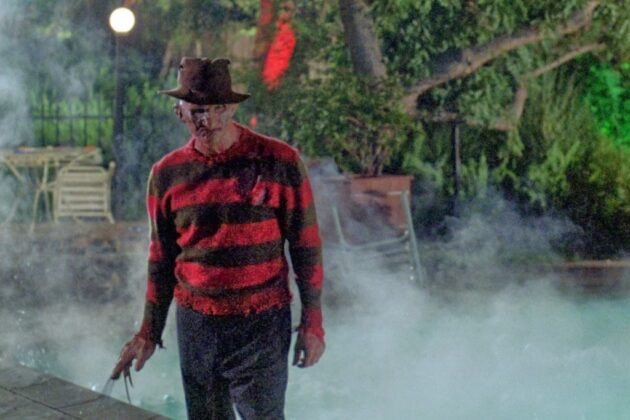 When the lights come back on at the party
But the real madness of Freddy’s Revenge is elsewhere: its reading as a gay coming-of-age story, so obvious that talking about subtext almost sounds like a joke. On screen, it’s a total hallucination, with everyone either in on it or completely wasted. It’s a glut of dialogue-heavy symbolism and explicit imagery that would have given Christine Boutin an attack.
Because Freddy 2 is indeed the story of a teen coming into his sexuality, where restraint for forbidden men becomes uncontainable. This desire manifests as Freddy Krueger, a monster who tries to possess his body—not to hook up, but to kill.
Characterized by a very feminine scream at the start, Jesse is tormented by Freddy, who relentlessly assaults his body (“He’s in me, he wants to take me, again!”). When he loses his virginity to his girlfriend, he bolts and hides with his friend Grady, during a scene on the sports field that reveals his well-built butt. He leaps on Grady as in a prime porno moment, then wakes in the night to kill him. And not just any murder: a force from within begins in his right hand, eventually forming an Alien-like birth. Grady, shirtless and sweaty, is impaled against the door by Freddy’s claws.
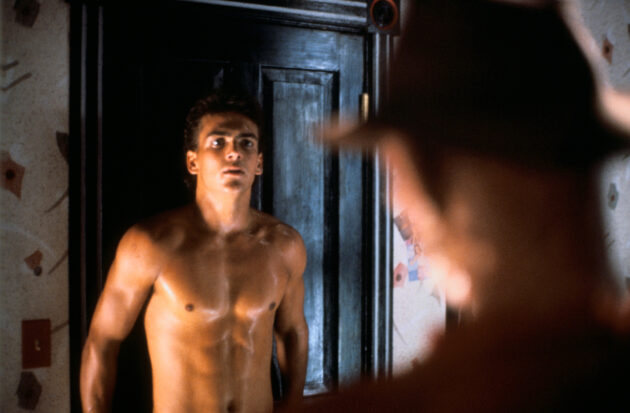 I’m gonna f— you up
The film reaches a dangerously suicidal level of craziness with the gym teacher’s murder, whom Jesse encounters in a gay club. The man has traded his shorts for leather, and drags his pupil back to school for a private session. Freddy returns to the charge for a totally absurd killing: strapped by the wrists, the teacher is dragged into the showers, where an invisible force (bondage) binds him, then his clothes are ripped off. In Jesse’s sight, he’s whipped to the point of blood, and finished by Freddy’s claws, with a shot lingering over the bloody showerheads.
Shot as soon as the film premiered, this gay reading has become a sad legend, as no one has owned up to it. Producer Robert Shaye and director Jack Sholder played naive for years, while screenwriter David Chaskin denied it to the point of suffocation; until he shifted blame onto actor Mark Patton’s interpretation. In any case, Freddy 2 was a success, grossing around $30 million on a $3 million budget. And even without focusing on the gay reading, the film remains a compact triumph with a handful of memorable, visually spectacular scenes (the bus-hallucination opening, Freddy’s invasion of Jesse’s body, and Grady’s bedroom). It is unquestionably a landmark installment in the saga.
3. Wes Craven’s New Nightmare
Release: 1995 – Runtime: 1h52
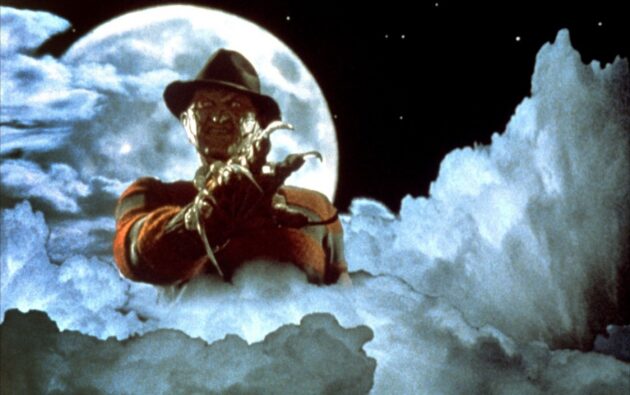 Under the moonlight, Freddy
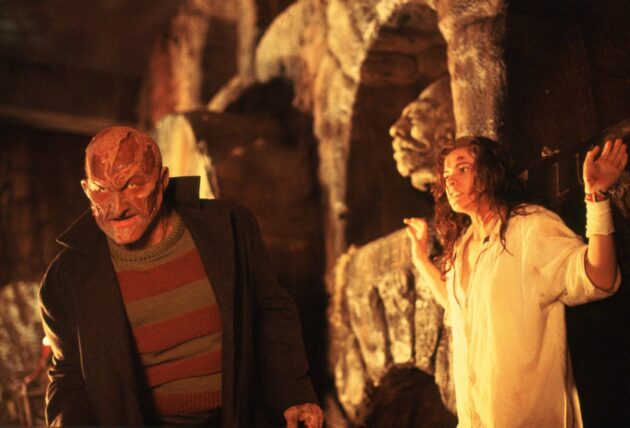
What happens in Wes Craven’s New Nightmare? Craven himself, playing Craven, prepares a new Freddy film. Heather Langenkamp, the heroine from the first film, agrees to reprise, albeit with major hesitations and a few nightmares along the way.
Craven explains that Freddy’s films trapped a supernatural entity, which is freed when the franchise ends. Making a new film becomes an urgent mission to save the world. But the entity, under the guise of Freddy, wants to kill Heather to reach reality, and also targets her son.
Heather gradually gets pulled into Freddy’s fiction, releasing him into the real world for good. She ultimately burns Freddy in an oven. Upon waking, she finds the entire script of the film, with Craven thanking her for returning to play Nancy and defeating Freddy.
 Final stint in the dream
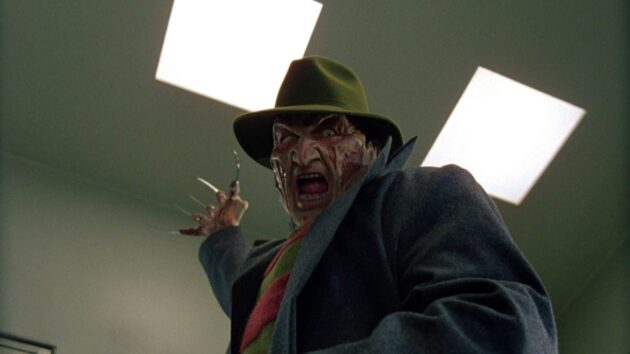
Why is it a wild Freddy? Because this film closes the loop in the most astonishing, poetic way. A director who had abandoned and dismissed the franchise returns to light a fire for one final installment that marks an irreversible turning point. Freddy can’t recover from such a meta twist, where the director appears in his own role, facing Robert Englund and Heather Langenkamp. The boogeyman is thrust into a new dimension, which uproots the entire mythology and allows the film’s artists (notably Nancy’s actress) a tremendous emotional charge. While pushing the core idea of the saga—that believing in Freddy gives him life—forward, Freddy’s New Nightmare travels into exciting territory.
 It’s the hospital that’s out of whack
Why is it still oddly sturdy? Because it’s a very self-reflexive and thoughtful film, and Craven’s meta-wunderkind approach is a fascinating lens on Hollywood and the horror cycle. It’s not just a fright film; it’s a meditation on the power of cinema itself. The movie is lean, with restrained gore and a focus on psychological dread rather than number of kills. There are some truly chilling moments, particularly in the reveal of Freddy’s true nature and in Craven’s direct involvement in the nightmare world he’s created.
2. A Nightmare on Elm Street 3: Dream Warriors
Release: 1987 – Runtime: 1h36
 If Freddy is good, it’s FreddyMine!
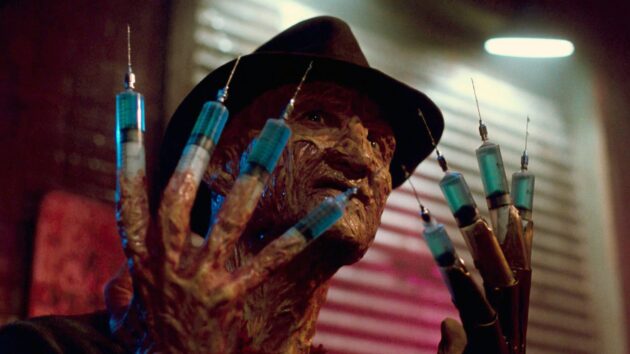
What happens in Freddy 3? We catch up with Nancy, the survivor of the first film, now a psychiatrist specializing in dream therapy. Freddy Krueger intrudes into the dreams of a group of teens she’s treating. Among them, Kirsten has the power to pull others into her dreams.
For the first time, the victims of the razor-clawed killer get to attack him on his own turf and invade the realm where he rules. Nancy forms a true teenage assault team that, with the support of her father in the real world, faces Freddy. The team learns the mystic and horrifying origins of Krueger, whose mortal remains must be purified under a dark Catholic rite while the teens assault him in the dream world.
What follows is a deadly labyrinth-like showdown that results in the teens’ victory, but Nancy’s death, pierced by Elm Street’s bogeyman, punctuates the film. Yet the final images hint that something of the killer might have survived.
 Grab the stage, bitch!
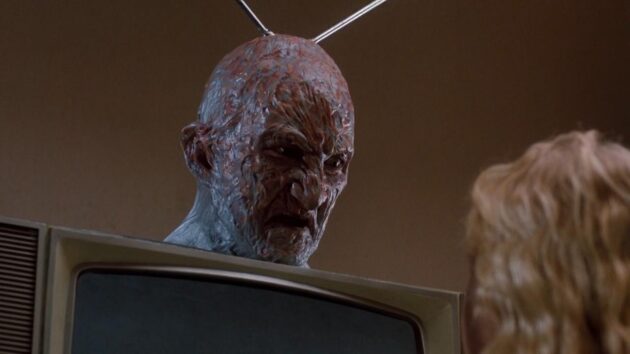
Why is this Freddy the second birth? After the success of Nightmare on Elm Street, which offered horror fans a instantly recognizable new boogeyman, the license would be reimagined in a second film that partly retook its concept. The third installment returns to the franchise’s mythic roots while adding two ingredients that become essential: a higher degree of wildness that sometimes reads as second-degree, which pushes the kills into the realm of gorier absurdity; and a deeper dive into the dream world, enabling the later films to go totally unhinged.
Freddy is now fully realized, able to appear in any form, to craft the cruelest, most obscene cruelty, including turning into a giant green slug-like entity that devours children, inhabiting a television, or grabbing you by the tendons to swing you around like a puppet of blood.
Technically, the film’s mastery is exceptional, with a parade of inventive sequences. It blends animatronics, maquettes, makeup, projection, and zany perspectives in vertiginous set pieces, offering a marvelous tour through the evolution of special effects—from Méliès to Tom Savini’s gore experiments. It’s no accident that Freddy 3: Dream Warriors was helmed by Chuck Russell, a master of practical effects who would later direct the charming, grotesque Blob (which came out two years later).
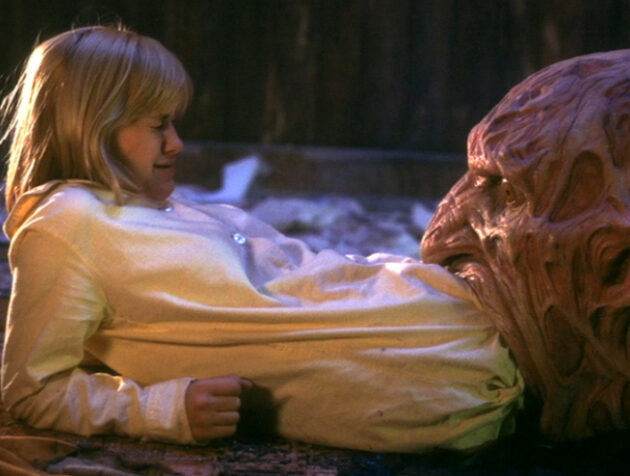 A final verse to go
Why nitpick? Even with Englund’s exuberant performance and young Patricia Arquette’s promising presence, the entire cast is, frankly, weak. The young actors struggle to hold interest beyond a plate of endives braised in a convection oven.
Moreover, while enriching the villain’s mythology is something every horror franchise must do, this film’s grafting feels dubious. Specifically, the arrival of nuns revealing the killer’s grim origins under candlelight and advising blessed water treatment doesn’t entirely fit. It gives the impression the screenplay is being dense by force, drifting into a Catholic-porn vibe that’s kitschier than intriguing.
1. A Nightmare on Elm Street (Freddy 1)
Release: 1985 – Runtime: 1h31
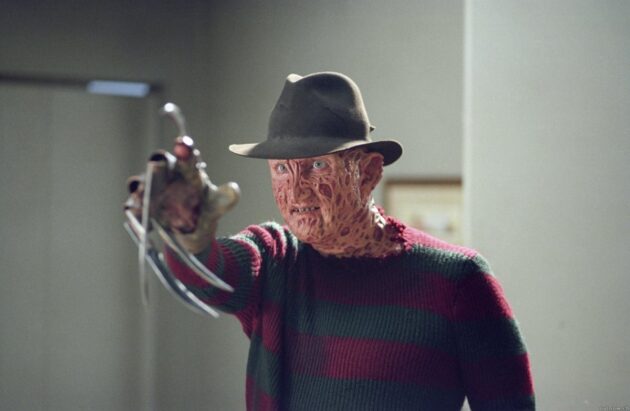 In the legend
What happens in the first Freddy? Life on Elm Street was peaceful until several teenagers realize they’re all having the same nightmares. A strange guy hides in the shadows, wearing a red-and-green striped sweater and long claws… Things get complicated when they begin dying in their sleep, prompting the police to draw hasty conclusions. And obviously, caffeine intake goes way up.
First institutionalized in a sleep clinic, Nancy learns from her mother that their tormentor is none other than Fred Krueger, a child killer (perhaps a rapist) released due to a procedural flaw and burned by the townspeople. She sets out to defeat him in reality. But Freddy has more tricks up his sleeve, and he’s about to torment generations of teenagers.
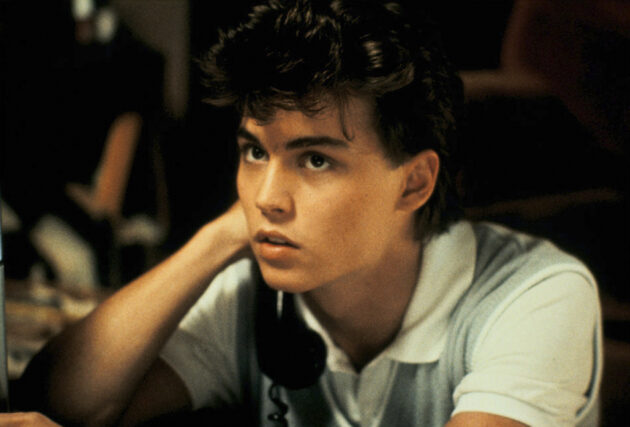 Young and Johnny
Why is it a definitive masterpiece? This dossier, born from three horror fans who loved the franchise, almost places “A Nightmare on Elm Street” at the top, led by its greatest advocate (can you guess who?). But the evidence is clear: while the franchise has delivered some great horror entertainment, A Nightmare on Elm Street remains not only a legendary feature film but also one of the most inventive and popular horror films ever released by the United States, representing the apex of the genre.
When Wes Craven approached the studios with his concept of forced sleeplessness for teens (Disney wanted to turn it into a children’s tale), the slasher was already somewhere between fading and reinventing itself. The big figures of the genre – Michael, Jason – were losing their spark and their serious edge. Freddy, despite later turning into a clown of gore, was a particularly vicious character in 1985, a sadistic bogeyman whom you could only escape by breaking one of humanity’s fundamental survival rules: sleep.
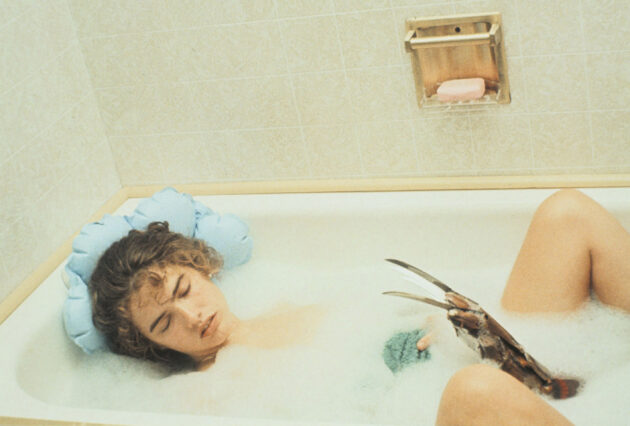 Take a shower
The torment he imposes on this group of teenagers is extraordinarily cruel: he torments them to the depths of their subconscious, drives them to their limits, and sets up the inevitable moment when they fall asleep and he drags them into ultra-spectacular sequences (especially considering the budget barely topped one million dollars), episodes that have become iconic. Huge streams of blood splashing a room, infinite bathtubs, sopping embalming bags… The murder sequences are truly nightmare-inducing and barbaric. The viewers of the era hardly believed their eyes.
The slasher genre often reflects adolescent anxieties, and A Nightmare on Elm Street is perhaps the most luminous example of that. Freddy is both a misunderstood form of psychosis shared by a group of friends—source of injustice and suffering—and a dark heritage left by the previous generation. The protagonists, while they may be a bit foolish, are not mere fools; they’re resilient victims rather than fools who deserve what’s coming. The parents are the real villains, absent figures obsessed with the American dream.
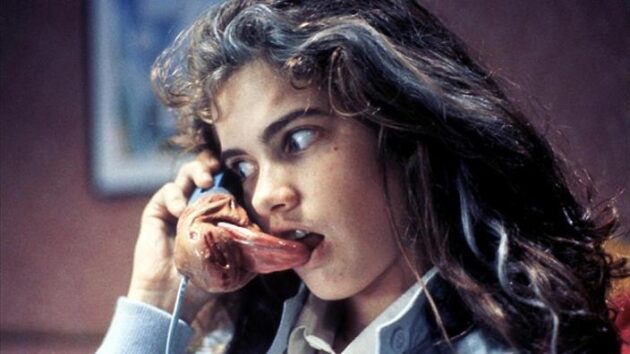 And a rather unsettling sexual subtext
A generational conflict more sinister than the one told in Back to the Future the same year. The little American suburb’s street hides a shameful communal mindset, and its adolescents are the first victims. Spectacular, intelligent, and most of all mean, A Nightmare on Elm Street may be the perfect slasher.
Its nearly outrageous use of fantasy, enabled by the dream premise, temporarily revived the genre and inspired the best entries. Freddy is no longer just a myth: he’s a model.
