
X-Men: Apocalypse didn’t really win over fans of the saga. According to the film’s editor, the problem was baked in from the script stage.
As iconic as it is uneven, the X-Men saga has weathered plenty of highs and lows. Since the release of X-Men: The Last Stand in 2006, many fans of the first two installments were deeply disappointed. We were still far from hitting rock bottom, as the franchise would prove more than once, but we hadn’t yet tasted what the saga could deliver at its most exhilarating.
In this sense, two back-to-back X-Men films, X-Men: Days of Future Past and X-Men: Apocalypse, form a striking synthesis. While opinions differ, it wouldn’t be crazy to view them as a microcosm of the franchise’s highest highs and its outright lowest lows. How could these installments, made one after the other and often by the same teams, yield results that are so diametrically opposed? John Ottman, the saga’s editor and composer, recently weighed in on the question.
MUTANT C’EST DE L’ARGENT
Longtime collaborator of Bryan Singer, John Ottman served as both editor and composer on X‑Men 2, X‑Men: Days of Future Past and X‑Men: Apocalypse. He’s even credited as a producer on the latter, though he says he already held a similar role on the previous film. In an interview on the YouTube channel Half the Picture, he explained that the production was far more collaborative on the time‑travel installment:
“On Days of Future Past, I avoided a lot of trouble. Bryan [Singer] told the producer: ‘If John wants something, we’ll do it, because we’ll save money that way. If we do it now rather than in reshoots, which are much more expensive.’ And there were scenes where I said, ‘That scene doesn’t make any sense, we need to shoot another one.’ I described the scene, Simon, the screenwriter, wrote it, and then we went and shot it. We did that on three scenes. Big, costly scenes. And once in L.A., we hardly had any reshoots to do.”
A method described as virtuous by Ottman, though unfortunately not carried forward afterward:
“When Apocalypse came around, there was a complacency: ‘Everything went well last time, so it’ll go well again!’ They had forgotten everything. When I got the script, I wrote pages and pages of notes. I could see everything that was about to blow up in my face. For my own sanity, I couldn’t let the script stay as is. Except they told me, ‘No, John, don’t worry, everything will be fine.’ So we went into production on a film that didn’t even have a third act. It was simply: ‘An attack. They die. This person makes it out. This character dies. They win.’”
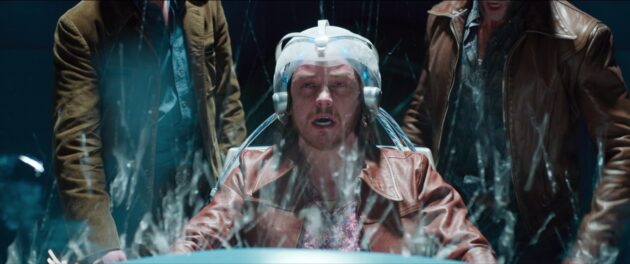
Beyond his direct involvement, Ottman links these troubles to a narrative stance that became too complex to squeeze into a single film:
“The big problem is that we have to introduce all these new characters at the start, but it’s hard to do that in a way that’s as fun as possible while also launching the plot. And then there was the villain who had a head much too big. My God, he looked like Frankenstein.”
So, will the next X‑Men arrival in theaters, in Avengers: Doomsday, sit in the same league as Days of Future Past or as Apocalypse? The answer arrives in theaters on December 16, 2026.
