I like to be in America
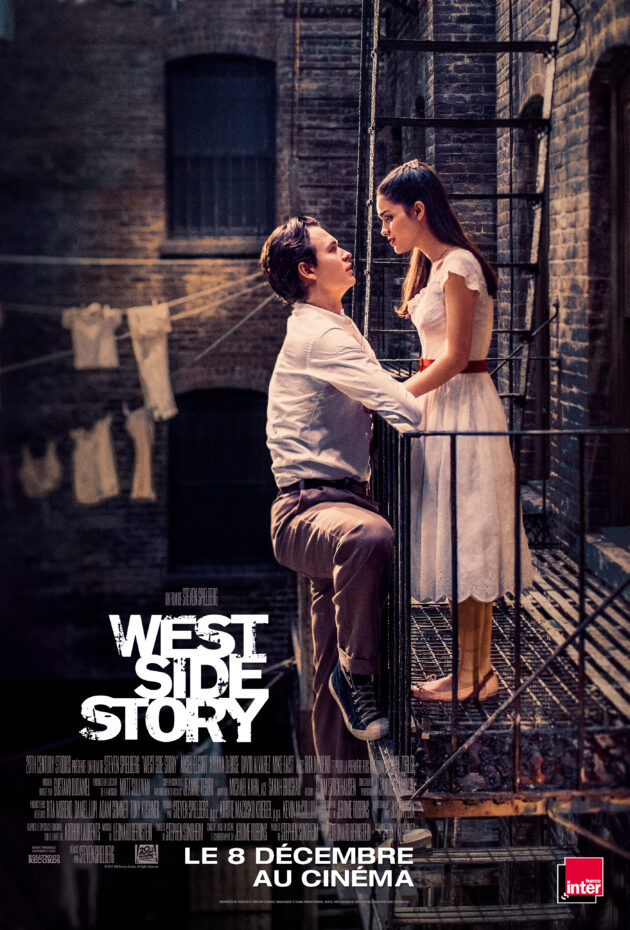
For his lifelong dream of turning a Broadway musical into a film, Steven Spielberg set himself a double-edged challenge: to adapt on the big screen one of Broadway’s most iconic titles—perhaps the most iconic of all—and to do so after the 1961 film adaptation, which won 10 Oscars and is rightly regarded as a masterpiece. And as hoped, this peak meeting between Broadway and Hollywood is a bold artistic achievement that can already be called a new masterpiece.
With contagious enthusiasm, the 74-year-old filmmaker once again demonstrates his eclecticism without ever betraying the source material or getting trapped by it. Screenwriter Tony Kushner (already credited on Munich and Lincoln) preserves the essence of the work and respectfully revisits Leonard Bernstein’s scores and Stephen Sondheim’s lyrics, but his main aim is to foreground the underlying themes of the original piece. The result is a feature-length film that is more frank, brutal, and political, giving street gangs and their social malaise as much weight as the romantic story of Maria and Tony.
Benefiting from a historical vantage point that Jerome Robbins and Robert Wise didn’t have, this new West Side Story foregrounds the gentrification of New York’s poorer neighborhoods, especially the Upper West Side, which is now a contested ruin fought over by two orphaned clans who will inevitably be dispossessed. From the opening, the film looms over demolition sites and plunges into rubble, dust, and shattered buildings through a masterful long take that immediately frames this urban upheaval with the look of a civil war.
The dialogue, cleverly revised, tackles racism, poverty, fear, and the sense of exclusion facing the two immigrant groups more directly, with the film emphasizing both their similarities and their differences from a more contemporary perspective. To achieve this, the Puerto Rican community and culture are foregrounded, with entire lines delivered in Spanish (without subtitles), while the screenplay gives them more interactions and invites us into their intimate lives more than the original film dared to do.
Just as the screenplay sheds new light on the character Anybodys, a trans man who dares to claim his masculinity aloud, and on Anita’s assault by the Jets, explicitly staged as a rape attempt.
Someday, somewhere
While it leans more toward political commentary and looks back to better describe the crosscurrents of today’s American society, West Side Story remains a vibrant and enchanting reimagining, with every frame a jewel in service of a grand work of craftsmanship. That jewel is partly crafted by Janusz Kaminski, the director of photography who has collaborated with Spielberg since Schindler’s List, and who plays with shadows, light, and color to create an aesthetic that is delicate and simply sublime.
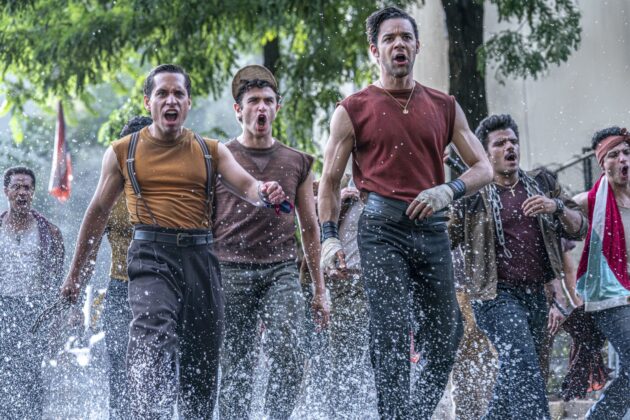
Spielberg himself moves away from the stage origins of the material and opens up the frame by shooting outdoors to intensify the musical spectacle and give it greater scale and realism. To underscore this authenticity, he roams the neighborhood’s streets more—the very heart of the conflict—in euphoric, kinetic numbers, especially the revival of America with its carnival-like mood. From the opening, he breaks the static feel of the first adaptation, further establishing the cinematic treatment of his remake.
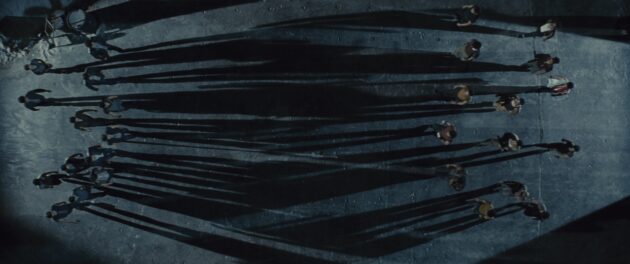
His camera no longer remains a spectator of the ballet, but actively participates in it. The lens blends with the performers, rises above them, follows their lithe movements, and even directs them at times, becoming an integral part of Justin Peck’s pulsing choreographies. West Side Story reuses the same sequences, rearranging them deftly to give the songs a new meaning.
One of the most striking examples is Rita Moreno in the created role of Valentina, Doc’s Puerto Rican widow, who inherits the melancholy tune Somewhere and lends the music a more universal symbolism, since the number originally belonged to Maria and Tony after the Jets and Sharks’ brawl.
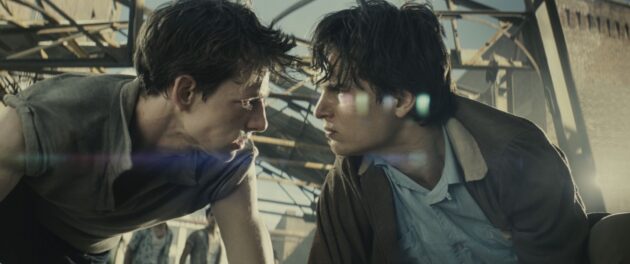
The song Cool arrives earlier in the narrative and pits Riff against Tony. This moment, meticulously choreographed to fuse dance and fight, intensifies the dramatic momentum and underscores the inexorable tragedy to come. Instead of reuniting the Jets, this ripping confrontation fractures the group’s dynamic, breaking Tony and Riff’s once-fraternal bond. The gun thus becomes a more central motif, signaling the escalation of hate and the machinery of cycles that entrap the two gangs.
THIS IS THE VOICE
Finally, it would be disingenuous not to devote a final section to the cast, featuring several names that are still relatively unfamiliar to the general audience, yet far closer to the characters they inhabit. Beginning with Rachel Zegler, the 20-year-old who plays Maria, whom Spielberg gives her very first major screen role. With a youthful face, graceful bearing, and aDisney-princess-type voice, her upcoming turn in the live-action Snow White feels almost inevitable.
The young actress, by surprise or design, steals the spotlight from her co-star, Ansel Elgort, who brings more fragility and sensitivity to Tony, lending him a smooth yet somewhat introverted voice. The film’s emotional center also hinges on Rita Moreno—formerly Anita—whose rasping voice rises for one of the film’s most poignant moments. Her character acts as both a generational and ethnic bridge, giving her more resonance than the Doc played by Ned Glass.
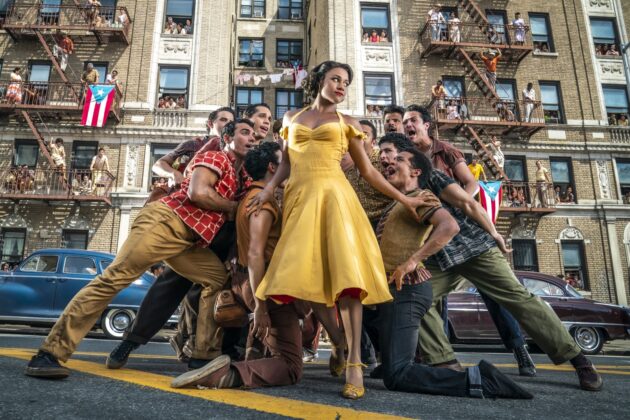
Yet the female cast is quickly matched by the electrifying Ariana DeBose. The actress steps into Rita Moreno’s shoes without hesitation, just as Mike Faist embodies a more agitated Riff and David Alvarez a more impassioned Bernardo. Beyond their undeniable singing and dancing prowess, the ensemble adds real complexity to the characters, just as Spielberg seizes the material to give it a fresh tonal direction while never denying its heritage.