
Valerian and the City of a Thousand Planets by Luc Besson was a financial disaster. How big was it, and with what consequences?
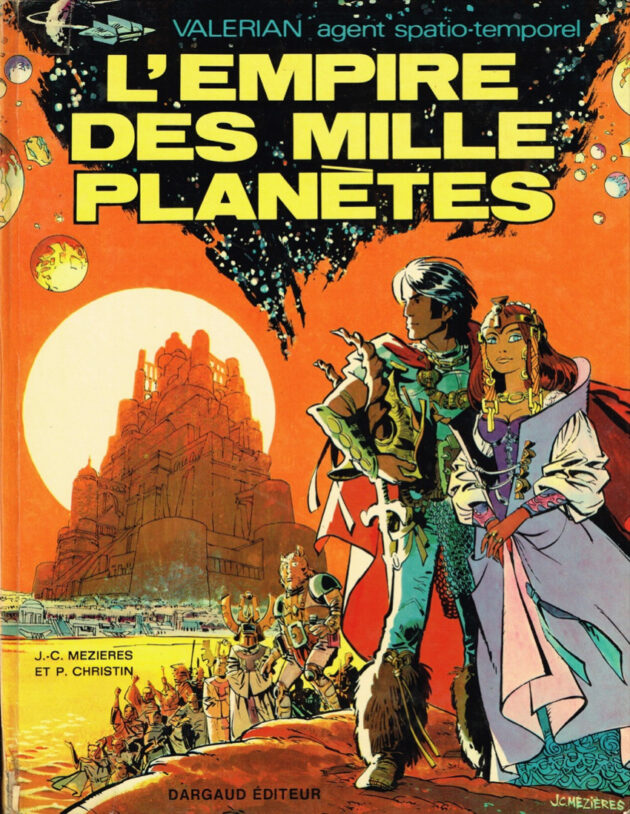
On May 12, 2015, Luc Besson announced with fanfare that he would adapt Valérian and Laureline, the French comic by Pierre Christin and Jean-Claude Mézières, to create a sci‑fi blockbuster. Christophe Lambert, then CEO of EuropaCorp, spoke bluntly about the ambitions: “This will be our Star Wars. This franchise has the potential for ten films.”
A little more than two years later, Valerian and the City of a Thousand Planets, starring Dane DeHaan and Cara Delevingne, hit theaters. First in the United States, where it turned into a box‑office disaster. Then in the rest of the world, where there was still hope for success. At least until reality caught up with the spacetime agents.
The Bronzers + hipsters
BIG FRENCH BUDGET
Valerian and the City of a Thousand Planets officially cost €197 million, according to CNC, or more than $230 million. A massive budget, higher than Spider-Man: Homecoming ($175 million), Thor: Ragnarok ($180 million), or Wonder Woman ($149 million), according to official figures. And also higher than Mad Max: Fury Road ($150 million).
On top of this official budget come various marketing costs to promote the film—ads, actor tours around the world. This figure is closely guarded by the producers, but it can quickly climb to $100 million for blockbusters, or well beyond that for monsters like Avengers: Endgame or Jurassic World: Fallen Kingdom.
In the case of Valerian, financed outside the Hollywood studio system but presented as a classic blockbuster, things were even murkier. At the time, Deadline wrote that this promotional budget was around $60 million, based on a hidden agreement between EuropaCorp (France) and STX (US distributor).
Bearing this in mind, the total budget neared about $290 million for Valerian.
 Valerian and Laureline, Luc Besson’s version
N however, even before the film hit theaters, Luc Besson publicly asserted that the financial risks were low. The filmmaker told Screen Daily in June:
« As with every production company, we greenlight a project only if at least 80% of its budget is covered. For Valérian, we covered 96% with pre‑sales. (…) The risk for EuropaCorp is thus 4% of the budget, so there is no real risk. It’s more a risk to reputation. If the film flops, people won’t trust us to execute this kind of project again. So it’s not so much a financial risk as a human one. »
In the same interview, when asked about the cast, he added: “Cara has 20 million followers on Twitter and Rihanna 50 million.” A non‑negligible marketing angle and, evidently, part of the machine: actor contracts now commonly include such “personalized” communication clauses, which can weigh heavily in the promo machine.
 Cara Delevingne, or the limits of Twitter, then
BIG GLOBAL FLOP
Valerian and the City of a Thousand Planets ended its run at around $226 million worldwide. That’s low for a blockbuster of this scale and for the franchise ambitions clearly announced. Remember, all box office receipts do not go entirely to the producers and distributor, and the share depends on territories (to keep it simple: best case, 50%; worst case, 25%).
In 2017, this figure was light‑years away from Beauty and the Beast and Fast & Furious 8 (each around $1.2 billion), Despicable Me 3 ($1 billion), Spider‑Man: Homecoming ($880 million), or films like Dunkirk ($525 million), The Mummy ($409 million), and Resident Evil: The Final Chapter ($312 million). Even more tellingly, Valerian posted a score similar to Baby Driver, which had cost around $35 million. It was, in short, a flop.
 The accounting department at the end of Valerian
In the United States, it was a disaster: about $42 million. By comparison, the box‑office champions are far ahead: more than $504 million for Beauty and the Beast, $412 million for Wonder Woman, or $389 million for Guardians of the Galaxy Vol. 2. Valerian sits more in the neighborhood of King Arthur: The Legend of the Sword, which barely surpassed $39 million (and also was a total disaster).
That was a feared figure from the start since Valerian and the City of a Thousand Planets opened with just $17 million, landing in fifth place behind Christopher Nolan’s Dunkirk (roughly $50 million), the comedy Girls Trip, Spider‑Man: Homecoming, and War for the Planet of the Apes—the latter two not even new releases that weekend.
The attendance dropped by more than 62% in its second week. By week four, the film hadn’t grossed a single million. Screen counts fell rapidly, from more than 3,500 screens at launch (roughly 500 fewer than most blockbusters) to under 1,800 by the third week. Despite a rebound during the September holidays, the film faded after nine weeks.
To put that in context, The Fifth Element stayed in US theaters for fifteen weeks in 1997.
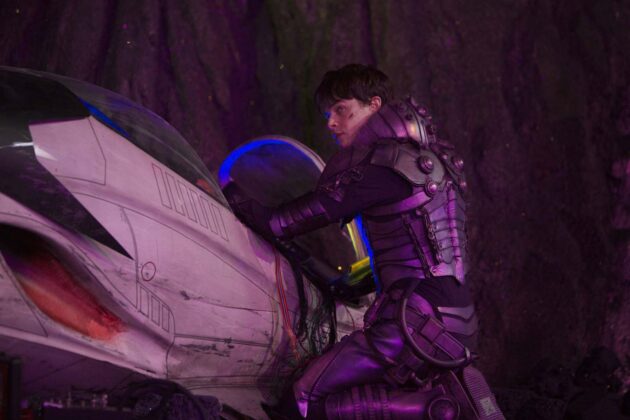 I fix my machine and I get out
FRENCH FLOP
The French public answered Besson’s call? Yes and no. About 4 million people watched Valerian and Laureline in theaters. The Besson blockbuster ranks as the 5th biggest hit of 2017 behind Star Wars: The Last Jedi (7 million admissions), Despicable Me 3 (5.6 million), Raid Dingue (4.5 million) and Coco (4.4 million). In terms of French cinema, it’s the second biggest success, behind Dany Boon’s comedy.
With 1.6 million admissions in its first week, it also represents one of the best starts of 2017, behind notably Fast & Furious 8 (1.8 million) and Despicable Me 3 (1.7 million). There, it takes the gold as the top French film.
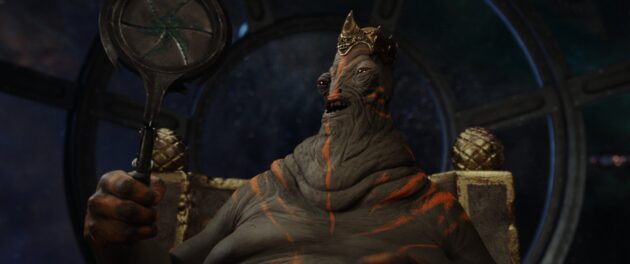 How big is this record, really?
Néanmoins, Valerian and the City of a Thousand Planets struggles to compare with Besson’s earlier French successes: it is only his fifth biggest hit, behind Le Grand Bleu (1988, 9.1 million), The Fifth Element (1997, 7.7 million), Arthur et les Minimoys (2006, 6.3 million), and Lucy (2014, 5.1 million). It sits just ahead of Arthur et la Vengeance de Maltazard (3.9 million) and Nikita (3.7 million).
As for opening weekend, it’s almost the same story: the blockbuster performed worse than The Fifth Element in 1997 (1.9 million) and than Lucy in 2014 (1.9 million). The biggest budget of his career to date was thus far from translating into his biggest success.
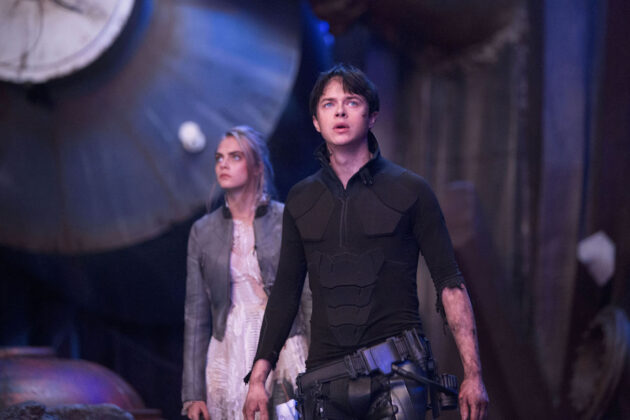 “Uh… are those the right numbers on the board?”
COOL RECEPTION IN ASIA
Valerian and the City of a Thousand Planets fared the best in China (62 million dollars), Russia (14.3 million) and Germany (13.5 million).
China turned out to be a key territory, both because the country has become a steady revenue source for big‑scale cinema, and because the Chinese company Fundamental Films helped finance the film (about $50 million), in addition to distributing it in the territory.
That arrangement was part of a broader deal with EuropaCorp: in 2014, the Chinese company helped distribute fifteen films, then invested in the French company in 2016 to acquire 27.9%. This alliance partly explains the presence of Chinese star Kris Wu in the cast.
 Rihanna, an obvious commercial lever on the international stage
The late‑August China release date was a major event, and Fundamental Films pushed the blockbuster to the max with about 6,000 screens (in the US, there were “only” 3,553), and around 80,000 sessions daily. Valerian and the City of a Thousand Planets thus opened strongly in China, taking in $28.8 million at release. By comparison, Lucy, with fewer resources, opened at around twenty million in its start.
Valerian then dropped in its second week against Dunkirk, ending up in fourth place after a 78% decline. Spider-Man: Homecoming wrapped up its run by early September, earning more than $116 million.
Subsequently, Besson continued to believe in a sequel (the second film would be cheaper, the third as costly as the first), pointing to the spectacular enthusiasm of fans. He also counted on Japan, where the film released much later, in March 2018… without much spark.
Valerian and the City of a Thousand Planets needed to really hit big to balance the books. And it did not happen.
 Who wants the stuffed animal of the critter that shits pearls for Christmas?
FINDING THE CULPRITS
Never simple to justify a box‑office failure, which hinges on a thousand factors. Was the film bad? Many good films flop, and many mediocre ones succeed, so you can’t pin it on quality alone. Was competition in theaters fierce? Valerian did find itself in the same lane as Spider‑Man: Homecoming, Dunkirk, and The Planet of the Apes: War, notably.
Was it hard to sell? The Valérian graphic novels are acclaimed, but certainly not enough to excite a broad audience worldwide. It was thus a challenge: launching an original franchise with unknown characters in a fairly conventional SF universe—one that the public would have to accept and adopt. And as with the blockbuster John Carter, seen as an anti‑Star Wars, Valerian and the City of a Thousand Planets likely suffered from being branded a Star Wars wannabe.
Finally, the cast. Regardless of the talent (or lack thereof) of Dane DeHaan and Cara Delevingne, the duo wasn’t a household draw. The presence of Clive Owen and Rihanna didn’t help to spark interest, and with no strong brand, no ready‑made franchise, and no big faces to sell, the film faced real uphill battles to exist.
 From the start
Luc Besson, for his part, offered another explanation. To Collider, he explained that the press was to blame:
« In reality, we had a very, very bad press campaign in the United States for the theatrical release, very bad. That’s my opinion. About 70% of the reviews were positive and 30% negative, as usual. Some of the negative coverage spread worldwide, some articles gained traction… (…) They end up in front of anyone who holds a newspaper, even in China. They read this Hollywood piece… The entire company was shot down by one or two pieces. Then the rest of the world wonders, “Woah, what happened in the U.S. with this film?” And after that it became very difficult to reach people and say, “Guys, judge for yourselves, go see the movie.”»”
A refrain a bit too familiar, given that Besson has often pulled the “press victim” card, especially in France… while a quick look at his career shows he enjoyed broadly favorable coverage.
 You’re allowed to talk about Valerian if you love Valerian
Director Julien Leclercq (L’Assaut, Braqueurs) chimed in on Instagram, citing reviews from Libération, Le Monde and Mad Movies:
“I deeply admire people who MAKE things… Imagine, rally, finance, tell, build, overcome… That’s the daily challenge for a filmmaker and his team… given its visual and financial ambitions, Valerian has to work everywhere, especially in France!! Each film is a SME employing hundreds of people each time… and Valerian’s success will help fund more challenging author‑driven projects…
Bravo to Luc Besson for pulling off such a feat!! To keep this shoot in France… it’s colossal! And so necessary. French cinema needs it! So all the Isabelle’s, Didier’s and Alexandre’s who are paid to say “this is good… this is not good,” wake up to your “French bashing” and what it takes to run a project like Valérian! Let’s all support this film! Long live France! Long live Valerian! Long live Luc Besson!
The promo didn’t miss the chance to trumpet these industry supporters, including Peter Jackson, who lauded the film’s success—its visual effects were handled by his Weta company. In other words, the equivalent of James Cameron declaring Terminator: Genisys a success (before recanting years later).
 “Okay, blame the press, nobody thought of this before us”
To ScreenRant, Besson spoke of this new world where a film has a very different life cycle.
“What’s happening today is a bit different from five or ten years ago. The way people consume films has changed. People are busy, so they go to the cinema, but your film stays on screen for three weeks. When I released The Fifth Element, we were in theaters for 12, 15, 20 weeks… Now you stay on screen for two, three weeks, VOD arrives quickly, then physical video, television, so sometimes people want to see a film and miss it, so they opt for another distribution path. So, let’s wait for the end of what we call the first cycle, i.e., the theater, the VOD, the video, and we’ll see what the audience really is.”
In short: it was impossible for him to gauge Valerian’s success at the box office. Yet nothing since indicated the film earned a second life on home video.
 The fading tide of hope
EUROPACORP IN TURMOIL
Côté business, Luc Besson kept saying the risk was minimal given the cost of Valerian and the City of a Thousand Planets had already been amortized before release. Nevertheless, the impact on EuropaCorp could not be ignored. After the disastrous US release, the company’s value fell by about 8.41% on Monday. In the financial press, there were reports of a more than 40% stock drop.
The EuropaCorp board then terminated the tenure of Edouard de Vésinne, the Deputy CEO since April 2016. Officially, because he was leaving to start his own company. Simultaneously, CEO Marc Shmuger announced he would depart at the end of the year, after three renewals since his arrival in 2016.
Already chairing the board, Besson took Shmuger’s place, and also filled in for de Vésinne for an undefined interim period. It’s hard not to read this as a decisive move to right the ship after such disappointing blockbuster results.
“The books aren’t looking good”
Then, on June 28, just weeks before the film’s release, EuropaCorp announced red ink in its books, with a historic deficit of around €120 million. A worse balance sheet than feared in February, due to several box‑office misfires (Miss Sloane with Jessica Chastain, The Circle with Emma Watson, and Oppression with Naomi Watts).
As Besson himself spelled out the stakes: “If the film is a huge flop, we won’t be trusted to pull off this kind of project again. It isn’t so much a financial risk as a human one.”
After that, EuropaCorp logically refocused on mid‑budget action and sci‑fi formulas, with Anna, the film Besson released right afterward, intended as a smart move: a blend of Léon and Nikita, with a $30 million budget. Bad call: the film flopped (roughly $31 million at the box office), a far cry from the triumph of Lucy (nearly $460 million).
The Besson empire was fragile, and Valerian proved to be the fatal blow.
Note that the director defends himself against the giga‑flop label. In 2024, he told The Discourse: “Valerian wasn’t a success in the United States. But over here, it wasn’t bad. We were profitable. We didn’t make money, but we didn’t lose money either.”
 That’s what I’m telling you
PAYING FOR THE MESS
Since then, things haven’t exactly improved. In 2019, EuropaCorp filed for a safeguard procedure with the Bobigny commercial court: Valerian had officially broken the machinery. The company’s share price hit a historical low, down 95% from 2007. Shareholders had to restructure more than €220 million of debt and find partners within six months.
Direct consequence: produce fewer films, trim staff, and sell off parts of its business (notably distribution). Even Taxi 5, a franchise with legs, did not become the slam dunk expected.
In 2019, a path forward emerged: rumors that Pathé was negotiating a potential EuropaCorp take‑over. It would have meant a French‑scale renaissance and a very large business. But the creditors rejected Jérôme Seydoux’s offer.
 Looking ahead with some calm
Early 2020, a different outcome in the United States: Vine Alternative Investments bought EuropaCorp. That signaled, in part, the end of a grand French ambition that collapsed under its own excess.
Luc Besson left day‑to‑day management but remained artistic director until 2025—carrying a nice salary, of course. Axel Duroux (ex‑VP of Publicis Group, previously with RTL Radio and TF1) took over as CEO, separating the business side from the artistic side of the company.
 The theoretical galaxy of my career
The story continued with the pandemic, which piled onto EuropaCorp’s already fragile business. In March 2021, the courts agreed to extend the safeguard plan by two years, to weather the crisis, as confirmed in a press release: “EuropaCorp obtains an extension of its safeguard plan until 2029, not 2027. The request was approved by the commercial court on March 16, 2021.”
What, then, was EuropaCorp preparing to do to reemerge? Nothing concrete, just several projects announced years earlier and since silent: sequels to The Transporter, a lucrative franchise for the company; the mysterious adventure film Sea at War; and the video‑game adaptation Ruiner.
