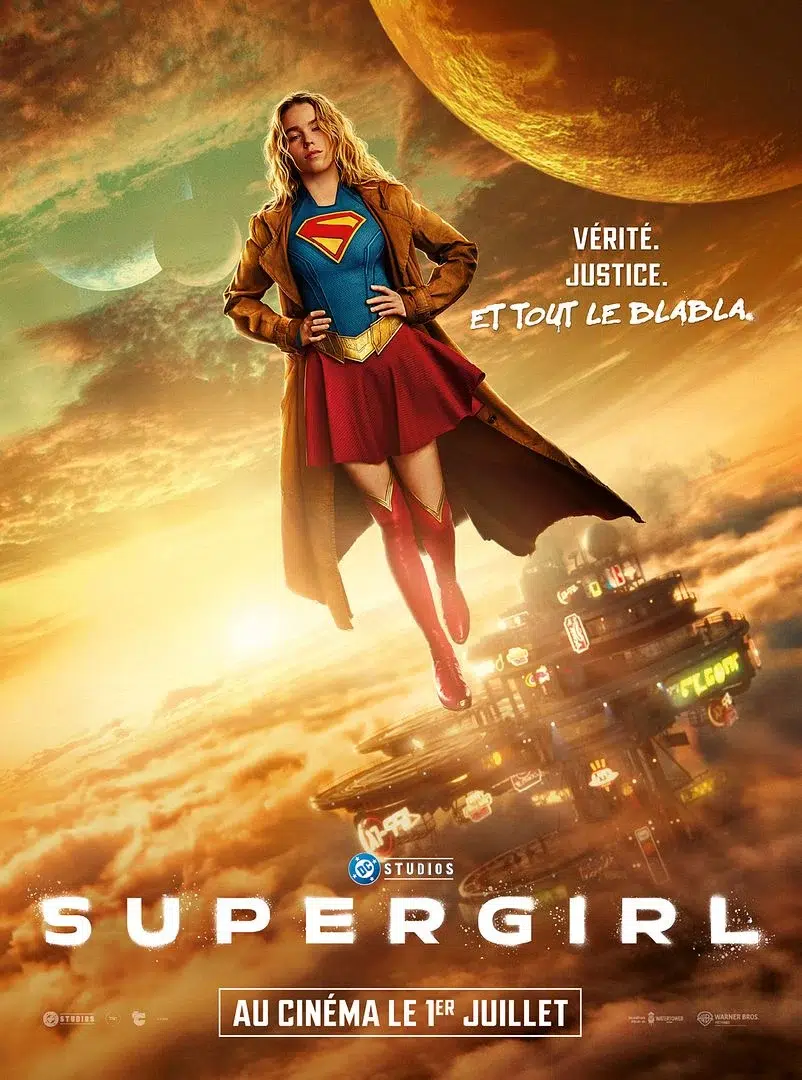
Son of a Gunn
Although Warner Bros. is counting on him to reboot the franchise after the DCEU fiasco, James Gunn had promised that each of his upcoming installments would come with its own tone, its own style, and even its own genre. In fact, the next film, Clayface, is expected to lean into pure horror. So it’s a pity that Gillespie merely copied the style of his predecessor. He borrows from his Superman, but mainly from the Guardians of the Galaxy trilogy and its unabashed space opera universe, brimful of likable anti-heroes and bars to smash up with a swaggering punch.
Another explicit reference: Mad Max, mostly via the hill-dwelling villain Krem des collines (Matthias Schoenaerts, who looks to be having a ball) and his band of raiders, who arrive with a BDSM aesthetic and post-apocalyptic cynicism worthy of the Lord Humungus. Unfortunately, the graft lands with difficulty. Director Gillespie and the relatively obscure screenwriter Ana Nogueira reduce these universes to a bouquet of gimmicks (a playlist-driven soundtrack, circular tracking shots amid the chaos, desert-scapes, etc.) without delivering either the humanity of one world or the feverish energy of the other.
The story is deliberately modest. Kara Zor-El is in search of an antidote to cure the dog Krypto, accompanied by a girl who wants vengeance for the death of her family. And it clocks in at under one hour and fifty minutes, well below the average runtime of blockbusters of its ilk. So we rarely have time to get bored between escapades. But we also rarely get the chance to be entertained, as this ill-balanced cocktail lacks personality… or even memorable sequences.
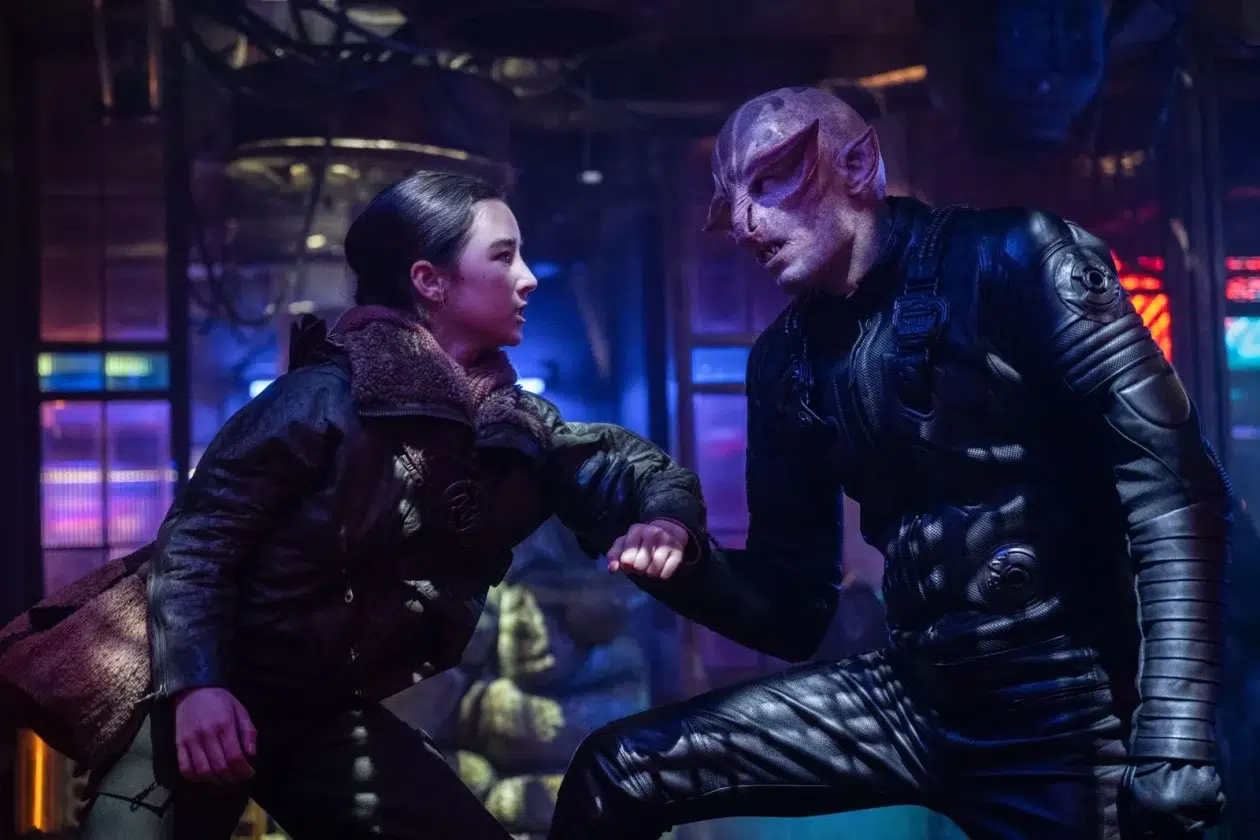
The promises of spectacular action are plentiful and enticing. The reveal of powers aboard a space bus, a prison break from a poisoned environment, a 30-on-1 brawl… But most of them land flat, the fault lying in direction that again recites James Gunn’s blockbuster archetypes without truly adapting them to the choreographies, which become, as a result, very chaotic. When the camera isn’t pulling away from the fight to linger on a secondary character.
In short, despite its real energy, Supergirl gets a bit bogged down in visual, thematic, or even musical clichés, since aside from the pre-existing rock cuts (thanks Wet Leg) Claudia Sarne’s score is shockingly anonymous. A generic bill that disappoints, because Superman piled up visual ideas with a kaleidoscopic candor that may not have pleased everyone, but at least set him apart from the competition.

Woman of yesterday
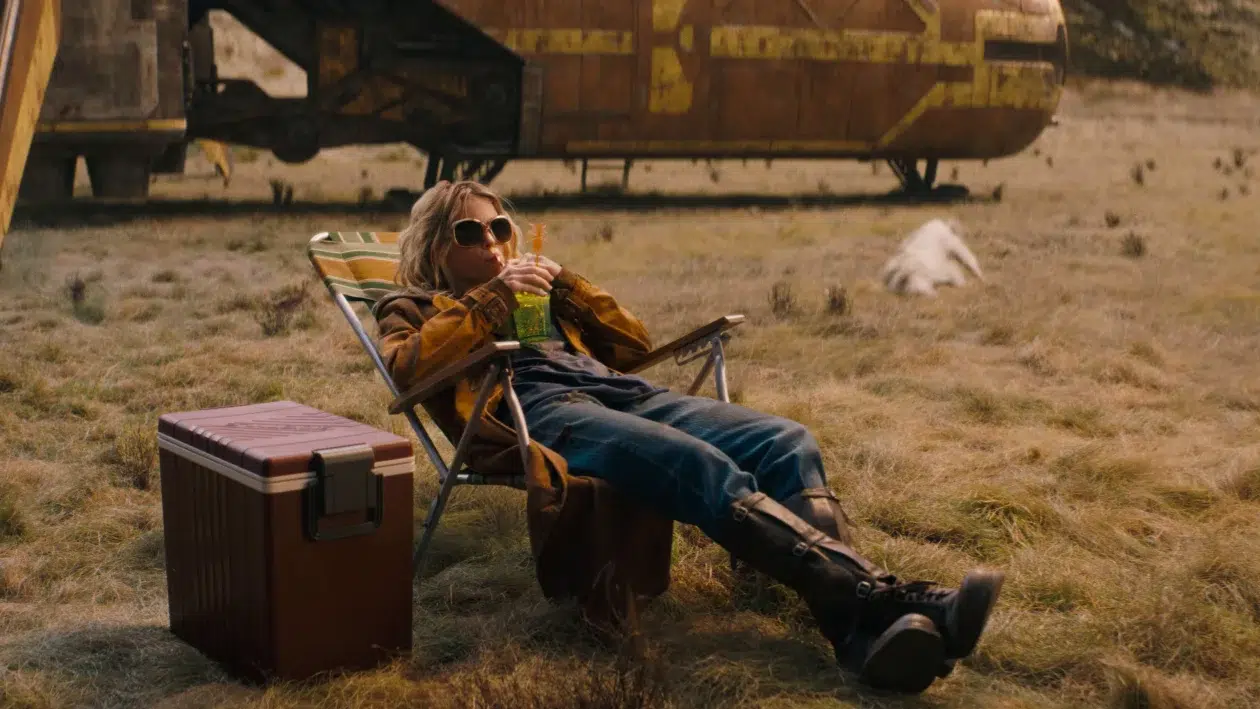
This expanded universe already begins to resemble the rest. Although there isn’t a post-credits sting, Supergirl is devoted to introducing its heroine, who is treated to a slew of flashbacks to Krypton and its destruction. Indeed, unlike her cousin, Kara wasn’t blasted from her native planet during its demise; she watched the last gasps of what remained for most of her early life. A trauma that helps explain her chronic alcoholism and her disdain for Superman’s proud heroism.
A fertile narrative ground borrowed from the comics Woman of Tomorrow, which it follows in broad strokes (alas, without the extraterrestrial dinosaurs, unfortunately). Again, it manages to pull out some nice elements, like a robust and entertaining bestiary that will delight monster fans. But the themes of grief and the need to start over in life are reduced to crude narrative devices, which show their ineffectiveness most clearly in a climactic sequence that feels extremely awkward. And we’re not even talking about the little storytelling contrivances aimed at dampening her powers to fit the stakes, sometimes glaring.
For instance, there’s hardly any attempt to distinguish her from Clark, who merely tosses a head nod to connect with Superman and to give a bit of material for the trailer editor. As for the famous Lobo, long slated for a Jason Momoa-sized take, he functions as a wheel-bound deus ex machina, which is frankly a shame given the immediate charisma of this extraordinary anti-hero.
At one point, one of the characters offers further clarity on the villains’ methods, granting them a nauseating masculinist dimension that clashes with the protagonist’s personality—one who is consistently underestimated by her foes. The ensuing confrontation would hardly be meaningful if Gillespie—director of Moi, Tonya!—didn’t settle for just three lines on the topic. It’s as if every argument of the film, from its colorful heroes to its themes, was sacrificed on the altar of mid-range Hollywood spectacle.
The meager scraps of ideas that remain, the aliens, and Milly Alcock’s undeniable charm keep it from sinking into the genre’s bottom tier, but perhaps we expected more from a film this strategically important for Warner Bros.