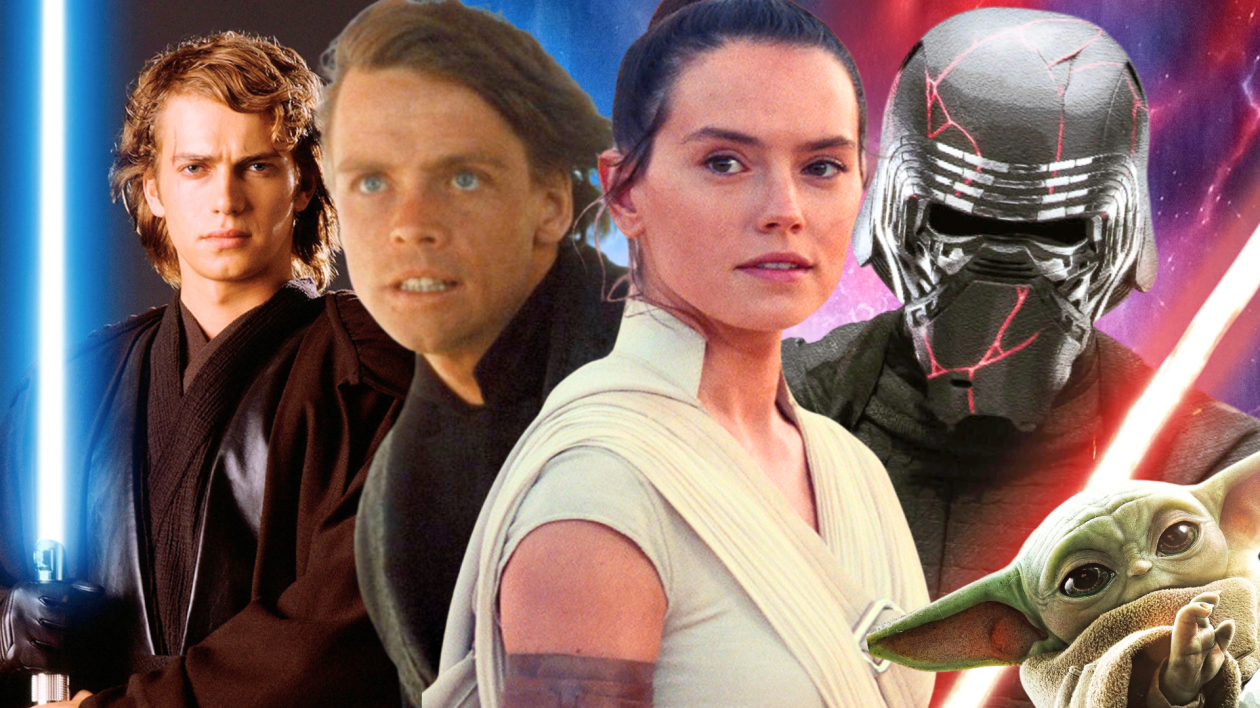
From The Empire Strikes Back to The Rise of Skywalker, via The Phantom Menace and Rogue One: we’ve ranked every film in the Star Wars saga.
From the first Star Wars that changed the world for many moviegoers in 1977, to The Mandalorian & Grogu bringing the realm of TV to the big screen in 2026, and including the concluding installment of the Disney trilogy with The Rise of Skywalker, the brief “A Star Wars Story” spinoff, and the long-debated prequel saga, generations of dreamers have dived into the universe created by George Lucas. The tally: twelve live-action films, spread across nearly fifty years.
And Star Wars is far from finished, since Disney has reignited the dream machine with a deluge of adventures, both in theaters and on Disney+. A justification for a long, exhaustive ranking of all the films.
Attention: this ranking is obviously subjective, the result of all editorial votes—please don’t draw blasters or hurl insults in the comments.
12. Star Wars: Episode IX – The Rise of Skywalker
- Release: 2019
- Running time: 2h22
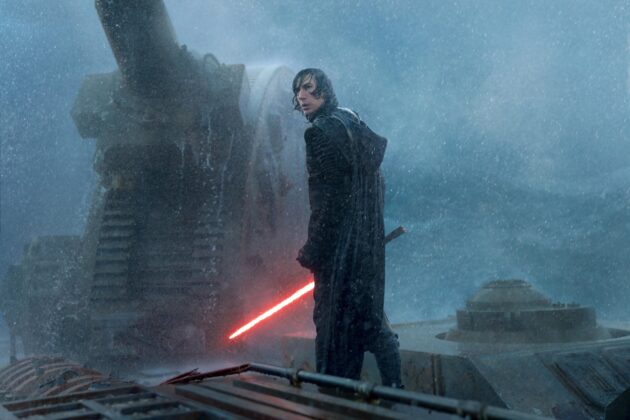 Kylo Ren—Not Giving a Damn
What happens: Surprise, Palpatine is alive again, and Kylo Ren tracks him down to Exegol. He must either win him over or kill Rey, while the Sith hatches a final assault with a fleet of star destroyers.
Formed by Leia, Rey searches for Exegol and thus for a beacon to locate it. Lando lends a hand, Rey believes she killed Chewbacca, C-3PO’s memory is scanned to locate the beacon, and Hux turns out to be a benevolent spy. Most shockingly, Rey discovers she is Palpatine’s granddaughter. She faces Kylo on the wreckage of a Death Star and kills him, with a magical assist from Leia. Then she resurrects him, because apparently the Force is capable of that. Han Solo—the Force—appears to steer his son back onto the right path.
Luke the Force ghost urges Rey to confront grandpa Palpatine, and Kylo (now Ben again) comes to help. Meanwhile, the Resistance fights in the skies with a swath of massive ships. With the combined Force of all the Jedi, Rey finds the power to defeat Palpatine, and she shares a kiss with Ben before he dies. In the end, Rey travels to Tatooine to bury the Skywalker lightsabers. A passerby asks her name: “Rey Skywalker.”
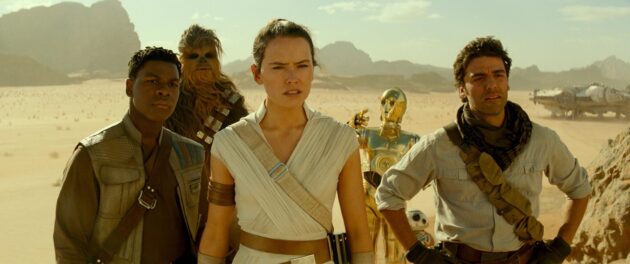 When you see the end coming and you still can’t believe it
What works: J.J. Abrams isn’t a fool and handles this messy affair with skill. Technically, The Rise of Skywalker is solid, and the art direction is sometimes genuinely beautiful. The opening, the dark Exegol, and the Rey–Kylo duel backdrop offer breathtaking imagery.
What doesn’t: At this point, it’s hard to believe the trilogy was planned, even in broad strokes. From Palpatine’s return to the reduced role of Rose (replaced by another underused female character), to that orientation trinket and a Force capable of resurrection, this finale feels improvised and patchworked at every level, desperate to glue things back together, conjure coherence, and placate fans with a torrent of callbacks and cameos that sometimes feel unnecessary. This creates a flood of inconsistencies or questions, about the trilogy or the film itself.
Of course, the project started off on shaky footing. Colin Trevorrow was fired and replaced by J.J. Abrams, and production moved faster than planned. The reception of The Last Jedi likely pushed the team back toward a reverential echo of The Force Awakens, in effect to honor the prior tone, sometimes forcing elements into the story. But the result remains incredibly hollow, with a spectacular lack of emotion (the refusal to kill Chewbacca is, in this context, a running joke), action scenes that lack scale, and an exhausted sense of déjà vu.
And of course, the ambition of the project always faced the risk of improvisation. Still, this is a conclusion that, while not without its moments, lands as more disappointing than its potential would suggest.
11. The Mandalorian & Grogu
- Release: 2026
- Running time: 2h12
What happens: Since Disney turned The Mandalorian’s fourth season into a feature, everyone can see it without slogging through three seasons, so the Mandalorian and Grogu embark on a light, consequence-free adventure. Assigned to track down Rotta the Hutt, the son of Jabba the Hutt, now a gladiator in an arena on Shakari, Din Djarin bumps into Janu Coin, a warlord of the Empire he intends to stop.
When he finally frees Rotta, he’s captured by the Hutts’ twin siblings, and mortally wounded by a sea-dragon-like creature, only to be saved by Grogu, who musters the moment in the jungle. In the end, they rescue Rotta again, kill the Hutts’ twins, and all ends well.
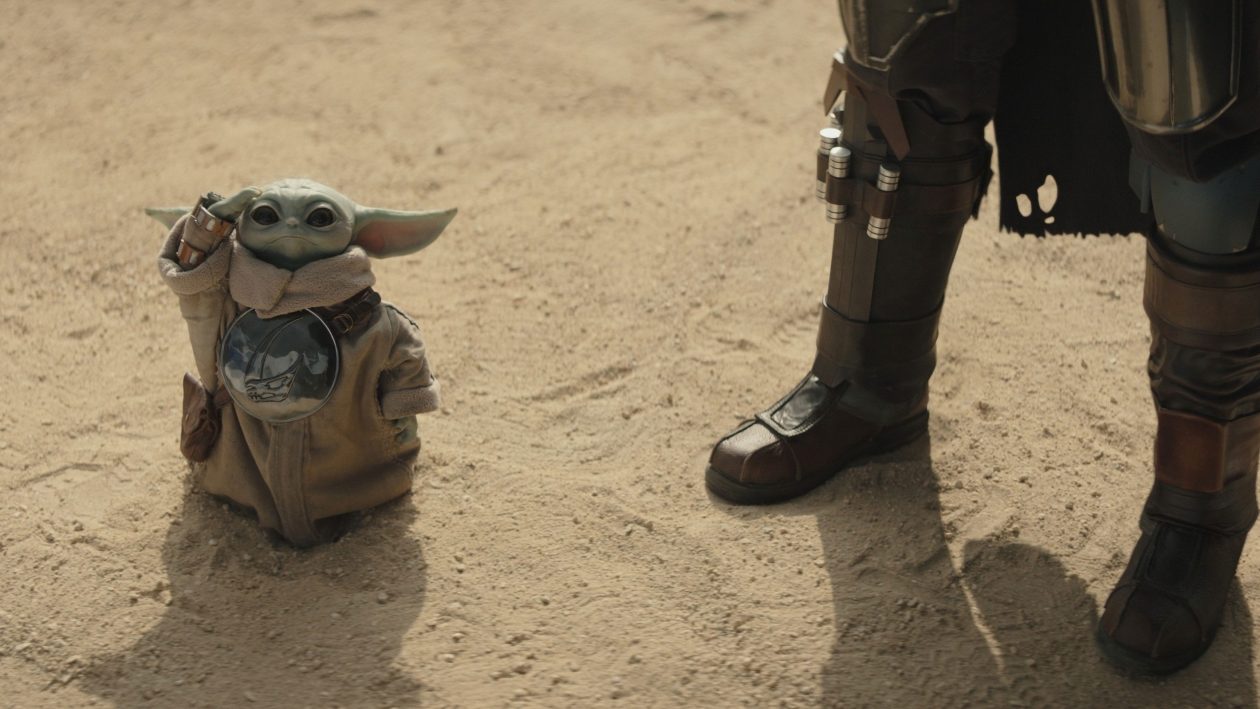
What’s good: The The Mandalorian & Grogu isn’t a catastrophe because it isn’t aiming for grand designs. It’s a light, week-long adventure with a small mystery and few consequences, and the Jon Favreau-directed film—known for Iron Man 1 and 2—is easy to watch. There are some modestly entertaining moments (especially the opening), Ludwig Göransson’s score can be exhilarating, Grogu remains adorable and funny and sometimes both, and some scenes with him remain technically impressive.
What doesn’t: The The Mandalorian & Grogu isn’t terrible, it’s just, politely, bland. Its ambitions are so small that it hardly qualifies as a true Star Wars cinema event. Fear likely guided Disney and Lucasfilm’s choices, after a trilogy that felt like a disaster on multiple levels, and the Marvel example that collapsed under its own weight with too many interlinked films and series, ultimately breaking the spell (the colossal flop of The Marvels).

By pivoting 180 degrees after five films in which Disney had dug deeper into Star Wars mythos, telling a very small story worthy of the series’ most forgettable installments, The Mandalorian & Grogu capsizes the risk but forfeits the main thing: the magic, and the interest of this saga. When it ends, it feels like you’ve witnessed a detour designed to provoke neither strong enthusiasm nor deep indifference.
10. Star Wars: Episode II – Attack of the Clones
- Release: 2002
- Running time: 2h22
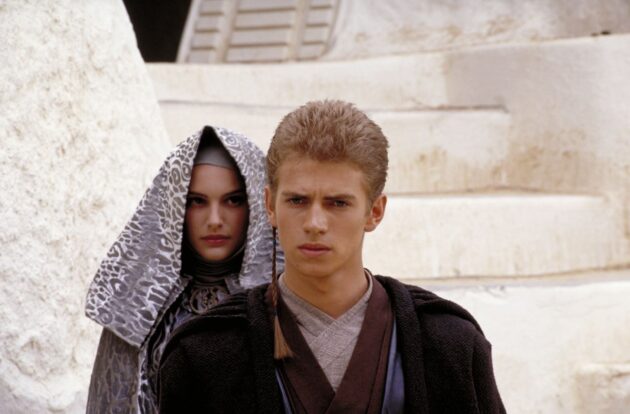 A Grand Tale of Love and Flesh (Or Not)
What happens: Ten years after The Phantom Menace, politics runs roughshod, and Senator Padmé Amidala narrowly escapes an assassination attempt. Anakin, now grown, is assigned to protect her by the Jedi Council, and he falls madly in love with her. But he is a Jedi—bound to celibacy and duty—so romance and marriage feel forbidden. On top of that, he reconnects with his dying mother, and he slaughters many people because the Force’s anger courses through him.
Meanwhile, investigator Obi-Wan uncovers a clone army secretly launched by the Trade Federation and Dooku, with Jango Fett in the mix. While Chancellor Palpatine earns sweeping powers to fight the Separatists, he is captured, as are Anakin and Padmé who come to help. It all ends in a CGI-filled arena, where the Jedi of the Galaxy swoop in to save them. Even with Yoda’s green Force power, Count Dooku slices off Anakin’s arm, escapes, and joins his master, Darth Sidious. On Naboo, Padmé and Anakin marry in secret.
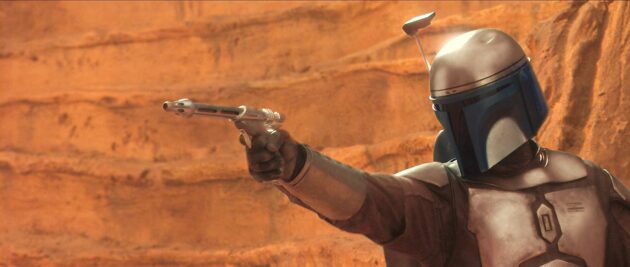 Boba Fail
What works: It’s hard not to recognize George Lucas’s generosity with spectacle and Star Wars magic here. From the Kamino shores to the swirling lights of Yoda vs. Dooku, to the final arena and Padmé lost in the factory, Attack of the Clones tries to satisfy audiences by pulling out all the stops: a crowd of Jedi, monsters, blasters, battles, and digital sets that throb with life. It also develops political questions about the Galactic Republic that feel surprisingly relevant in light of real-world parallels.
What doesn’t: First and foremost, the love story between Anakin and Padmé is dull, stilted, and clogged with awkward dialogue and scenes that feel heavy-handed in the overall narrative. Anakin’s arc doesn’t win him sympathy, largely due to the writing and Hayden Christensen’s limited toolbox. Attack of the Clones also visually aged badly, underscoring Lucas’s heavy hand with digital world-building and the limitations of that approach.
9. Solo: A Star Wars Story
- Release: 2018
- Running time: 2h15
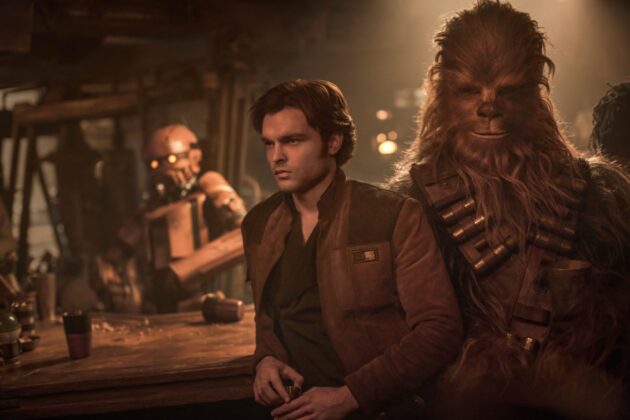 For a Few Parsecs More
What happens: A young Han Solo—before he becomes a smuggler—meets Chewbacca and the Bennett crew, and after a disastrous heist, the spacefaring misfits must pull off a daring theft to redeem themselves. To survive—and regain the heart of his beloved Qi’ra, who is under the sway of the fearsome Darth Maul—Han Solo displays a fearless sense of adventure and phenomenal piloting skills. He heads to Tatooine with Chewbacca aboard a ship he won in a game, hoping to join a powerful smuggler ally, Jabba, who is assembling a crew.
What goes well: Solo aims to be an old-fashioned adventure film, a tribute to the serials of the 1940s and 1950s, where caricatured yet lovable characters embark on breezy voyages. The movie falls short of recapturing that inspirational simplicity, and it lacks energy, but the intention gives it room to roam across varied locales and maintain a brisk pace uncommon for many contemporary blockbusters.
Notably, the soundtrack of this film is arguably the most inspired of Disney-era Star Wars scores (aside from The Mandalorian and Andor). Epic and faithful to its roots, but ultimately more adventurous than usual, it nearly saves the carousel-like Kessel Run sequence from being a narrative misfire and a choreographed mishap.
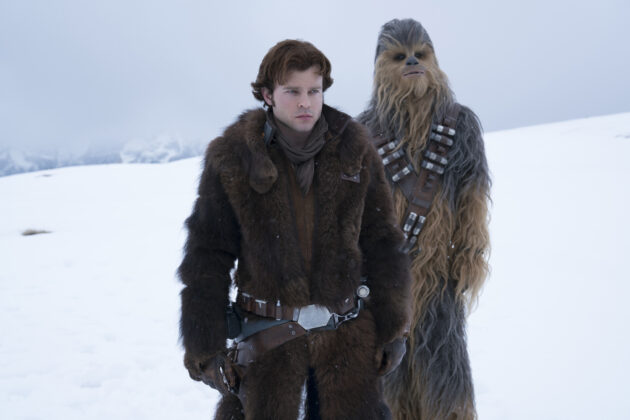 Chew-pas-là; oubliez ce film
What doesn’t: The firing of directors Phil Lord and Chris Miller before filming wrapped, Ron Howard stepping in to finish the job, and a box-office disaster for the saga make Solo a classic case study. It’s a catastrophe with obvious consequences, as the cast frequently seems unsure of what they are playing or why, while the art direction veers between old-school Western and a darker, Rogue One-like vision. The constant nods to the Star Wars canon feel forced and artificial, as if Solo keeps trying to crash a party as an overbearing guest. And the technical misstep is alarming for a Star Wars film: the cinematography is so dark it’s nearly unreadable in places.
Throw in Alden Ehrenreich (who had a solid resume with the Coppolas, Coen brothers, Park Chan-wook, and Woody Allen) and Emilia Clarke, who despite a strong supporting cast cannot rescue the movie.
8. Star Wars: Episode I – The Phantom Menace
- Release: 1999
- Running time: 2h16
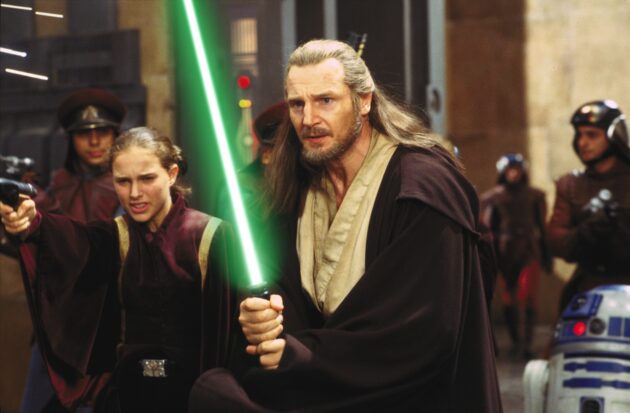 The return (to mixed results) of Star Wars
What happens: Qui-Gon Jinn and Obi-Wan Kenobi, Jedi of the Galactic Republic, discover that the Trade Federation intends to invade Naboo. With the help of Jar Jar Binks, they rescue Queen Amidala, but crash on Tatooine, a desert world. They discover Anakin, a enslaved boy who will become the dangerous Darth Vader.
A high-stakes podrace to win the right to leave Tatooine, freeing the boy to face the cool Darth Maul, who demonstrates Sith might. Padmé stirs up trouble in the Senate and allows Palpatine, who is secretly the wicked Darth Sidious, to become chancellor. All the good guys plan a war to defend Naboo. Quin-Gon is slain by Dark Maul, whom Obi-Wan then kills, and he takes Anakin as his apprentice.
What goes wrong: It was Star Wars’ triumphant return after a 16-year gap, yet it became a milestone in public disengagement. Episode I stands as a symbol of a new era, where everything digital seemed to overshadow the director’s original instincts. Jar Jar Binks and midi-chlorians only added to the backlash, while the attempt to recraft the creation itself left scars. It’s therefore one of the most polarizing installments, perceived by many as overly family-friendly and unappealing.
What goes well: Perhaps, because of years of ridicule and a sense of charm, the film carries a certain nostalgic appeal. George Lucas’s urge to create and play with new aliens, creatures, and worlds is evident; he overindulges in the digital toys, yet occasionally recaptures a certain epic rush—or a sense of ancient magic—amid the spectacle. Between John Williams’s gorgeous themes, a stylized Darth Maul, a strong cast (Liam Neeson, Ewan McGregor, Natalie Portman), and dazzling duels and visuals, The Phantom Menace is not as terrible as it’s often deemed; it’s simply not as igniting as it could be.
7. Star Wars: The Force Awakens
- Release: 2015
- Running time: 2h15
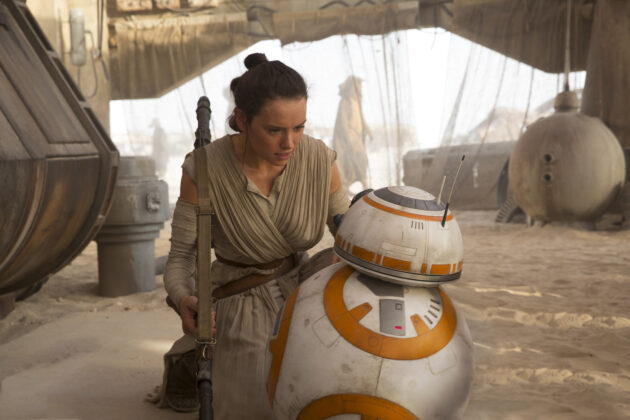 Daisy Ridley: birth of the new heroes
What happens: It’s basically Episode 4 all over again, but with fresh names and older actors re-entering the fray.
What goes well: The Force Awakens remains a film filled with moments and visuals that stick. The village assault at the opening, the ruined TB-TT on Jakku, and especially the final duel—carefully tied to a dramatic natural upset—bring a welcomed weight back into the saga after the prequels. Han Solo’s death is a dramatically staged moment, lit with a powerful, mournful light.
J.J. Abrams demonstrates a confident craft, seen in Mission: Impossible 3, Star Trek, and Super 8, and he executes the mission with a certain flair. Adam Driver as Kylo Ren is, for many, a major asset.
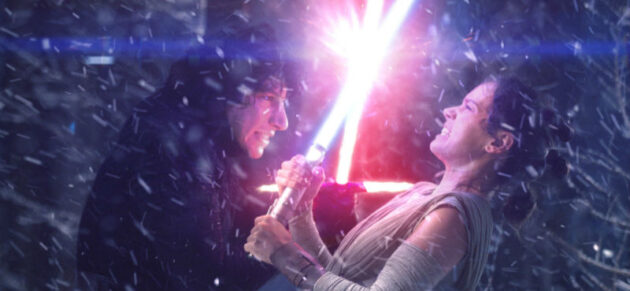 (And if I told you now that she is Palpatine’s granddaughter to break him…?)
What doesn’t: Beyond the notion that remixing A New Hope feels bland and affects the saga’s ambition, the biggest problem with this Episode VII is that there are too many elements for one film, but not enough for two.
Many important aspects of this new universe feel rushed or ignored, because the film seems bound to a rhythm of action and plot turns. It’s disappointing to see Phasma and Poe discarded, the First Order remain a hollow entity, and the story rarely carries an emotional core. No matter the talent of the actors or the return of old heroes, this The Force Awakens fails to generate a strong emotional reaction or sustained excitement. It lands cold, with underdefined characters, a conventional set of stakes, and a lack of identity.
6. Star Wars: Episode III – Revenge of the Sith
- Release: 2005
- Running time: 2h20
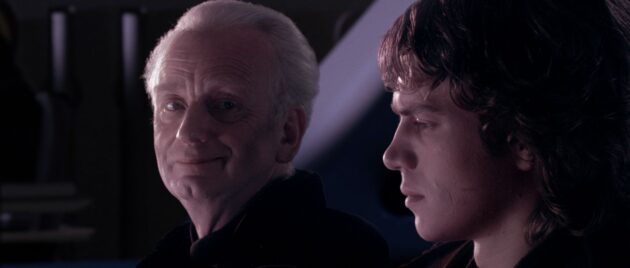 Who could fear such a friendly face?
What happens: It’s a mess. The Republic is under threat, and Anakin and Obi-Wan finally corner Dooku, who has kidnapped Palpatine. Meanwhile, Anakin wrestles with doubt, torn by his love for Padmé, a forbidden romance among the Jedi, and the internal pull toward the Dark Side. Palpatine orchestrates this to win Anakin over. The result: Anakin becomes Darth Vader, massacres many Jedi, and forces survivors into exile. Obi-Wan confronts him, they duel, and Anakin is horribly burned and saved by Palpatine, who outfits him in a life-sustaining suit. Amidala gives birth to Luke and Leia before dying, and the babies are separated to keep Anakin from discovering them. Vader is left gravely injured, while Palpatine seizes control. The climactic moment—“Nooooo!”—echoes as the saga’s prequel chapter ends.
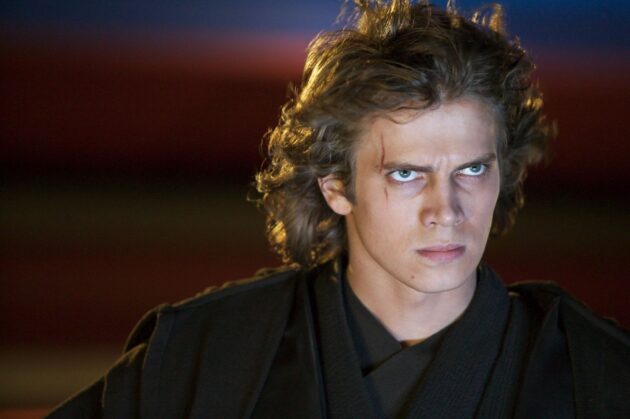 Hayden Christensen almost had a fabulous career
What goes well: Even if the prequel trilogy isn’t unanimously beloved, it contains some striking moments. And in Revenge of the Sith, the drama peak is reached. It’s probably the most consequential episode because it finally shows how Anakin Skywalker becomes Darth Vader, and how the Dark Side corrupts a fragile mind.
Whether it’s Anakin’s forbidden love sealing his doom or Palpatine’s decisive influence, the film charts a fall from potential to catastrophe. The final duel with Obi-Wan is heartbreakingly devastating, set against an apocalyptic backdrop. There are other dramatic highlights too, from Mace Windu’s tragic death to the clones’ betrayal of the Jedi, and that quiet moment when Padmé and Anakin exchange a silent, distant gaze through their windows.
What doesn’t: It’s hard to salvage a single film out of a storyline that’s already taken a heavy hit in the earlier installments. Anakin remains the primary casualty, and his brooding look and tortured choices don’t fully redeem the love story from the previous film. Luke and Leia’s birth also feels oddly brisk, lacking the dramatic weight it should have carried. And yes, that infamous “NOOOOOOO” in the finale remains puzzling and undermines the attempt to end on a high, solemn note.
5. Star Wars: The Last Jedi
- Release: 2017
- Running time: 2h32
 Rey vs Luke: the island isn’t so magical
What happens: In a long, frenetic pursuit, the Rebel fleet fights back against the First Order, which chips away at Leia after a cosmic Mary Poppins moment. Finn and Rose sneak off to a casino planet to recruit a pirate and sabotage the First Order’s tracking, but much of it feels like padding.
Meanwhile, Rey pesters Luke on his remote island, hoping to become a worthy Jedi. The old master is haunted by his failure with Kylo Ren and senses a fragile, ambiguous Force in Rey, complicating the mystery of her parentage. Rey pursues Kylo, who is eager to draw her to his side, and their dynamic is a central tension of the film. Kylo—now Supreme Leader—aims to wipe out the Rebels and trap them on a doomed planet. Fortunately, Luke’s mystical intervention, when he confronts Kylo Ren, proves fatal for him, and the Resistance escapes aboard the Millennium Falcon. In the end, a nameless child lifts a broom, signaling a democratization of the Force.
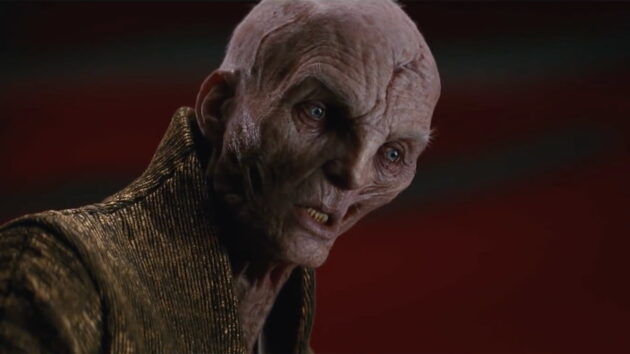 “Snokin’ Sith Everyday!”
What works: Technically, The Last Jedi is a triumph in many ways. It opens with an epic sequence that blasts Poe Dameron’s X-Wings against the Empire, and features numerous monumental moments. The film delivers a double-climax, heightened by striking cinematography and inspired staging on the planet Crait. The humor, including the Porgs, is deftly balanced and, in small doses, quite funny.
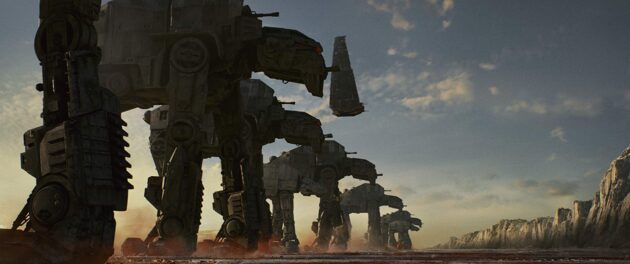 A sense of déjà vu
What doesn’t: The script, and the handling of character arcs and subplots, feel unsettled. Entire story arcs—like Finn and Rose’s quest—linger without delivering payoff, and certain characters (Phasma, Maz Kanata) are underused. There are odd choices (Leia’s reduced role, Holdo’s presence), and The Last Jedi often gives the impression of treading water or padding. It also cannot fully detach from the Skywalker saga, leaving little space for the newer generation to breathe. The result is a 2h30 film that often lacks rhythm, cohesion, and momentum.
4. Star Wars: Episode VI – Return of the Jedi
- Release: 1983
- Running time: 2h14
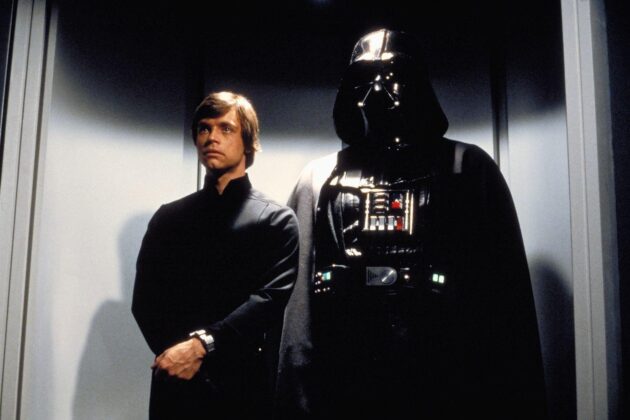 Luke Skywalker nears one of the saga’s greatest moments
What happens: After crippling the Rebels and leaving Luke scarred (and a whole generation traumatized), the Empire restarts the Death Star project—though this time it’s the Death Star’s successor, the second Death Star. Luke trains anew, wielding a green lightsaber. He frees Han and Leia, while Jabba and Boba Fett meet their fates. Luke then seeks out Yoda, who passes away.
The Emperor arrives aboard the Death Star to lure the Rebels into a trap. The Rebels fall into the trap, only to face a band of Ewoks that turn out to be a stubbornly formidable force. The Imperial war machine suffers a brutal defeat. The Emperor tries to sway Luke to the Dark Side, but Vader’s humanity resurfaces, sacrificing himself to save Luke. He dies, the Death Star is destroyed, and peace returns to the galaxy amid Ewok celebrations.
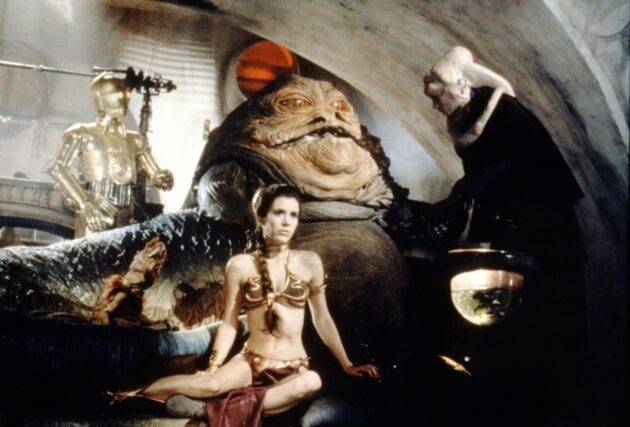 A moment that etched itself into memory…
What works: Almost everything, especially in light of its predecessors. Having suffered from comparisons with The Empire Strikes Back, Return of the Jedi is a somewhat bittersweet finale that nonetheless conjures a sense of epic culmination and a few welcome disruptions (such as Leia’s reveal). Luke is at the height of his powers early on, and the climactic duel running parallel to the Rebel assault remains one of the saga’s most Shakespearean and visually inspired moments, a true high point. The score soars, with the Emperor’s theme and Vader’s death delivering one of the saga’s most devastating emotional climaxes.
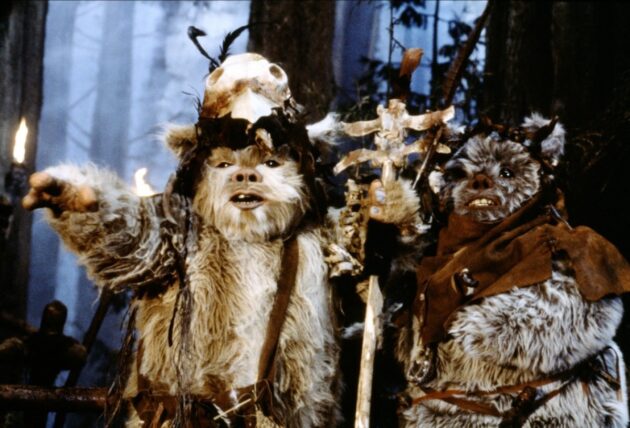 The embodiment of Star Wars’ drift
What doesn’t: The film isn’t a perfect grand finale; tonal missteps and a lack of harmony hold it back. In this epic, dark finale, there are elements designed for younger audiences that feel out of place, and some merchandising-driven moments (Jabba’s court, the torture device, the ridiculous Jedi Rock) that undermine the gravity of the climactic events. Those little plush creatures—the Ewoks—are also a symptom of a broader issue: the film’s tonal inconsistency. The jokes around Jabba’s court and other moments jar with the tragedy unfolding, threatening to derail the movie’s epic finish.
3. Rogue One: A Star Wars Story
- Release: 2016
- Running time: 2h13
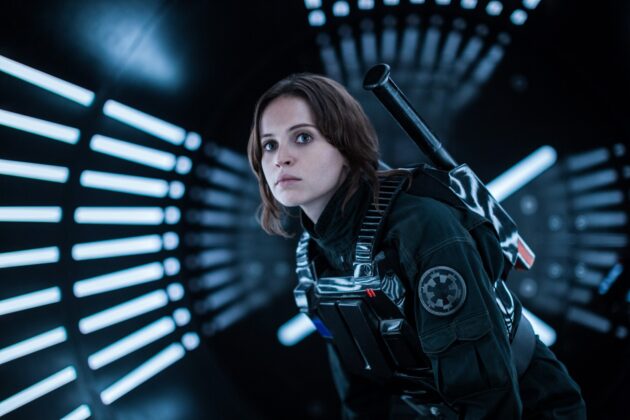 Felicity Jones, one-off heroine
What happens: The mission to steal the Death Star plans that will enable A New Hope is led by Jyn Erso, whose father designed the Death Star and designed a flaw to destroy it. Joined by a ragtag crew, she heads to Scarif, fights to retrieve the plans, and hands them to Leia. In the end, everyone dies.
What works: After a chaotic production and major story shifts, this first Star Wars spin-off somehow avoids catastrophe. Rogue One does not reinvent the wheel, but it delivers consistently engaging spectacle from start to finish, with a sense of cinematic drama not often seen in standalone blockbusters. For the first time since The Empire Strikes Back, Star Wars embraces true drama and sustains it until the final frame.
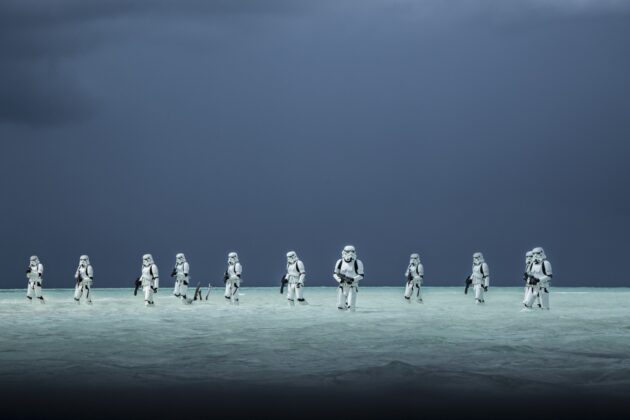 Violence of upcoming exchanges in a tempered milieu
Similarly, Gareth Edwards (with Tony Gilroy stepping in to polish) deserves credit for respecting fan service while wielding that element with intelligence—a genuine cinematic impulse, rather than a mere exercise in nostalgia. The sequence in which Darth Vader mows through a corridor of rebels demonstrates the character’s power in a way not seen since his early cinematic heyday. The film also offers striking visuals, with bold art direction and a sense of alien geography that freshens the saga.
What doesn’t: Rogue One bears the scars of its troubled creation and can’t fully mask the changes it underwent. The trailers teased striking visuals and sequences that never quite appear in the final cut, and several key characters are not given fully convincing arcs. The characterization of the protagonists, the value of some supporting roles, and the overall narrative fall short of a perfectly cohesive story. It also suffers from pacing issues typical of a heist setup, forcing the team to plug along rather than letting them lead the charge. The result is an uneven film that stumbles at times, though not without some remarkable moments.
2. Star Wars: Episode IV – A New Hope
- Release: 1977
- Running time: 2h01
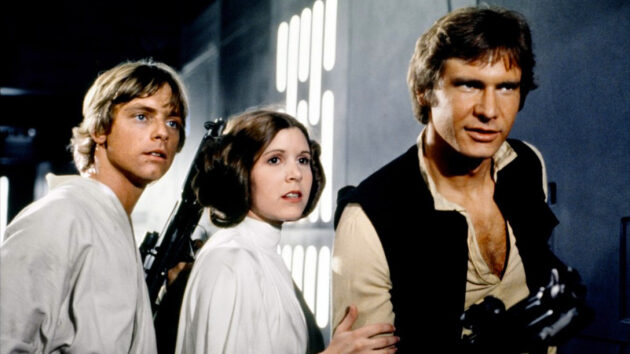 Iconic lineup of heroes
What happens: The galaxy is in upheaval, with the Empire vs. the Rebel Alliance. Having secured the Death Star plans in the future via Rogue One, Princess Leia hides the plans in R2-D2 and sends him (with C-3PO) to Tatooine. Luke Skywalker joins the quest to assist in delivering the plans to Obi-Wan, while Darth Vader tracks them and kills the Skywalker family. Luke’s flirtation with the Force leads him into danger as the gang falls into enemy hands. They rescue Leia, Obi-Wan faces Darth Vader and chooses to depart. With the aid of the Death Star plans, they discover a vulnerability and, with Luke’s talents, destroy the Death Star.
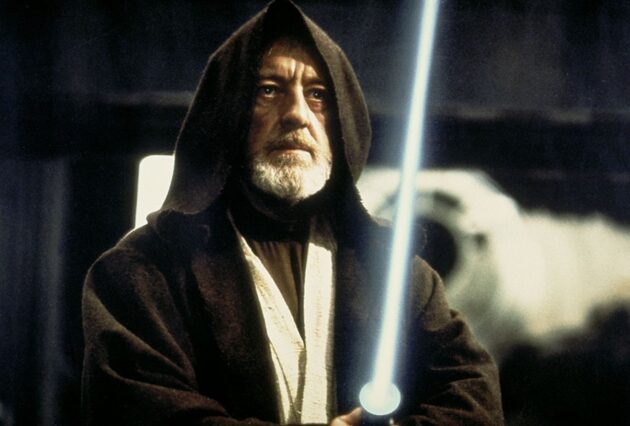 Alec Guinness didn’t suspect where those noble feet would take him
What works: It’s hard not to feel affection for the saga’s first chapter, the one that started it all. A bold, risky gamble by George Lucas, who had shown promise with THX 1138 and American Graffiti, but who would redefine Hollywood cinema with this film. It created heroes, a universe, and a dream on a relatively modest budget (around $11 million, roughly $45 million in 2018 dollars), and it summoned mythic archetypes with a fresh, compelling take. Action, humor, tender moments, and a sweeping epic scale propelled by a superb trio—Carrie Fisher and Harrison Ford’s charisma and Mark Hamill’s steady presence—make A New Hope a masterclass in storytelling and spectacle that remains a benchmark for the genre.
What doesn’t: Compared with later chapters, A New Hope feels more restrained and straightforward. It adheres to a classic adventure-film framework, laying out the pieces in a near-scholarly fashion. While that gives it a meticulous construction, it also lacks the expansive momentum of future installments, leaving some viewers with a sense of it being a well-crafted setup rather than a full-blown cinematic arc.
1. Star Wars: Episode V – The Empire Strikes Back
- Release: 1980
- Running time: 2h04
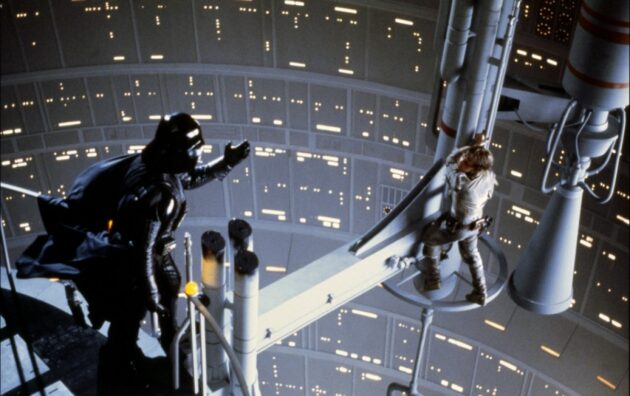 Nothing will ever be the same again
What happens: After the destruction of the Death Star, the Rebels face a harsher reality as the Empire grows stronger. Luke’s Force understanding deepens, while the Dark Side begins to loom, and Emperor Palpatine becomes a looming figure. Luke journeys to Dagobah to train under Yoda’s guidance and confront his own inner darkness. Leia and Han seek help from Lando Calrissian at Cloud City, only to discover betrayal. Han is frozen in carbonite, Luke learns Vader is his father, and their fates collide in a fateful lightsaber duel. The story pushes toward a dramatic revelation and a cliffhanger that reshapes the saga.
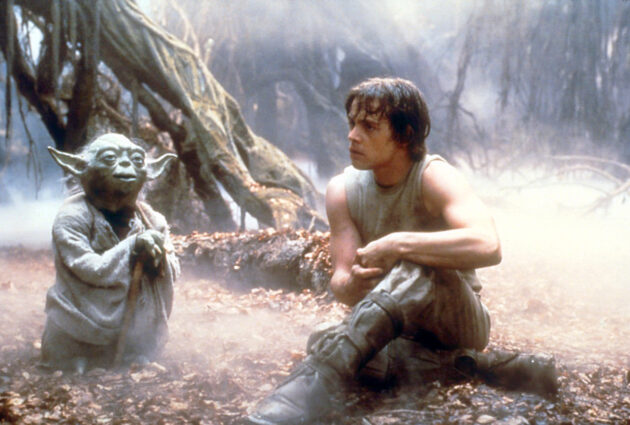 Mark Hamill on Dagobah with Yoda
What works: If Star Wars started a revolution, it was The Empire Strikes Back that elevated it into a timeless epic. Reconnected with mythic storytelling and fully realized in its universe, Star Wars expanded its world and its symbolic framework, building on dramatic stakes and character depth in a way that would define the saga for decades. The Empire Strikes Back turns the entire oeuvre into a central, essential chapter, inviting viewers to grow with it as it reveals a darker, more adult universe and greater emotional resonance. The dialogue between destiny and choice reaches a peak as the film blends action with profound thematic weight.
What doesn’t: It’s hard to find major flaws in The Empire Strikes Back, but if one must name a shortcoming, it’s the way its radical and powerful approach casts a long shadow over every middle chapter to come, pressuring them to be darker and more mature than the others. It looms as the ultimate frontier, an impossible standard that all subsequent installments must meet, even when the narrative doesn’t fully support it. A rare film that remains towering, even as its shadow stretches across the entire saga.
