
A new (slight) twist in the Carl Rinsch case, the director accused of defrauding Netflix, defended in person by Keanu Reeves.
The case had been the subject of much chatter in the American trade press (and the French site Ecran Large). Carl Rinsch, once Ridley Scott’s protégé and a promising Hollywood director, was accused of stealing a staggering 11 million dollars from Netflix through a science-fiction series titled Conquest, a project he never completed. Articles in The New York Times and Deadline unfolded like feuilletons, brimming with nearly unbelievable details and, above all, with damning ones.
In December 2025, Rinsch was found guilty of fraud, money laundering, and illegal transactions. According to the defense, he faces eight to ten years behind bars. But he now enjoys Hollywood support.
Keanu Reeves to the Rescue
According to Variety, Keanu Reeves reportedly sent a letter to Judge Jed Rakoff, who is presiding over the case, urging the court to show “indulgence and clemency” toward an “exceptional artist”. He acknowledges that he is not a therapist or a psychologist, but speaks as a fellow artist in support of the disgraced director:
“In my view, Carl can self-sabotage by magnifying the scale, reach, and scope of what was negotiated, placing himself in a conflicted position with his interlocutors. I do not intend to minimize what has been established or what he did, but I offer perhaps a window into why he did it.”
Not denying the financial excesses for which he has already been convicted, but rather testifying to a potential good-faith gesture, is the central issue of this phase of the trial: the defense argues that the judge should impose a far lighter sentence than anticipated, since Rinsch is not a repeat offender and his career is “probably over”. The precise recommendations from the prosecution are expected to be announced on June 16. The verdict is scheduled for June 29.
Reeves knows the director well because he starred in the blockbuster 47 Ronin, his first and only feature film budgeted at $175 million. It’s arguably his most stinging box-office flop (it barely surpassed $150 million in gross), a misfire that seemingly nudged him toward streaming, then surging in the thick of its growth. Initially titled White Horses and developed independently, the series was envisioned as a future in which a genius creates a human-like species, only for humanity to turn against it after discovering its true nature.
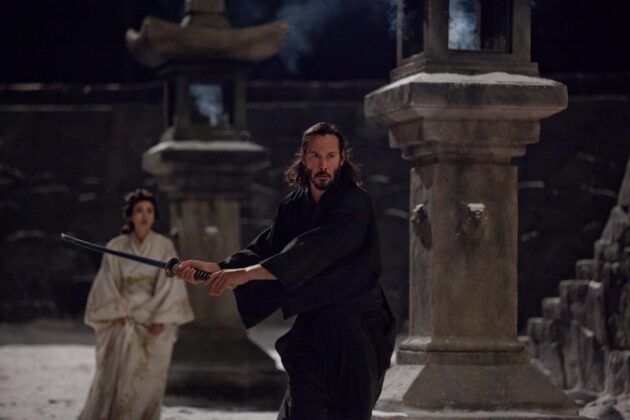
The actor even invested money in the project when it was struggling, a project Netflix ultimately picked up after a fierce bidding war with Amazon. But the shoot turned into a disaster. After the $44 million budget had been spent, Rinsch demanded an additional $11 million, which he promptly deposited into his own bank account. He is said to have spent it on luxury goods and risky investments, which he claimed were necessary for the production of the series.
The New York Times article also notes the unstable mental state he was in at the time, fueled by Vyvanse, a stimulant prescribed for attention-deficit disorders. In the midst of the early COVID-19 period, he reportedly flooded colleagues with strange messages, accusing his wife and collaborator of attempted murder and claiming to know where lightning would strike. An initial arbitration forced him to repay $12 million to Netflix. He did not pay.
