
A look back at 10 welcome changes in Zack Snyder’s Justice League, aka the Snyder Cut, now streaming on Netflix in France.
In November 2017, it was a catastrophe. Justice League hit theaters, officially credited to Zack Snyder, but actually reworked by the producers with the help of Joss Whedon. The verdict: a major misfire (our review of Justice League is here), and a financial ruin. And in March 2021, it was the end of a long saga and a small miracle. After years of uncertainty, hope, battles, rumors, and scraps, the Snyder Cut, aka Zack Snyder’s Justice League, arrived on the small screen.
Four hours to right the ship, to do justice to the League and to the fans. At the time, you might have missed it. Now the film has been available on Netflix since June 11, 2026. A perfect occasion to revisit 10 things worth a look at, and that make it a version far more interesting than the one that hit theaters. ATTENTION SPOILERS !
And otherwise, our SPOILER-FREE review in video is right there.
The Opening—and the Things Cut
No surprise: the Snyder Cut dumps a fair amount of material right from the opening. Farewell to Superman filmed on a cellphone by kids, farewell to Batman luring a Parademon with the fear of a thug: Zack Snyder’s Justice League picks right up after Superman’s death, at the climax of Batman v. Superman against Doomsday.
Everything restarts at that fateful moment, with the faces of Lois, Bruce, and Diana, and Superman’s scream of pain echoing across the world. From Themyscira to Atlantis, that cry rings out, touches several characters, and triggers a few Mother Boxes. Notably the Amazon box, which springs into action as Steppenwolf approaches.
This long opening shows that things really kicked off with the end of Superman, and the disappearance of the planet’s guardian. A pretty way to recenter the story compared to the theatrical version, which depicted global grief with the song Everybody Knows and images of newspapers and extras in the streets. Zack Snyder, instead, lingers on a heavy silence and clings to his leads. The world here feels depopulated, with a melancholy vibe from the start. And it’s a beautiful kickoff for this Snyder Cut.
Cyborg and His Father
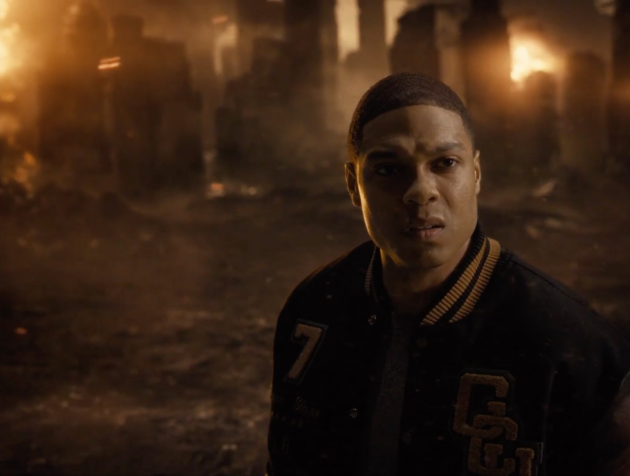
With Superman, Victor Stone was the central character of this extended cut. Between Ray Fisher’s statements and the numerous elements revealed so far, it was clear Cyborg had a much larger role to play in Justice League, originally. And that’s the case, because he gains a lot through a wealth of new scenes, especially flashbacks. The slow-motion snowy American football game, the mother’s death in a car accident, and his genius-aspect skills are all used to better sketch the character behind the machine—even if it’s a bit simplistic and clumsy in writing.
Another major new development: the scope of his powers is fully embraced. The man-machine can do almost anything in a tech-dominated world, and a voice makes it clear that this great power could push him toward the dark side. A (long) (and corny) scene stresses Cyborg’s goodness when he saves a single mother in distress, effectively padding her bank account. This part at least underscores the power of Cyborg, who is much more than a CGI toaster: he’s a key character, not a luxury gadget hacking behind Batman, Wonder Woman, and the others.
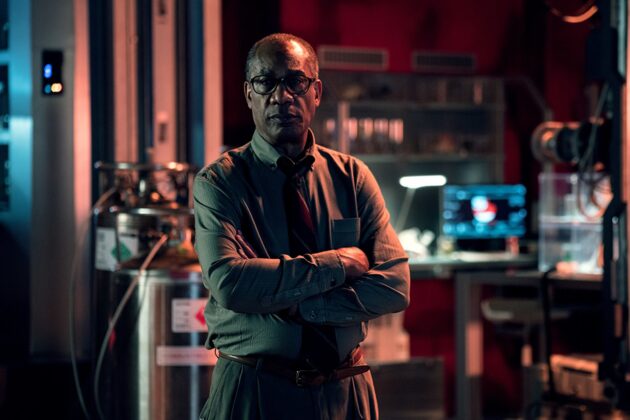
Finally, the role of his father Silas, played by Joe Morton, is naturally tweaked. Present in the background and then abruptly cut from the theatrical version, he now plays a decisive role in the story, both for Victor and for the League.
His conflict with his son is more developed, with extra exchanges, looks, and situations to set it up. Cyborg’s story is that of a son and a man angry, who must come to terms with one grief (and then a second) in the middle of apocalypse. It was in the theatrical version too, but it’s now very present on screen, with all the classic steps of that journey. Cyborg will face his father’s sacrifice, and will get a final flashback to close it out, before an epilogue where he has found peace. All of this is very ordinary, but at least it’s owned from A to Z.
Flash Gets a Substantial Makeover
In the Whedon-Warner version, there’s no doubt that Flash was one of the big misfires, notably due to his clunky humor and, more importantly, a minor role that only involved saving the Russian family in the botched climax.
In this Snyder Cut, it’s hard to claim all of his flaws have vanished. Barry Allen is, unfortunately, still the team’s comic sidekick (and Ezra Miller leans into it) and endures a few goofy setups (who wasn’t ready for that sausage moment, among others). One might also regret that the Iris West arc, whose rescue really introduces the superhero in this version, is completely abandoned later (we never see the young woman again) or that Barry’s father arc remains as thin as ever.
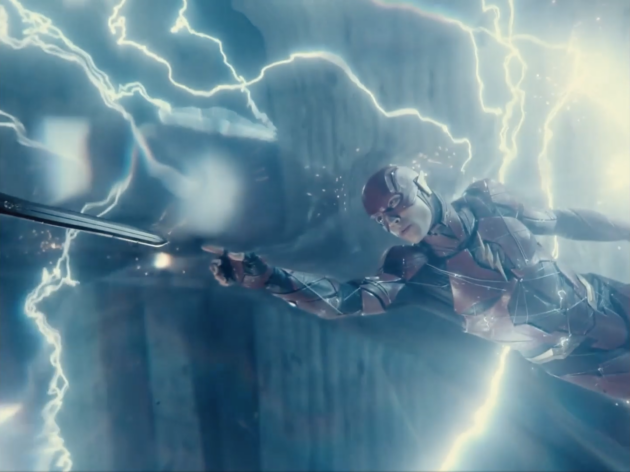
Nevertheless, despite this still shaky and slightly inconsequential characterization of his aloofness, the superhero grows explosively during the action scenes. Aside from his Quicksilver-like entrance in X-Men: Days of Future Past, his powers are finally fully exploited.
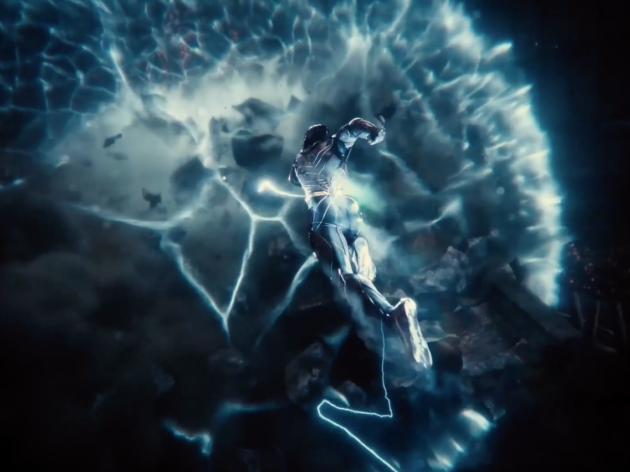
First during Superman’s resurrection, where his light-speed movement briefly hints that he can time-travel. But it’s really in the final climax that Flash has a unique and epic role. As the team loses in the wake of the Mother Boxes’ activation and the apocalypse unfolds, he becomes a true superhero figure, humanity’s savior (even more than Superman), by racing back in time and erasing Darkseid’s victory over the Justice League.
In a matter of minutes and a single sequence, Zack Snyder reveals the sheer power and critical importance of Flash, while giving one of the film’s most memorable moments.
Steppenwolf
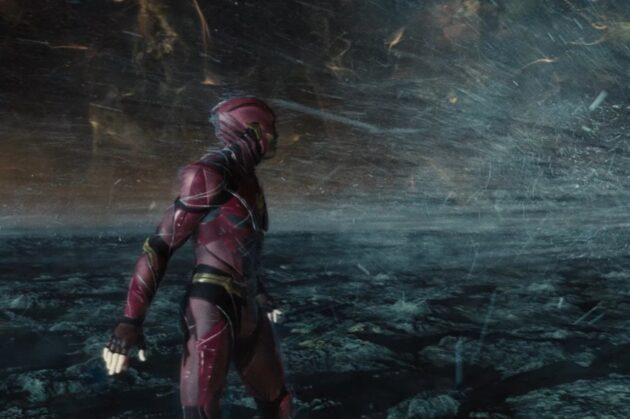
Like most characters in the theatrical version of Justice League, Steppenwolf was totally bungled. With a ghastly character design and essentially no development, he was the perfect template for a dull antagonist.
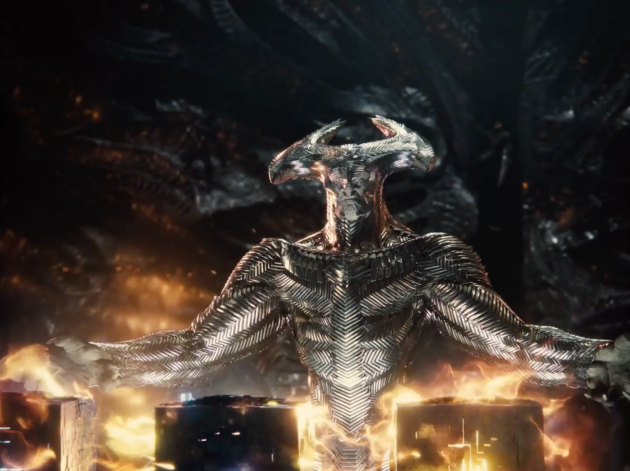
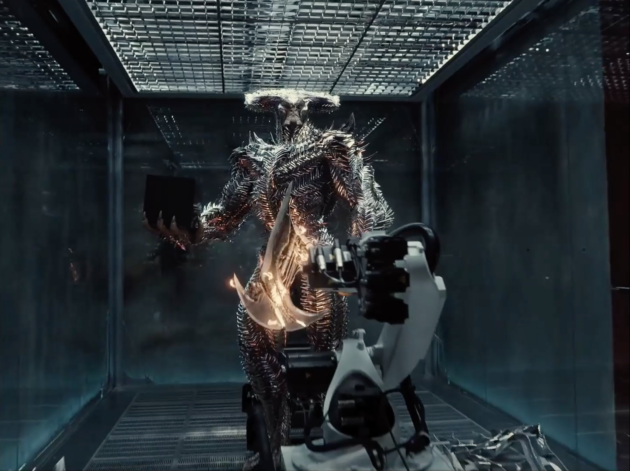
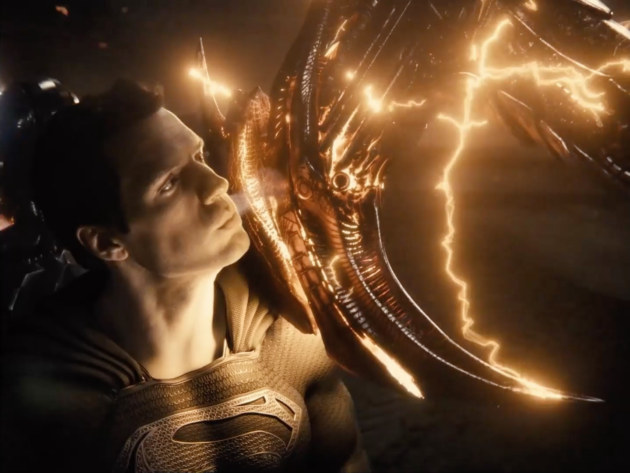
So it was fair to expect Snyder’s version to salvage this infamous villain. And the least you can say is that our wishes were granted, because he becomes one of the Snyder Cut’s most compelling figures. His new design drew a lot of talk, but undeniably, his spiked armor makes him more imposing and more unsettling, and his more creature-like look with real horns makes him far stranger. He also gets a few new, rather fun gadgets (including that spider robot).
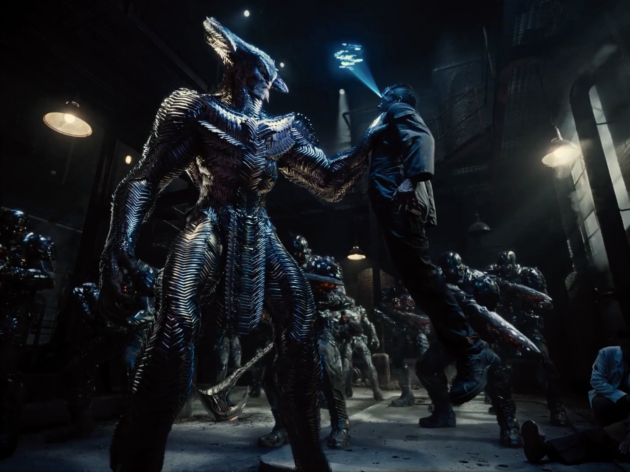
Indeed, the character grows in presence, especially with a better-developed arc. His motivations are sketched briefly, sure, but they give him depth and an identifiable identity. His hope for redemption opens doors here and there to a few emotions and echoes (less gracefully) the way Thanos could hide a bit of humanity behind his terrible plans in Avengers: Infinity War.
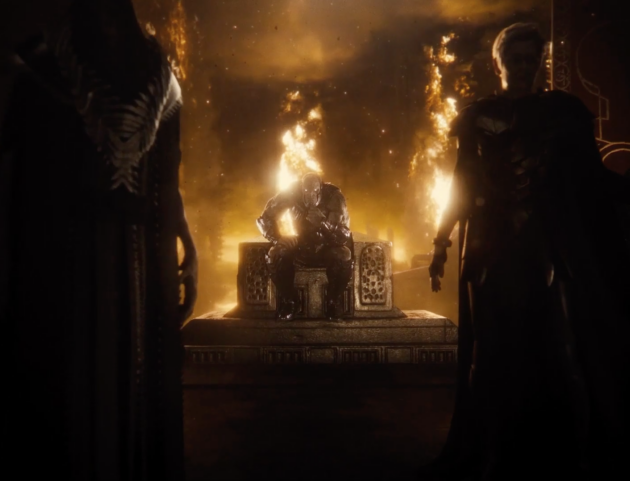
The fact that Steppenwolf is ultimately just a lieutenant of Darkseid, while being a genuine threat in his own right to the superheroes, amplifies the power of the Apokoliptians and thus the danger for Earth. His strength and brutality are better showcased, and the climax is the ultimate proof, with the character finally getting a worthy ending in the heart of the film’s most violent sequence. Just for that, Steppenwolf has gained a lot—and so have we.
The Third Mother Box Heist
Steppenwolf is at the heart of the plot with his thefts of the Mother Boxes, and while the first two, recovered on Amazonian lands and Atlantis’ depths, were visible in the theatrical version, the third was taken off-screen while the team faced the amnesiac Superman. A gag so ridiculous you could hear the laughter in the theater.
In this Snyder Cut, the theft of the third Mother Box isn’t a plot hole; it actually has a major impact. True, the heroes forget to keep track of where the Box is after it helps resurrect Superman. But someone tries to conceal it before Steppenwolf can grab it: Silas Stone, Victor’s father.
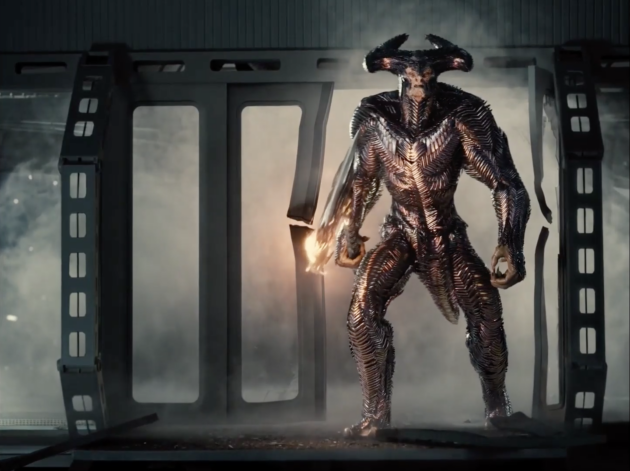
While the heroes battle Superman, Cyborg’s father indeed seizes the fallen Mother Box off a car and heads back to STAR Labs to hide it. Unfortunately, Steppenwolf arrives, senses the Mother Box, and finds Silas. There, in a heroic move, Silas sacrifices himself before his son Cyborg and the other heroes, trying to destroy the Mother Box that’s causing his disintegration.
Unfortunately that isn’t enough to stop the Mother Box from being stolen by Steppenwolf, but Silas’s sacrifice makes the Box overloaded with energy and thus more detectable by the heroes on a radar. That gives far more heft to Steppenwolf’s pursuit, while intensifying Cyborg’s grieving struggle (after his mother, he’s now losing his father).
Obviously, this isn’t subtle by a mile, but the sequence does a better job of fleshing out Cyborg’s inner conflicts while giving a bit more coherence to the messy plot of this third Mother Box theft in the cinema version. For once, an extra scene actually has real stakes—and we’re not complaining.
The Climax
With Flash and Steppenwolf deeper than before, the final battle changes a lot, for the better. The climax already gains a dramatic dimension with Barry literally saving the world with his speed.
Like the Christopher Reeve and Richard Donner-era Superman, he goes back in time to fix the irreparable: he didn’t arrive in time to help Cyborg separate the Mother Boxes, Darkseid had won, and the Justice League had been atomized. Flash goes all in, pushes through the pain of his injury, and races at full throttle toward the Mother Boxes. The void reappears under his feet as he rewrites history and saves everyone in the end. No one will talk about it much, but it’s not nothing.
Visually, the idea is thrilling, and Junkie XL’s score underscores Flash’s heroism. Dramatically, this perilous situation and the potential sacrifice add a welcome new dimension. We move from a mere climax to a super-climax in terms of stakes. Because the heroes’ victory comes down to a few seconds, proof that Darkseid is a formidable foe for the League. For a moment, you feel that yes, everything could almost be lost.
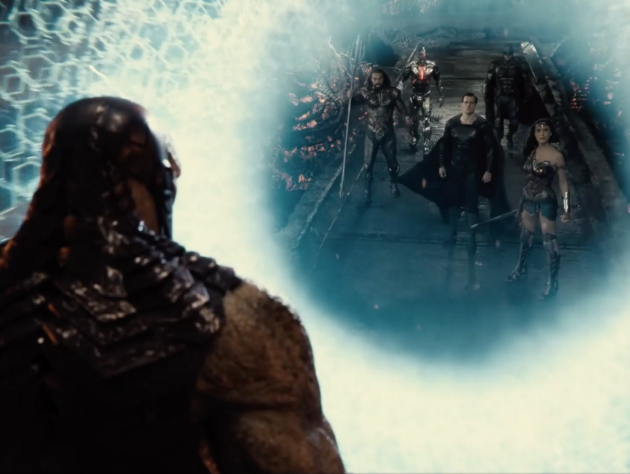
Steppenwolf, for his part, has (re)become a worthy foe. Instead of being gobbled by his Parademons as soon as he discovers fear (laughs), he is defeated by the heroes, united and in sync to strike him down. Aquaman spearheads him, Superman delivers a heavy blow, and Wonder Woman finishes him off and decapitates him. The head is sent through the portal by which Darkseid watched it all, and for a tense, but useful moment, the big villain and the heroes lock eyes across time and space.
It’s simple, a bit ugly on the CGI front (we’ll discuss in another piece), but it delivers a necessary satisfaction to this brawl. The Justice League finds balance, the scale of their powers (especially Superman and Flash) is essential, Steppenwolf loses his horn and his costume to drive the point home, Darkseid watches the scene, and the mission is accomplished on the spectacle front.
Zack Snyder Unleashed
Do you feel a twinge, a stiffness in Zack Snyder’s style in 300, Watchmen, and Man of Steel? It’s likely this Snyder Cut will give you a few nervous laughs. Because Zack Snyder’s Justice League is a fireworks show for the filmmaker, who has a new playground to push his directing tics to the max.
Slowdowns, music, colors, digital effects: everything is in service of extreme iconography for the heroes. The imagery overemphasizes hits, faces, looks, costumes, and poses, sometimes to the point of overcutting movements and fights. From 300 to Batman v Superman, Snyder has always aimed to recreate the comic-book panel magic on screen. The Snyder Cut is undoubtedly one of the most spectacular demonstrations of that fantasy.
It goes without saying that this four-hour film isn’t about sobriety, restraint, or reconciliation for those who don’t digest Snyder’s style. But it’s hard not to see in this gesture a finale bouquet for the director, who blasts the guns to maximum, even experimenting (notably in the Batman–Joker face-off, with tight close-ups and deliberate blur).
Depending on taste, it’s either a fantasy or an atrocity. But it’s so pushed to the limit that there’s something remarkable about it.
The Martian Manhunter Look
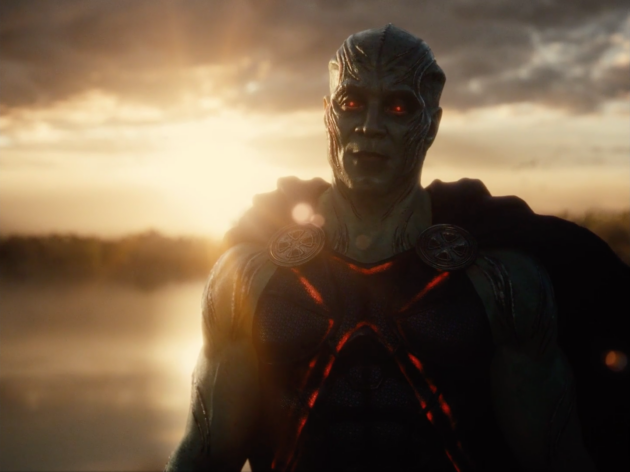
It may be a minor detail given Martian Manhunter’s small role, but it’s a little treat for comics fans and fans of the animated Justice League series. Teased, revealed, confirmed by Zack Snyder and actor Harry Lennix, the superhero earns two scenes. And the first was already known since the filmmaker had revealed it: Martian Manhunter takes on Martha’s appearance to talk to Lois, and rekindle her will to live.
The second acts as a post-credits scene, tucked into the ending epilogue which already has the feel of a post-credits moment. J’onn J’onzz visits Batman in the early morning, in his lakeside mansion. Bruce isn’t any more surprised by this alien, who explains that Darkseid isn’t done with them, that the Anti-Life Equation is on Earth and they must find it. A war is coming, and he will help them.
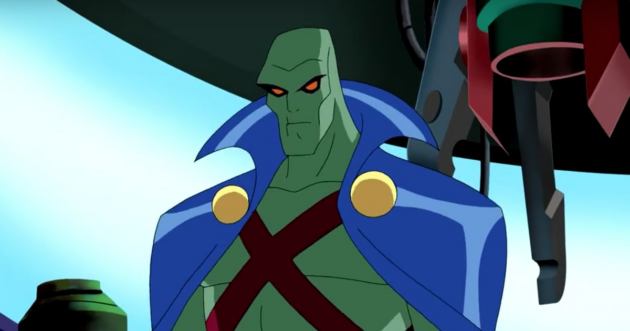
Given Martian Manhunter’s vast range of powers (flying, punching hard and fast, becoming invisible, extraordinary vision, telepathy…), his presence opened big possibilities for the future, cosmically speaking. J’onn J’onzz isn’t just a supremely powerful superhero; he’s also a tragic figure given his origins.
Finally, there’s the hero’s design. Martian Manhunter isn’t the easiest character to adapt with his totally alien look, green skin, and costume, but the result is a pleasant surprise. It’s all the more welcome that the film is packed with effects, sometimes not very subtle (the battle with the Amazons, the Darkseid flashback, the dimensional portal during the climax). Yet Zack Snyder dresses his Martian Manhunter in the shadows or sunlight to keep up his aura. It leaves you eager to see him again someday, somewhere….
The Trilogy Fantasies
Anyone will think twice before saying there won’t be a sequel or continuation to this Zack Snyder’s Justice League, since its very existence proves we should all shut up. What’s certain is that these four hours confirm for the 47th time that Zack Snyder had grand ambitions for his Justice League trilogy.
The project was originally conceived as two parts, before being reduced to a single movie opening the door to sequels. Since then, the ambition of a trilogy has been teased and suggested many times, with numerous elements: the Anti-Life equation, Darkseid laying waste to Earth, Lois Lane’s death, Superman’s turn to the dark side, Flash traveling through time, and the Green Lantern Corps coming to the rescue. All of this is more or less confirmed in the Snyder Cut, with Martian Manhunter joining the Justice League, and Ray Palmer, a.k.a. the Atom, lurking in the corner.
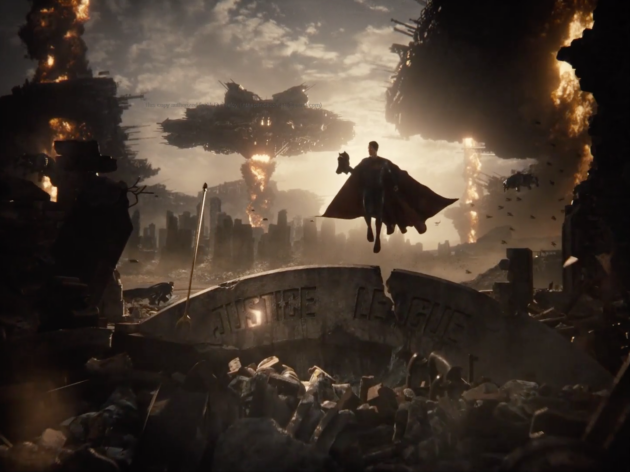
Several nightmare visions punctuate the film to open these apocalyptic horizons. When resurrecting Superman, Cyborg glimpses a terrible future, where Wonder Woman and Aquaman are dead, and where an unfriendly-looking Superman hovers over the ruins of the Hall of Justice (the team’s famous headquarters), with a few corpses and Batman’s mask in hand.
And of course, the epilogue further explores Knightmare, that dark future seen in Batman v Superman. The Snyder Cut reveals that Bruce isn’t the only survivor of this chaos, as he trudges along with Cyborg (whose scrappy metal is perhaps a little worse in the sun), Flash (in a bulkier suit), Deathstroke (still sporting a fresh haircut), Mera (still furious at losing Arthur)… and the Joker. The sense of despair is palpable as this unlikely group contemplates slim chances of survival. Notably, Superman finds them again—surprising that they had been talking off-screen for five minutes.
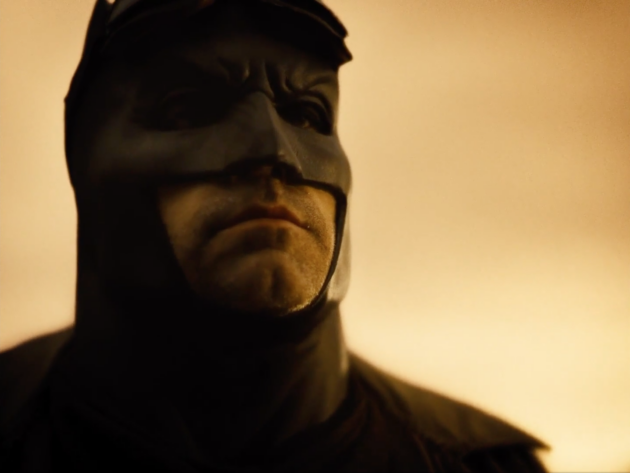
All this leaves us with a lot of questions. On one hand, a present where the heroes barely survived thanks to Flash, while Darkseid plans his revenge with his army, and Martian Manhunter joins the League for the coming war. On the other hand, a terrible future where Superman is on Darkseid’s side, where Wonder Woman and Aquaman are dead, and where Batman leads a group of survivors not exactly heroic anymore. Between the two? Many possible events, including Lois’s death and Flash’s time travel. And potentially two films, which would plunge into this particular era of despair that is especially exciting.
Ultimate fantasy? Ultimate frustration? Teasing of a killer death before a Zack Snyder’s Justice League – Part 2 on HBO Max? That’s also the poisoned gift of the Snyder Cut.

C’EST UN cas d’école INCROYABLE
Watching these four hours of the Snyder Cut also shows just how extraordinary the film’s existence is. If few believed it at first, it’s because reopening the file didn’t seem logical.
Warner Bros. owning the chaos of the theatrical version? Who backpedals and makes a precedent for fans? Who extends the budget? Who layers more complexity onto an already tricky extended universe? It all seemed crazy. Like a Joker film with Joaquin Phoenix, Robert De Niro, and by the director of The Hangover, which earned two Oscars (and the Golden Lion).
All of this was possible largely thanks to a revolution called SVOD. The streaming wars pushed studios to meet Netflix head-on, overloading the delivery pipeline with projects of every kind. For Warner Bros., it was a perfect opportunity: fix a mistake, attract subscribers to HBO Max, occupy the field given the cinema drought, and calm the fans (which is no longer a luxury). It’s also thanks to HBO Max that Zack could deliver a 4-hour version, typically reserved for DVD and Blu-ray releases.
Justice League isn’t the first blockbuster to get a second life. You don’t have to look far, because Superman II went through a similar hell at Warner in 1979: director Richard Donner was fired mid-shoot and replaced by Richard Lester in a sprawling production (Superman and Superman II were shot together). There were similar issues with reshoots, rewrites, conflicts, and patchwork. The shooting dragged on, creating hair-coif and actor-look issues visible, much like Kate Mara’s wig in Fantastic Four, another textbook case of mega-ambition going off the rails.
Reworked heavily, with added scenes, the Richard Donner Cut finally saw the light of day… roughly 25 years later. That’s also why the Snyder Cut is a case study, since it was realized in less than four years. From a pure business standpoint, Zack Snyder’s Justice League is fascinating, and will have a place in Hollywood history books. The question remains whether it was a miracle, or if the lightning could strike again, someday.
