
Denis Villeneuve has revisited the question surrounding the ending of Dune for Part One, which could have been quite different. Spoiler alert!
In 1984, Dune hit theaters in a truncated version of about 2 hours and 15 minutes, with producers fearing that David Lynch’s original cut would run longer than three and a half hours. Wanting to craft their own adult Star Wars with the big payday that comes with it, the producers, including Dino De Laurentiis, trimmed the final cut and added Virginia Madsen’s voice-over in the opening.
A final cut Lynch would disown just as he did the televised version, despite the few elements it retained from his original edit. While Denis Villeneuve had to upend his working method, his frustration and resentment appear to be far less than Lynch’s associate on the 2021 Dune production, which the director has always viewed as the first installment of a trilogy (one that could indeed happen).
This news was highlighted in conjunction with Dune’s broadcast on TMC at 9:25 p.m. on June 29, 2026
How to End a First Installment
Facing the density of the six-book Dune cycle by Frank Herbert, Villeneuve chose to adapt only the first half of the first novel in Dune. It thus ends with Paul (Timothée Chalamet) and Jessica Atreides (Rebecca Ferguson) meeting the Fremen. A controversial, even questionable choice, which marked the director’s first instinct, but which could have led to a very different ending according to what he told Empire:
“My first instinct was to stop here. We also tried stopping later. In the book, there’s a natural rupture—a two-year gap or something like that. But it didn’t work, because after 2 hours and 30 minutes of film, you were suddenly plunged into a whole new story — the one where Paul and Jessica are accepted by the Fremen and introduced to their culture. It felt like the start of a new chapter, which made the ending a bit heavy.”
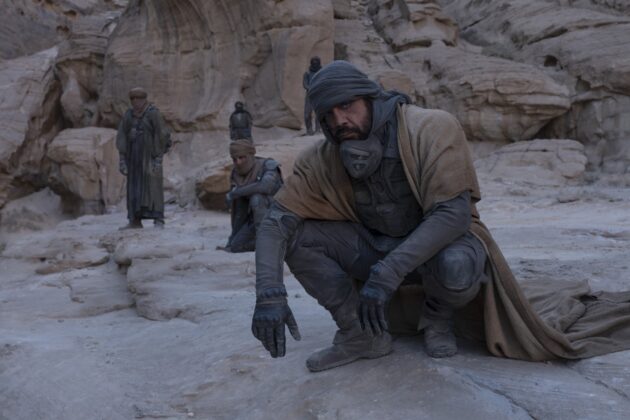
“I’m 100% convinced we stopped at the right moment, where you feel Paul has moved from boy to man and a page has turned.”
The second installment of Dune, titled simply Dune: Part Two and released in 2024, confirmed that this was more or less a smart narrative choice. By leaving Paul and Jessica at the moment they depart with the Fremen at the end of the first film, the director could restart the plot with a compelling action sequence alongside the Fremen and, more importantly, use it as a graceful transition from Paul’s move from Arrakeen Palace to the Fremen caves.
But more than that, he managed to generate strong buzz around the universe and the journey of his “hero,” since the second installment enjoyed strong box-office success (about $715 million gross on a $190 million budget). Will the third installment do even better? The verdict will come on December 16, 2026 in French theaters.
