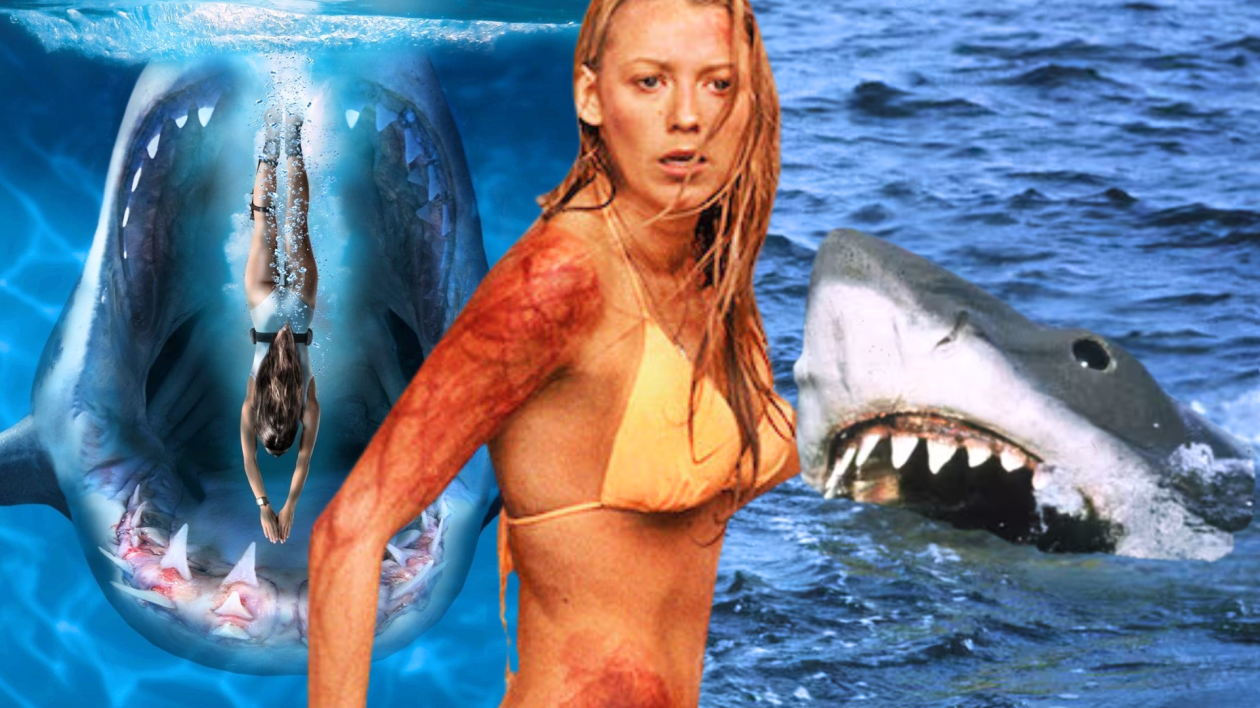
Jaws, Deep Blue Sea, Open Water, The Reef.. What are the best shark movies?
There are a few subjects that always bring the team together and can end any scrap at Ecran Large. Among them: David Fincher, Bertrand Blier, Julianne Moore, bagels, dinosaurs, and sharks.
Because we love sharks, and even more so shark movies, but good shark films are rare, we’ve gathered all the pearls to land on the best shark movies. Guaranteed 90% genuinely good films, and 10% regression-level fun.
Before you yell: the ranking goes from newest to oldest.
DEEP BLUE SEA 3
- Release: 2020 (VOD)
- Runtime: 1h40
Il n’y a pas ça dans Les Dents de la mer 3
What it’s about: These damned genetically modified bull sharks, hoping (yes, hoping) to cross with the great whites. On their path, several lunching creatures will try to deter them.
Why it hits the spot: Let’s be blunt. If you’re not satisfied with one of the latest blockbusters in this subgenre (see below), Western contemporary filmmaking (we haven’t had the chance to savor China’s delirious takes, most of which are not released in France) has plenty to plunge a sharksploitation fan into a pit of despair. Between barely disguised cons and formulaic products, the big-sister B-movie with fins is becoming rare.
Luckily, miraculously even, after a sequel that came out of nowhere and could be frankly dull, Deep Blue Sea 3 regains the generosity of the other films on this list. Of course, we’re light-years away from the budget and ideas of the half-baked crummy production of Renny Harlin (see below, again). But one has to acknowledge that the pitch’s self-aware stupidity, with its sharks swimming in formation, plus some deliriously bold moments, more than pays back the cost of a beer. And that’s all we ask of it.
IN TROUBLED WATERS
- Release: 2018
- Runtime: 1h54
What it’s about: 23 meters long, an insatiable appetite, and countless teeth: those are the hallmarks of the Megalodon, the supposed extinct monster returning to snack on a tourist or two. Except Jason Statham is nearby, and he’ll take the beast on in a 1-on-1.
Why it’s enough fun: The Meg is far from a perfect film. It’s basically a Disney-fied shark movie, with a crowd-pleasing ending that even spares a little dog. It’s packed with goofy supporting players and cheap drama. And the heroes are so bland and annoying that you’d almost like to dunk them in a footbath. So what the heck is a $150 million American-Chinese blockbuster doing among the best shark movies? It defends one niche: the big-budget blockbuster in this subgenre.
With Jason Statham and the director of Cool Runnings and National Treasure, no one could expect much from these troubled waters. That’s why the film’s first half stays entertaining, with its big-B-movie vibe as the team explores an unknown realm in the Marianas Trench.
A little touch of Jules Verne and of Pacific Rim helps it start strong… before settling into the usual. Once the mega-megalodon emerges from its lair, The Meg wears its face of daylight and outdoors, and loses much of its charm. It’s then a bunch of uninteresting puppets, a handful of simple tension moments, and CGI that’s not even particularly fun.
47 METERS DOWN
- Release: 2017
- Runtime: 1h41
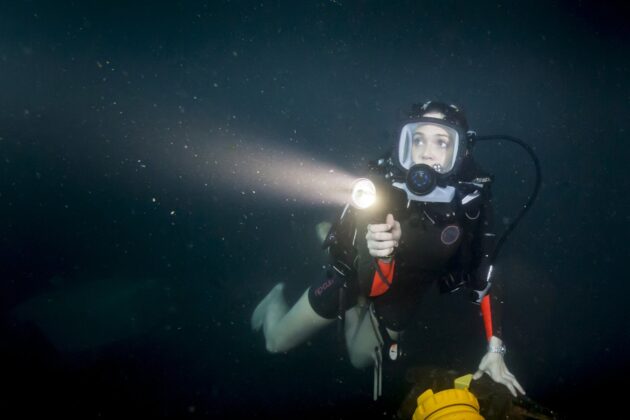 So far, so good
What it’s about: The quintessential crowd-pleaser premise: two slightly dumb sisters who look straight out of a bad TV show dive into a shark cage to observe the predators, but end up at the seabed when the cable snaps. Panic ensues as the two girls are surrounded by sharks, with oxygen running out and no way to call for help.
Why it’s a very pleasant surprise: Made on a $5 million direct-to-video budget, 47 Meters Down had a crazy life. Sold by Dimensions Films to Entertainment Studios, it got a theatrical release and proved successful at the box office, bringing in over $60 million (even though about $30 million went to promotion). It remains gentler and more classic in tone, with a twist that a watchful viewer will spot, like a shark tracking blood from a virgin on a summer morning.
But the premise is so funny and cruel that it’s hard not to want to dive in,” especially since a film largely set underwater has a certain joyous thrill.
And the ride is even more fun than expected, because director Johannes Roberts leans into the survival tension, even adapting the staging—rare in the genre—to match. The result includes some apnea-filled sequences (for us, and for the characters at times), with dark backgrounds to spot a fin. However, we can’t recommend its pseudo-sequel 47 Meters Down: Uncaged.
INSTINCT OF SURVIVAL
- Release: 2016
- Runtime: 1h27
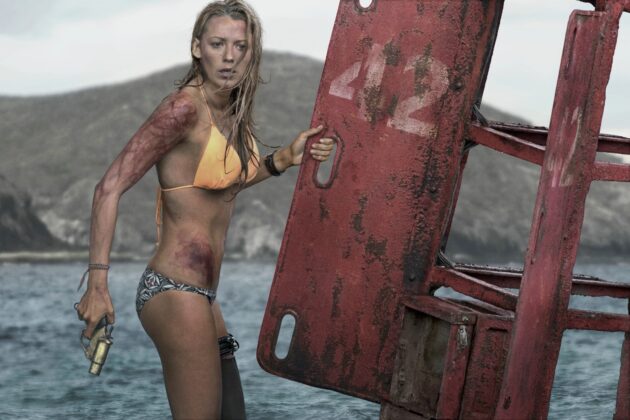 Blake Lives
What it’s about: Nancy, a solitary surfer, and Roger, a great white shark who would love to have her for his late snack. Stranded on a rock, the young woman calculates her chances of covering the several hundred meters to the beach.
Why it’s the quintessential summer pleasure: Blake Lively versus a shark. The Jaume Collet-Serra film essentially boils down to this showdown between an American woman who came to mourn her mother on a sunlit beach, and a very pissed-off beast determined to make her pay. A dead whale, a rock, a floating buoy: the film keeps itself to the minimum to deliver a pure aquatic survival experience. And the director finds a perfect balance between the genre he’s dabbling in (House of Wax, Orphan) and the Liam Neeson-style action flicks (Unknown, Non-Stop, Run All Night, The Commuter). Yes, we’ve skipped the Dwayne Johnson ones (Black Adam, Jungle Cruise).
Instinct of Survival doesn’t exactly reinvent the wheel, and simply replays familiar moments. But the film nails its simplicity and sacrifices much on the altar of spectacle and small, sharp thrills, enough to satisfy a craving for a little gore drying on a beach that looks too paradisiacal to be honest. Flat-out silly, but pleasantly effective.
THE REEF
- Release: 2011
- Runtime: 1h29
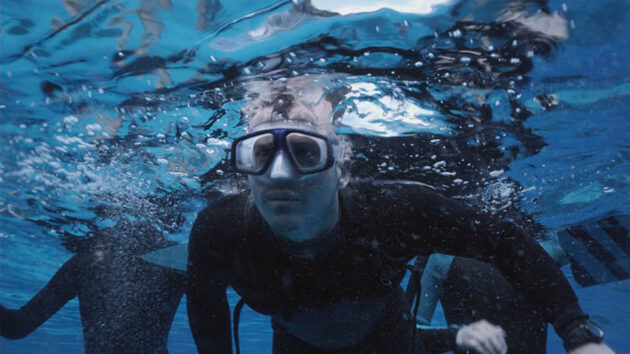 That’s going to be all blue… and then all red
What it’s about: Five friends head out on a cruise aboard their boat. But when it sinks, they discover the oceans aren’t just great spots for swimming.
Why it’s genuinely scary: On paper, the idea is simple: make a shark movie that feels real, with fear born of unimpeachable credibility. The risk of slipping into boring documentary-drama territory was real, but Andrew Traucki’s feature dodges it, largely thanks to its characters.
Their tragic fate is deftly set up and written, without ever compromising a tightly wound plot. For once, we don’t wait for shark attacks with blood on the lips, but fear them, convinced that each person is in danger, as the adventure never sheds its fatal aura. And it’s the editing—combining real shark footage with the panic reactions of the small group—that delivers, sometimes genuinely terrifying results.
OPEN WATER
- Release: 2004
- Runtime: 1h20
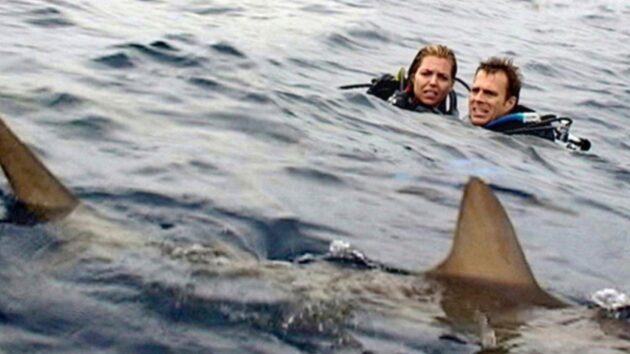 Caught between sharks and pixels
What it’s about: Susie and Daniel’s Bahamas vacation goes sideways when the couple gets separated in waters teeming with sharks whose favorite dish is the unsuspecting tourist.
Why it’s ugly but okay: Ever wished your coworker would get eaten by a killing machine underwater? If not, you’ll likely change your mind after this. The film’s hideous imagery will have you begging the cinematic gods to end the protagonists’ suffering. Director Chris Kentis probably hoped to amp up the immediacy of the subject, but shooting on DV doesn’t really add anything here since there’s no subjective point of view or found footage vibe.
The pace is relentless, and the tension grows extremely quickly, as shark attacks come with unstoppable savagery. So, while you should probably avert your eyes at times, Open Water—in deep water—is a shark movie you should seek out.
DEEP BLUE SEA
- Release: 1999
- Runtime: 1h40
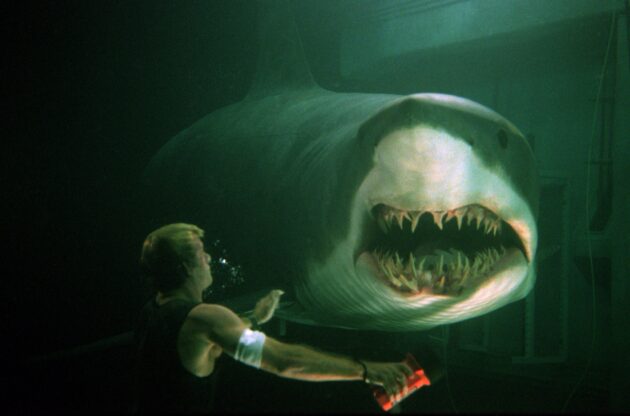 TOTAL CLASSIC
What it’s about: Experiments conducted by a research team aimed at curing Alzheimer’s by genetically modifying sharks—because, why not? The catch: bigger, smarter sharks start pushing back.
Why it’s goofy but great: Before being dismissed as a mere yes-man vehicle for Driven, Profiler, and other action flicks, Renny Harlin delivered a string of memorable ’90s action hits (notably Cliffhanger and Die Harder makeshift titles). The fiasco Pirate Island slowed him down, and Deep Blue Sea remains his last big Hollywood moment. And what a moment: a furious, delirious ride where sharks commandeer a floating lab, ready to snack on our heroes.
Deep Blue Sea is conceived, shot, and told like an attraction. That’s why it glosses over implausibilities and details, because spectacle is all that matters. It serves up deaths worthy of Tex Avery, savage attacks, and a carnivorous sprint toward death that is utterly enjoyable. The characters are mere meat for the feast, and for once that’s entirely intentional, including the unforgettable death of Samuel L. Jackson, and the one of Saffron Burrows (who played the heroine in theory, but the ending was rewritten after test screenings to kill her off).
Renny Harlin’s mastery of effects is on full display, and aside from a few CGI missteps, Deep Blue Sea expertly exploits the claustrophobic feel of the sinking facility, where the sharks stage a slasher-like melee. A full, guilty pleasure, even after many viewings.
THE LAST SHARK
- Release: 1981
- Runtime: 1h22
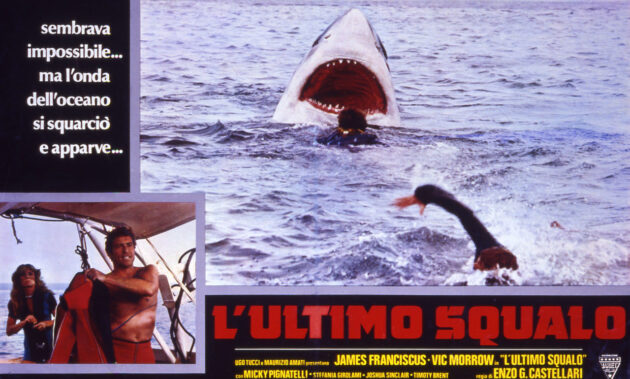 The ultimate predator?
What it’s about: A shark wreaks havoc on Amity Island’s seaside station during a windsurfing competition, just as the storm peaks.
Why it’s campy but wild: The film shamelessly borrows from Spielberg’s masterpiece and recycles its characters, but it smartly avoids treading the same turf. With a shrewd exploitation pitch and the budget of a vegetarian, the villain shark is shown as much as the effects and stock footage allow. And the creature is given full reign, chomping through surfers and a ski-boat crew, with the crowd-pleasing chaos of a marine monster on the loose.
The Last Shark sits as a rowdy, enjoyable B-movie that leans into the carnivorous frenzy. It’s a fun, over-the-top ride that embraces its own silliness while delivering on the thrills.
JAWS 2
- Release: 1978
- Runtime: 1h56
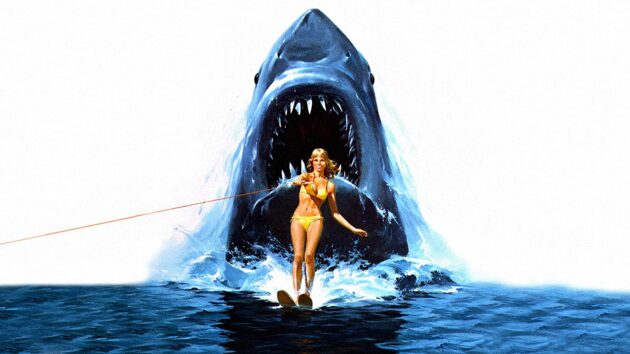 Astonishing
What it’s about : Amity’s beachfront once again visited by a carnivorous animal. And this time, the thing’s got a serious appetite.
Why it’s a good sequel: It may not stand up to the master, but Jeannot Szwarc understood that you have to distinguish yourself. The shark is present here and takes on a diabolical, gleeful look, sporting a nasty wound as impressive as its jaws. The era isn’t about subtlety or restraint; it’s about devouring the innocent, attacking sail classes, and skiers better watch out.
For a follow-up with familiar levers and not exactly groundbreaking ideas, you’re surprised by the staging quality and the suspense, which culminates in a final confrontation that reimagines Spielberg’s apex and crowns the big-game hunt as essential gear. Jaws 2 remains, for many, the best sequel to the demigod classic, unless you prefer the fourth film’s more ridiculous shark revenge. Each one has its fans.
JAWS
- Release: 1975
- Runtime: 2h04
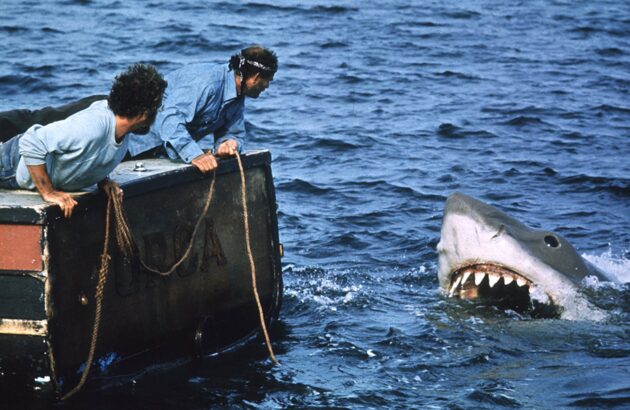 An attack that changed cinema
What it’s about : A shark, a police chief, a scientist, an old salt, and a deathmatch that changed the course of Hollywood cinema.
Why it’s the quintessential classic : For anyone who has lived in a bubble for over thirty years and still swims with innocent gusto, Steven Spielberg’s film is a marvel, the most complete and terrifying creature-attack film. Forced by technical constraints to use the shark in only a handful of scenes and to improvise (the shoot time nearly tripled), the director reshapes his film and makes the predator an integral part of the sea—an oceanic environment that’s hostile, unpredictable, and quietly treacherous.
Carried by impeccable performances (Roy Scheider, Robert Shaw, Richard Dreyfuss) and a John Williams score that still haunts, Jaws permanently marks cinema history, helping to create the blockbuster as a category (the first film to gross over $100 million) and signaling the decline of New Hollywood. If released in 2018, Jaws would cost around $35 million to make and would likely reach $2.2 billion in gross revenue. In short, a predator classic.
BLUE WATER, WHITE DEATH
- Release: 1971
- Runtime: 1h39
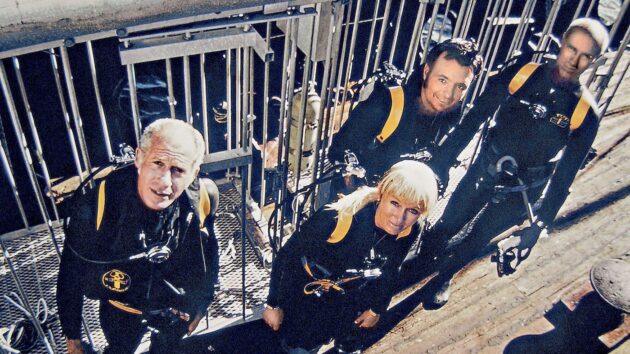 A touch of real in a brutal world
What it’s about : An 18-month expedition following the hunt for the Great White, chasing a reputation that’s already well established.
Why it’s a precursor : If this is a documentary, you can’t help but feel the same vertigo in front of Gimbel’s masterpiece as you do in front of the most immersive fiction. First, the director and his crew truly tell a story—more than simply informing us about a subject: the unbelievable adventure of a cinema crew that decides to become the first to hunt a great white to film it.
Blue Water, White Death is the progenitor of all shark-filled cinema, and already contains sequences that later successors would reuse (notably the cage scene). If you add to that historical value an aesthetics-driven accomplishment that’s often stunning, you’re looking at one of the greatest works dedicated to the creature we’re talking about.
BONUS: ORCA
- Release: 1977
- Runtime: 1h35
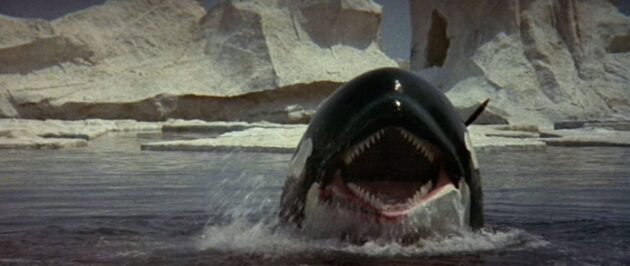 Don’t save Willy
What it’s about : Captain Nolan (no relation) goes after an orca, not realizing that this target is intent on replying, or even seeking revenge.
Why it’s too good not to mention : You can see where this is going… it’s not even a shark, so it doesn’t count. Allow us to say that when it has a fin and eats bathers, it deserves an exception. Indeed, this is not a traditional shark movie, but a vicious, vengeful killer whale. When a powerful male watches his mate slaughtered by Captain Nolan, he decides to attack—and then goes after every human who gets in his way.
Putting Bo Derek and Charlotte Rampling in the path of an enraged animal is in itself a generous gift to the audience, but Michael Anderson does even better: he proves, twenty years ahead, that the Free Willy team clearly got it wrong. We were told that a big beast like that couldn’t be entirely bad. The blunt eco-message and often questionable effects are forgiven thanks to those bold intentions.
