COP TALK
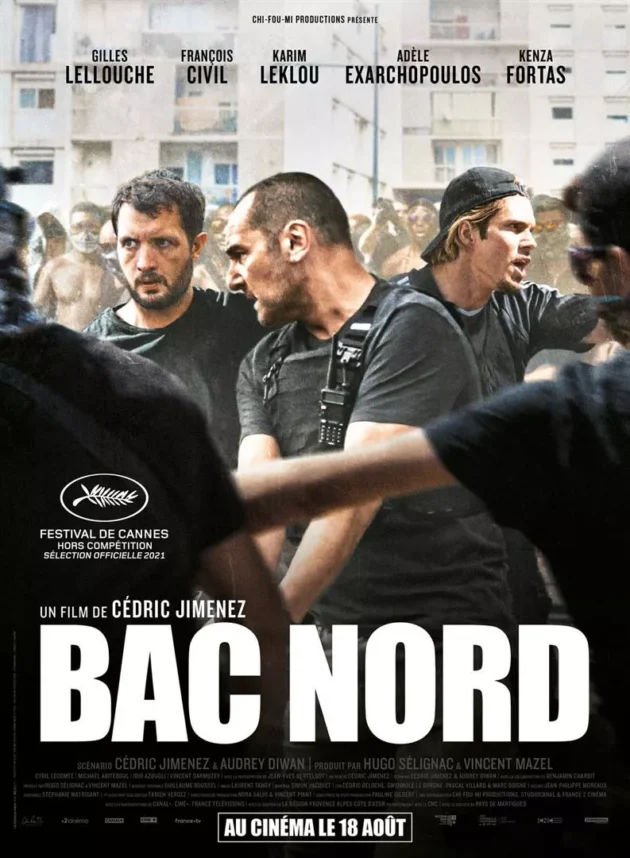
In just a handful of feature films, Cedric Jimenez has shown an ambition and a versatility rare in French cinema. From concept-driven thrillers to historical drama and retro-noir, he has moved across different strata of genre filmmaking, accumulating the narrative and technical toolkit he now deploys in Bac Nord. From the opening engine-rousing sequence and as he gradually introduces each protagonist, the filmmaker tightens his grip on the audience’s nerves more with every moment.
Scene by scene, the ease with which he establishes atmospheres, imprints them on screen, and captures the subtlest nervous inflections of his characters is consistently impressive.
Deceptive Sun
First and foremost in the writing, one senses that rarely has his collaboration with the screenwriter-director Audrey Diwan been as fruitful. The articulation between conflicts conceived in the writing, psychological trajectories, and their translation into visual grammar is always lucid, continually serving the claustrophobic core of the whole. If The French sometimes wheel with a postcard-sentimental mood, here everything is more assertive, fluid, stylized, and yet delivered with a disarming sense of reality.
Neither a plagiarist of Anglo-Saxon methods nor a timid naturalist, Jimenez carves out an aesthetic path that fully embraces Marseille’s stereotypes, only to twist them, subvert them, and wield them to characterize the port city. The geography, the colors, the skins, the accents—everything is embraced and ordered to bring to life a symbolically enclosed space whose temperature climbs from one scene to the next.
And Marseille becomes a cauldron, as the director narrows his framing around a trio of police officers sliding toward a tribal, criminal logic. A spiral that prefaces the story’s big turning point, the bravura moment that will leave part of the audience on their knees, searching for their teeth.
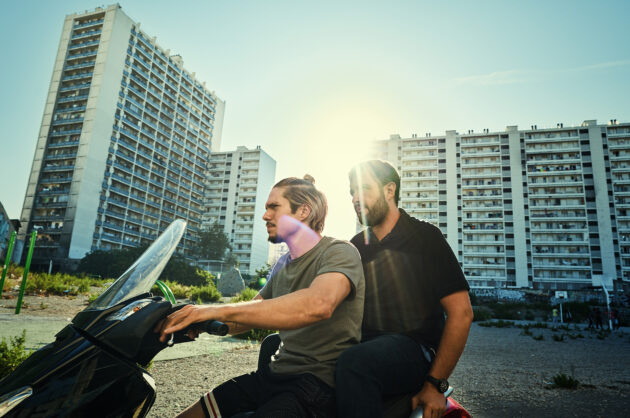 Two cops, Buddies
WITHOUT WARNING
To raise a plot’s voltage and relentlessly increase pressure requires a storyteller who can release it in a double movement. By easing the viewer’s adrenaline while ensuring that the action’s momentum does not drain the script’s stakes, in short, that the explosive moment doesn’t deprive the story of its oxygen. That is precisely what Bac Nord achieves with its central action sequence.
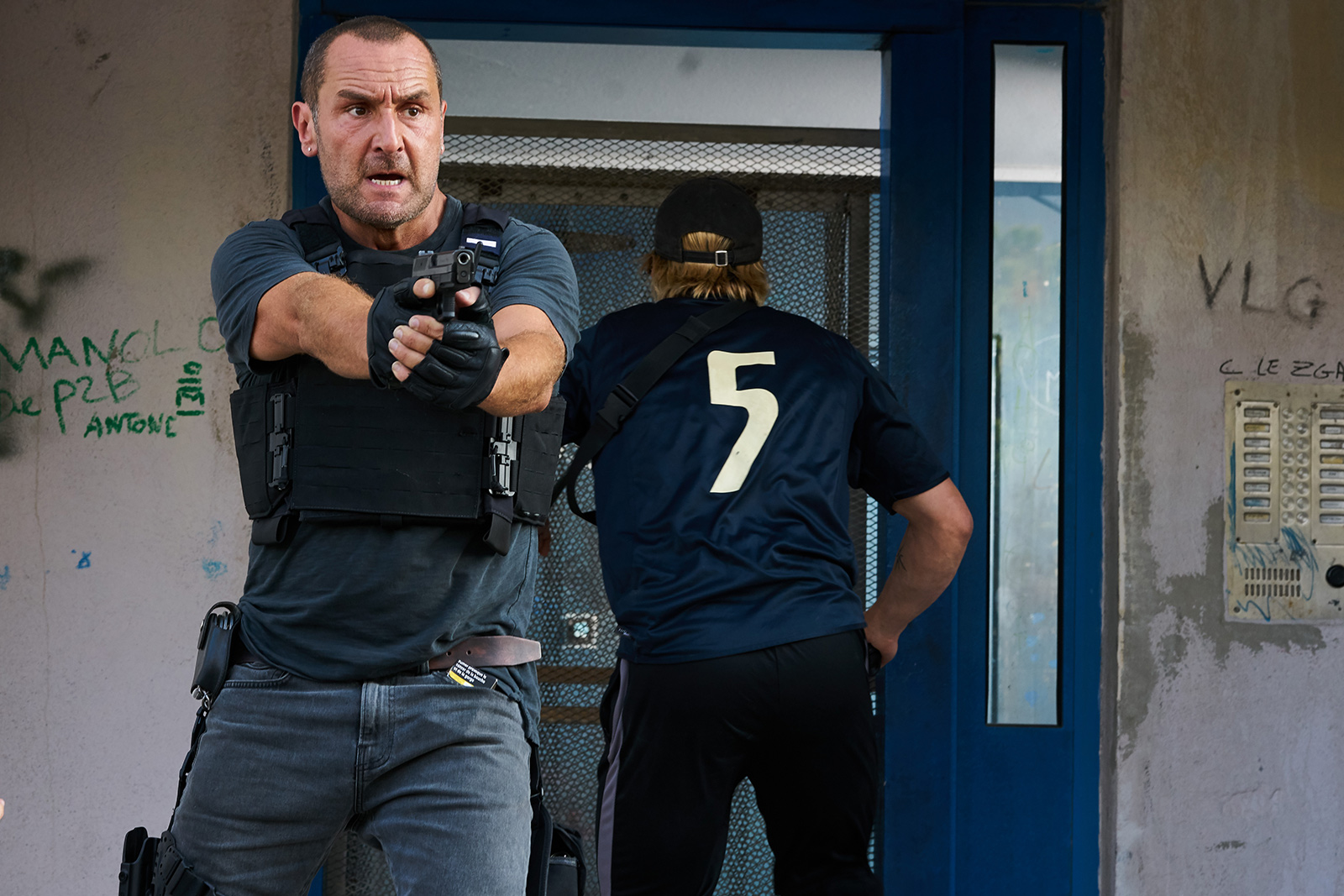
For nearly twenty minutes, Jimenez’s camera and editor Simon Jacquet bulldoze through with mastery. A masterclass in spatialization, rigor in the action’s tempo, and the impact of every frame: when the film clamps the audience’s wrists, it’s not to let them escape. And that interminable burst becomes a new narrative squeeze, allowing the story to keep advancing, leaving us groggy yet eager to speed up again.
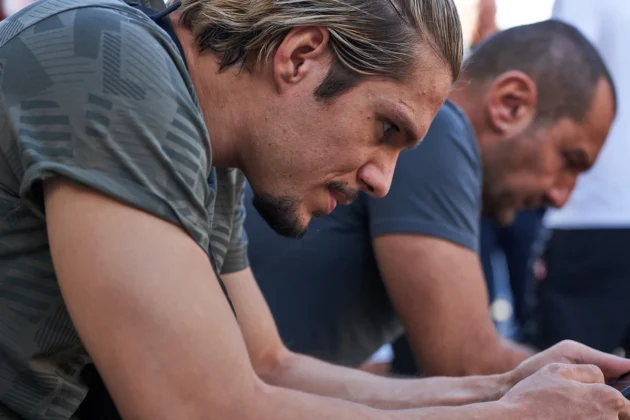 François, plainclothes cop
What helps keep us glued is a cast fully committed to the material. Gilles Lellouche has always carried heft, but he seems to have sharpened his act since directing Grand Bain. With a scar just about to reopen into a furious burst of rage, he is the driving force behind a trio of disreputable men who don’t quite know each other. Karim Leklou proves startling once again, while François Civil teases the audience by playing off his pretty-boy image and trading it for a slightly goofy, likable fool who can’t quite grasp the stakes or consequences of his actions.
In short, the film is effective. And truthfully, it’s refreshing to see French cinema take on current events in a way that aims for broad popular appeal—part crime saga, part urban western, straddling the legacy of hexagonal policing cinema and that American gangster mythos, or more generally the urban western. For all those who won’t want to hear what the film is saying, there are plenty reasons to appreciate it nonetheless.
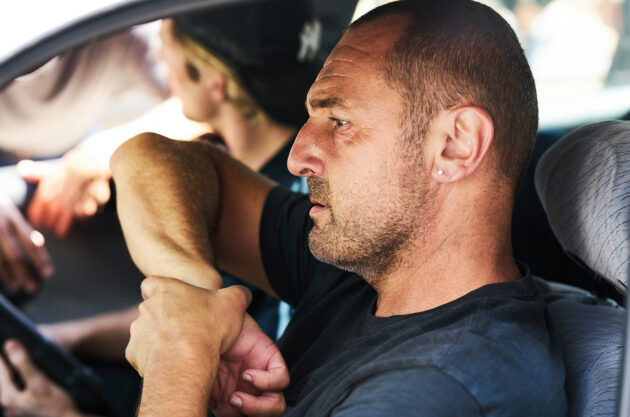 Gilles the Loul
DIRTY-FACE CRIME
The real-life incidents fueling the film aren’t trivial: with 18 defendants, charges ranging from drug trafficking to money laundering, corruption, and racketeering, the case resulted in a whistleblower being sidelined and a portion of the corrupt officers being laundried—charged and convicted. It stands as one of the most troubling scandals to tarnish the image of the French police. But the portrait Jimenez offers is deeply problematic. If the Marseille vice squad progressively drifted into organized crime, the screenplay bluntly suggests it’s because life isn’t easy.
Self-important superiors, unfeeling hierarchy, and kebabs that never quite hit the spot—this brutal daily grind is what toppled our heroes. The reasoning feels thin, and the director’s empathy for the characters so pronounced that it raises a deeper question: why treat the people in the film as human beings while painting everyone else around them as another kind of creature? The police extort and traffic, but they have their reasons.
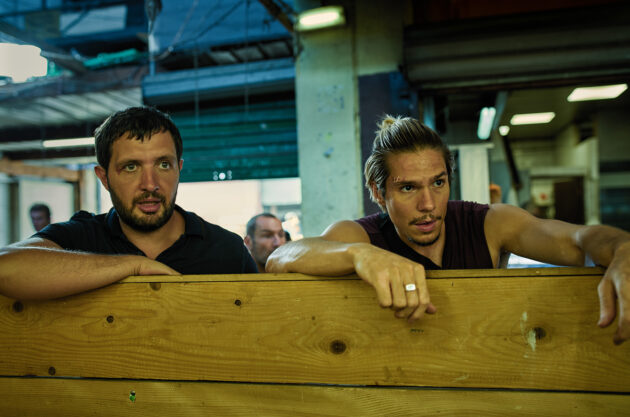 When the cops get it all on the table
Meanwhile, the residents of the northern districts are systematically pushed toward a radical otherness, if not outright animality. Everyone has their reasons… but some more than others. And it isn’t a single car sequence where our officers laugh raucously with a kid over a rap track that can convincingly nuance this prosecutorial portrait.
A whole population is reduced to a hostile mass, and a criminal organization is scrutinized to extract its anguished humanity. It’s this discrepancy that makes the piece more provocative, especially given how works like A.C.A.B (All Cops Are Bastards), Antidisturbios, or Les Misérables reminded audiences that a critique of police institutions can coexist with genuine empathy. That angle is what a journalist from Ireland pressed during the Cannes 2021 press conference for the film, only to be met by the team’s practiced condescension.
 A direction steadfastly anchored to its characters
COPS AND HOODLUMS
The police-procedural remains a staple of French cinema, a genre unto itself with its codes and references that predate Bac Nord by years. It would be hypocritical and shortsighted to pretend that a modern feature is suddenly breaking a centuries-old tradition of representing the suburbs and working-class neighborhoods through dozens of movies—now further reinforced by relentless television depictions that cast immigrant communities as nothing but savage hordes.
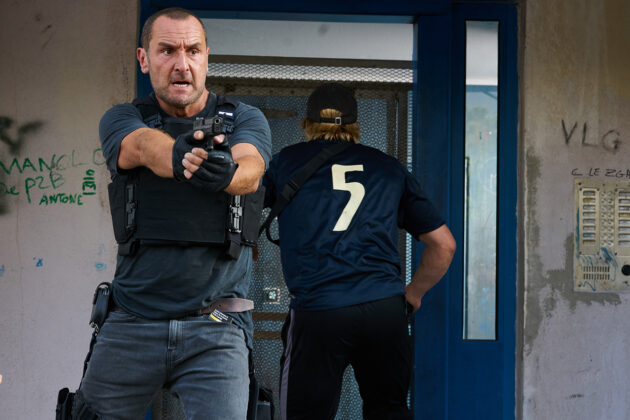 Not such good cops
If the film isn’t responsible for the culture that precedes it, it nevertheless bumps up against many other contemporary French productions—like Gagarine, Shéhérazade, and Bonne mère—that have managed to offer living, nuanced looks at these themes and the people who live them. An endemic system of corruption stretched over years is reduced to the end-of-month dithering of a few public servants, a population cast into a barbaric image… More than a movie that would extend a right-wing version of reality, Bac Nord is a film that rejects any notion of objective reality (or truth) and substitutes its own fantasies instead.
That approach won’t deter those seeking a straight-up urban western, technically polished, from enjoying themselves. But it does raise questions hours after two individuals were riddled with bullets at close range by BAC officers, with little public outcry, and it leaves one hoping that French cinema will renew some of its patterns—or at least interrogate the representations it carries without simply parroting them.