
What are Pixar’s best and worst? Screen Large has ranked all 30 films, a 100% guarantee that “nobody will agree and that’s fine.”
Since Toy Story, Pixar has delivered a parade of fantastical, surprising, wondrous, and unique journeys. Yet the California studio with the desk lamp has also stacked a few (big) missteps, caving to its own formula and the easy lure of sequels and franchises. The editors therefore turned their attention to the studio’s entire animation catalog to offer their little ranking, from the worst to the best.
Note: This ranking was initially conceived for the release of The Incredibles 2 and updated for the release of Toy Story 5.
31. Jumpers
- Release: 2026
- Runtime: 1h45
The idea: Teenage girl Mabel places her consciousness inside a robotic beaver to save a glade and its animals from the vile mayor Jerry.
The good: The humor around discovering the animal world and some burlesque ideas (the shark). But that isn’t enough.
The bad: Jumpers is the perfect example of what has gone off the rails at Pixar. The initial emotional hook between Mabel and her grandmother (who dies off-screen) tries to imitate Up without delivering the same melodramatic fervor. Overall, the film doesn’t dare to do much, and it uses the studio’s storytelling tic without the enthusiasm.
But we’d almost forgive it if Jumpers wasn’t so politically hypocritical. Mabel is basically a cardboard environmentalist, more worried about the memory that the threatened glade evokes than about the ecosystem itself. When she stirs an animal uprising, the film immediately backtracks, even though it had previously shown that dialogue with Jerry was impossible. In short, you’re allowed to feel outraged, but the outrage itself is unacceptable. A terrible message to send to kids!
In today’s political climate, that call for compromise feels irresponsible, especially since the film implies everyone—including the “villain”—will win. Jerry wants to build a bypass and will succeed via a single detour that merely sweeps the bigger problem under the rug. It wasn’t exactly what Pixar needed to become the new voice of Macronism through its heroes.
30. CARS 2
- Release: 2011
- Runtime: 1h52 too long
The idea: Martin becomes an international spy. That’s as bad as his main character.
The good: Apart from seeing Lightning McQueen again in a few scenes, not much else.
The bad: This is one of those films that probably should never have existed, and whose premise never should have sprouted. Shoved into a post-drunk, ecstasy-inspired and hallucinogenic-styled mix, Cars 2 is undoubtedly the worst entry of the trilogy. A colossal flop for John Lasseter (here directing) who still had to recover from the crash of his film.
The first mistake of Cars 2 was thinking that audiences and fans would love Martin and accept him as the new hero of adventure. The idea of placing an insufferable village fool at the center of an espionage plot is deeply desperate and stupid, and clearly aimed at under-fives. Apart from its lead duo, the supporting characters don’t shine. Despite veterans like Flash, nearly absent, you’re left with an overstuffed cast of secondary characters who serve no purpose.
Ultimately, the worst thing about Cars 2 isn’t the characters or the grotesque humor, but its garbled and incomprehensible moral, packed with old clichés. The very good technical execution behind it isn’t enough to fill the galactic void of a shaky script. Congrats to Disney for pulling off Pixar’s first real failure. Please never do it again.
29. CARS 3
- Release: 2017
- Runtime: 1h42

The idea: In the face of a new generation, Lightning McQueen is nudged toward retirement from racing. With the help of a young mechanic, he fights to prove he still belongs among the champions.
The good: If there’s one element you can’t fault in the Cars franchise, it’s the virtuosity of its animation and the overall technical excellence that persists in Cars 3. Even if the movie remains a modest disappointment, it’s more dignified and appreciable than the second film, closing the missteps of Cars 2.
The bad: After a disastrous second film, Cars 3 regains some color thanks to McQueen and a well-judged reverse-pivot to a more sport-based, existential narrative. It stays within the lines but still layers clichés with caricatured characters—most notably a parallel between McQueen and Rocky Balboa, both facing limits and obsolescence.
The plot also meanders through a series of mostly useless subplots and fails to refresh its themes (transmission, experience, virtual reality).
28. THE GOOD DINOSAUR
- Release: 2015
- Runtime: 1h34

The idea: A timid, isolated dinosaur meets a young human and begins a long journey with him.
The good: In terms of lighting, scenery variety, and texture effects (dust, rain, water, mist, etc.), The Good Dinosaur represents a remarkable technical triumph. The concept of portraying dinosaurs as civilization-bound creatures and humans as the wild—gritty—creatures is original. The studio also attempts to inject some grit into the overall narrative, giving the piece more character at points.
The bad: The plot is terribly predictable, and the hero Arlo often comes off as a “happy-go-lucky” fool rather than a seeker on a quest. The pacing is especially tedious. Moreover, while Pixar has always delivered visually accomplished works, The Good Dinosaur suffers from a clear direction problem. Despite gorgeous textures, the rounded, childlike look of the film dulls it more than it characterizes it. It’s also unable to stand out among the many dinosaur-centered animated features that predated it, such as Don Bluth’s The Land Before Time-like works. Ultimately, The Good Dinosaur comes off as a slightly passé echo of more ambitious Disney-Pixar efforts.
27. BUZZ LIGHTYEAR
- Release: 2022
- Runtime: 1h49
The idea: Here’s the film Andy watched in 1995: a space opera about a Space Ranger stranded with his crew on a hostile planet. Trying to get home triggers a chain of events that will change his life.
The good: With its openly meta dimension, Buzz Lightyear deftly sidesteps the mercantile baggage surrounding its existence. Sure, the movie was meant to ride the Toy Story wave, but Angus MacLane speaks through this reflective object about how certain imaginary worlds shape the collective unconscious. On one hand, the film employs dazzling visuals to pay homage to Star Wars and 2001: A Space Odyssey, while on the other, it speaks to everyone who grew up with Pixar. A beautiful spectacle that reclaims its universe to tell the deep loneliness of a hero haunted by his failures.
The bad: Unfortunately, this risk-aversion sometimes hurts the film. As a space opera, Buzz Lightyear can feel a little thin, since it relies on one planet in a Star Trek–like setup. With underdeveloped secondary characters, the second act lags and struggles to build momentum. Everything seems a bit boxed in by the Toy Story framework. What is Star Command for? How far does its power extend? All these questions remain unsettled, thanks to a fairly lightweight world-building that could have benefited from expanded scope. The movie will thrill kids, but it falls short of the emotional shock that Andy experienced in 1995.
26. Elio
- Release: 2025
- Runtime: 1h39

The idea: An 11-year-old boy obsessed with space struggles to find his place on Earth. His life is upended when he’s mysteriously teleported into the Communiverse—a galactic organization gathering representatives from distant galaxies. By a twist of fate, he’s mistaken for Earth’s official diplomat.
The good: Elio is visually stunning. Its texture work pushes a new limit (especially in its handling of lighting) and pairs beautifully with the depiction of a boy’s disoriented search for footing. This indefinable void the film brushes against lands in some breathtaking scenes.
The bad: Not only is Elio (as of now) Pixar’s biggest box-office flop in history, but it was almost entirely redone during production, prompting the departure of its original director, Adrian Molina. The intent, according to the creator, was to hint at the protagonist’s latent homosexuality through this challenging story of identity and belonging.
But in Disney and Pixar’s conservative crusade, auto-censorship was chosen, to the point where Pete Docter (Monsters, Inc., Up, Inside Out, Soul), now the studio’s chief creative officer, candidly stated in an interview: “We make a movie, not a multi-hundred-million-dollar therapy.” Brilliant, except that’s precisely the therapeutic dimension Pixar has been known for in the past.
Unfortunately for Elio, these shortcomings are felt. In addition to a sophomore slump, the final result never carries the emotional punch expected, limited to a certain level of emphasis despite its cosmic stakes.
25. FINDING DRORY
- Release: 2016
- Runtime: 1h37

The idea: Since Finding Nemo was a huge hit, why not go back to the well? This time, it’s Dory who must be found.
The good: Hank, the eccentric octopus. Nobody will be fooled by the automatic use of this quirky character meant to amuse and distract from the film’s emptiness, but Hank is funny enough to satisfy and is used to highlight Pixar’s ingenuity.
The bad: The fact that Finding Dory is entirely dispensable and trapped in the Pixar formula, reaching peak laziness here. This sequel is monumentally unnecessary since it largely recycles the premise both in substance and form. Auto-pilot on hyperspeed, with a forced sequence of tear-jerking moments, gags, and capers.
Again, Pixar leans into nostalgia and familiarity more than imagination and daring—this time more bluntly than in Monsters University. It’s basically re-teaching the same song, changing a few notes, and hand-feeding audiences who loved Finding Nemo with a payback to nostalgia. There’s also a troubling sign that the studio, due to popularity, feels free to deviate more and more without real consequences. The result is lazy and middling, though still entertaining for fans.
24. MONSTERS UNIVERSITY
- Release: 2013
- Runtime: 1h44

The idea: Borrowing from Monsters, Inc. by explaining how Bob Razowski and Sully met at the Monster University, where the duo were anything but friends.
The good: Pixar nails the Pixar formula. No one will be surprised to get a few smiles and laughs, and to latch onto a supporting character, a gag, or a scene. And unlike many recent Pixar films, Monsters University is largely effective, less dull and flat than feared.
The bad: Why another Monsters, Inc. prequel? If the first film by Pete Docter wowed audiences, the sequel mostly rode its wave and offered little novelty. It’s a familiar story of the pulled-together friendship with a setting barely revisited. No magic, no brightness on screen.
The real problem is that Pixar plays the nostalgia card, not imagination or audacity. Safety comes before artistic ambition, giving this prequel a procedural, marketing-friendly feel that’s aimed at younger viewers who’ll be happy with it.
23. A BUG’S LIFE
- Release: 1999
- Runtime: 1h35

The idea: An ant colony spends each year gathering food for crickets so they’ll leave them alone. But the night before harvest, the young Tilt makes a huge blunder, destroying all the food, and must quickly find tougher insects to help them face their enemies.
The good: A Bug’s Life is a bit like the Seven Samurai, but scaled down to microbe size. Besides a tightly plotted story where nothing oversteps, we salute a film that adheres to Hitchcock’s principle that a hero’s journey is strongest when the villain is notably remarkable. The villainous locust (voiced by Kevin Spacey in the dub) is genuinely chilling, a schemer who will be remembered by both kids and adults. A standout villain on par with Frollo in The Hunchback of Notre Dame.
The bad: If John Lasseter said he drew from insects for his animation, you might get the sense he’s making them think and act like humans. In sum, the film explores themes like the power of community against tyranny and the awakening of individuality, which are good in themselves, but feel repetitive and don’t bring a fresh edge to the animated movie. There’s also heavy-handed humor in dramatic setups, which robs some scenes of their gravity.
22. BRAVE
- Release: 2012
- Runtime: 1h35

The idea: It’s the story of a modern princess who’s armed with a sword and red hair, seeking freedom and independence, but who must learn to temper herself and repair her mistakes.
The good: The hair work on Merida is technically impressive.
The bad: That Brave almost marks the first Pixar film by a female director (before Brenda Chapman) and the resulting behind-the-scenes drama underscores the franchise’s problems. Beneath its modern reimagining of the princess, the film presents a rather simple coming-of-age tale with a somewhat ambiguous message. Visually, it’s not as bold or memorable as Pixar’s most daring work. It doesn’t quite measure up to Vaiana in terms of world-building, characters, or myth.
21. ONWARD
- Release: 2020
- Runtime: 1h42

The idea: In a magical world where magic has become commonplace, two brothers who are complete opposites embark on a quest in which a spell might let them spend a few hours with their deceased father.
The good: Onward isn’t Pixar’s first film to tackle grief, acceptance, and letting go, but it does so with a blend of invention and restraint that is impressive. Despite initially off-putting protagonists, each comes into their own through careful storytelling, becoming a perfect vessel for audience emotion. Pushing the characters to question their priorities and the source of their happiness, the film delivers an intimate epic that often lands.
The bad: Two big issues keep Onward from rising higher. The first is narrative: the plot stalls a bit and takes too long to establish its stakes. The first half-hour, though thematically interesting, lacks energy. The film also reflects the studio’s internal doubts after John Lasseter’s departure, turning the aesthetic into something uncertain.
The film aims to critique “mall fantasy” but never fully distance itself from the concept in terms of artistic direction. And in trying to show how industrial imagination breeds a hideous mythology, it sometimes becomes rather ugly itself.
20. LUCA
- Release: 2021 on Disney+
- Runtime: 1h36

The idea: Two young “sea monsters” — who are only monstrous by reputation — head to the surface where they take human form to join a race and win enough money to buy a Vespa and ride toward freedom.
The good: After the stunning and poetic short La Luna, director Enrico Casarosa took on his first — and so far last — feature-length film. While not quite a rough draft, Luca bears the director’s signature, especially in its rounded lines and some character designs, and memorable dreamlike sequences with the starry ascent.
Beyond the visuals, Luca is a light and charming movie, even if the term sounds old-fashioned. Its sunny mood, near-one-location setting around a small Italian fishing village, lovable characters, bright colors, soothing music… Everything about Luca exudes warmth, tenderness, and mozzarella.
The bad: Even with good sentiments and heart, Luca suffers from a predictably simple plot and a concept less innovative than the studio’s more complex, existential stories like Inside Out, Soul, or Toy Story. A refreshed take on The Little Mermaid, it’s notably predictable, which can make the whole feel a bit programmatic rather than enchanting.
19. CARS
- Release: 2006
- Runtime: 1h36

The idea: An arrogant young car prodigy sets out on the race of his dreams but ends up lost in the American heartland and must team up with a village loser to reach his goal.
The good: Orchestrated by the virtuoso John Lasseter and his legendary technical skills, Cars is one of Pixar’s most visually accomplished films (despite the cars’ very childlike designs). Even twelve years later, the movie retains real elegance and a wonderful visual fingerprint.
The bad: It can’t help but include a long-running love subplot that sinks the film’s rhythm and distracts from the real messages, leaning on familiar narrative patterns that feel convenient for younger audiences. A classic case of crowd-pleasing formula over a sharper story.
18. SOUL
- Release: 2020 on Disney+
- Runtime: 1h40
The idea: Joe, a middle-aged music teacher, dreams of playing at a premier New York club, but on the eve of his big break, he dies and ends up in the afterlife. He escapes and lands in the “Great Before,” a place where souls gain their personalities before heading to Earth. Joe teams with 22 to try to return to life—and give 22 a taste for living.
The good: Visually, Soul is one of Pixar’s most stunning achievements. After exploring emotions in Inside Out, Pete Docter steers into souls—their origins, purpose, and what they trigger in people. It’s visually imaginative and emotionally rich, with textures, depth cues, color play, and a standout score that create a deeply affecting experience. The film’s journey through the Great Before and Earth lets the two leads confront their inner unknowns and invites viewers to reflect on their own lives.
And when you realize that amidst these mature themes, Soul reveals Pixar’s introspective journey to rediscover its own soul, it becomes even more beautiful, ambitious, and moving.
The bad: Unfortunately, the film doesn’t quite live up to its stunning premise. Docter’s themes are there, but the depth sometimes feels surface-level, or the issues are resolved too quickly. Additionally, the plot around the cat and the body swap can feel like filler rather than a driving force for character growth. It’s not a total misfire, but it lacks the momentum the better Pixar entries deliver.
17. Toy Story 5
- Release: 2026
- Runtime: 1h42
The idea: Bonnie’s parents give her a connected tablet named Lilypad, which leads Jessie, Buzz, and the other toys to doubt their usefulness. And somehow, Woody has returned…
The good: To distinguish itself from its predecessors, Toy Story 5 has a strong idea: give more room to Bonnie, and to kids in general, at that awkward age when forming social circles is hard. The girl tries to make friends and is pressured by technology and consumer culture to join the crowd or be ostracized.
In this way, the film avoids the boomer critique we might have leveled at it, since Lilypad’s arrival isn’t that different from Buzz’s entrance in the first film. Still, introducing Bonnie to a social network early pushes the film to confront a cruelty that kids are capable of—and Pixar dares to address it head-on. The real pit of tech is making the young “play grown-ups.”

The bad: The best ideas for Toy Story 5 mostly exist in a closed loop, and they struggle to connect with the main characters, who are increasingly limited in their psychological development (Buzz and Woody especially feel sidelined). Overall, the links in the long film feel rough, particularly with a forced sub-plot about a Buzz Lightyear troupe escaping from a crashed crate.
In its cascade of cross-cutting adventures leading to a blundering final act, the film loses the emotional thread, except for a powerful twist about Jessie that could have been even more devastating if Andrew Stanton had pushed the idea to its logical end.
16. COCO
- Release: 2017
- Runtime: 1h47

The idea: Miguel lives in a family that has banned music for generations because of a shameful ancestor. Wanting to become a singer, he finds himself transported to the land of the dead and seeks the idol Ernesto de la Cruz to help him live his dream.
The good: Pixar finally seems to have found its spark again. Right away, the stunning and incredible technical execution makes each frame a feast. The Mexican culture is refreshing, and the film is full of wild, imaginative ideas.
Moreover, the characters are genuinely strong and emotionally engaging, with Coco at the forefront, capable of bringing tears to the eyes in every scene. And the film ends with a deeply moving final musical sequence that reminds us that when Pixar truly commits, it remains the boss.
The bad: Coco isn’t Pixar’s most original film, and it hints at a path already started with Soul and Vice Versa. The premise is fairly conventional, and the film leans heavily on its visual prowess to deliver a spectacular parade of art. The problem is that a later comparison to Tim Schafer’s Grim Fandango shows that the Mexican afterlife idea isn’t entirely novel. It’s not a failure, but it signals Pixar leaning on easier formulas rather than taking bigger risks, even if the result still offers ample value. And some older gamers will note echoes of Grim Fandango in the underworld mythology Pixar paints here.
15. TOY STORY 4
- Release: 2019
- Runtime: 1h40

The idea: Years after Andy handed his toys to Bonnie, Woody is doing okay but badly down. He sees in Bonnie’s creativity a chance to rediscover a mission, which leads him to find a longtime friend…
The good: After a third chapter that seemed to be the best possible ending for the saga, director Josh Cooley faced an almost impossible challenge with Toy Story 4. And he partially achieves it by embracing the weight of the legacy he must elevate. Yes, after its last epic, Woody wonders what remains for him to live, and the franchise, and perhaps the audience, begins to morph with him.
The bad: Pixar pours a lot of time and talent into its flagship franchise, and you can feel it in this fourth chapter: the script sometimes struggles to refresh the interest in its longtime protagonists (poor Buzz…). The production faced a troubled path, including the sudden exit of Rashida Jones from the script, which editorials note left traces. A shake-up that seems to have left marks, as the film appears to struggle with itself in a first half-hour that spools out many paths before discarding several mid-route.
14. INSIDE OUT 2
14. INSIDE OUT 2
- Release: 2024
- Runtime: 1h40

The idea: Riley is now a teenager, and the emotions that guided her as a child must make room for more “sophisticated” ones. Anxiety, Shame, Boredom, and Desire will upset the life of Joy and her colleagues, as well as Riley herself, who’s ready to join a hockey team and prove herself.
The good: In the same pleasantly endearing vein as its predecessor, this sequel allows fans to reconnect with the film’s vibrant characters and its concept, which is as charming as it is playful. Riley’s adolescence is a subject many would fear to tackle, yet the film avoids clichéd adult-speak and doesn’t fall into melodrama. It’s a strong, wholesome extension of the emotional core of the first film.
The bad: Despite its many strengths, Inside Out 2 struggles to truly measure up to the original. The new emotions concept is intriguing, but there’s not enough room for them to breathe, and the countless supporting characters end up stepping on each other’s toes. The film grapples with pacing and balance between the ensemble, leaving some arcs underdeveloped. Still, it’s a warm addition rather than a misstep, and it preserves the human heart that made the first film so memorable.
13. ELEMENTAL
- Release: 2023
- Runtime: 1h42
The idea: In Element City, water, fire, and air live together and must overcome their differences and biases.
The good: While the love story at the heart of Elemental could feel like another Romeo-and-Juliet rehash, the film is first and foremost a touching ode to multiculturalism and open-mindedness. The director mined personal history and family life to craft the script, and the filmmaker (as with Flam) drew on his own experience, having been born in the United States after his parents left Korea for America. Element City mirrors New York, with the Flamblont community living in neighborhoods similar to the Bronx, to convey themes of segregation, discrimination, xenophobia, and community identity. While the message remains straightforward, the film contains unexpected flashes—like the concrete reality of everyday racism that can slip in between innocuous lines.

The good: Elemental’s animation is a technical marvel, pushing Pixar’s visuals to fresh, textured depths and delivering texture-driven, almost tactile scenes. Flam’s architectural style and abstract animation inject a new energy into the studio’s aesthetic, revitalizing the brand’s look while staying distinctly Pixar. The film also experiments with texture and color to convey emotion, making every frame feel alive and dynamic.
The bad: The romance at the center of Elemental can feel a touch conventional, and as a concept it’s more of a gentle reimagining than a bold leap. The world-building is not as expansive as some of Pixar’s more ambitious outings, and while the visuals dazzle, the narrative sometimes plays it safe. Still, Elemental remains a gorgeously crafted, emotionally resonant entry that proves Pixar can still surprise.
12. THE INCREDIBLES 2
- Release: 2018
- Runtime: 1h58

The idea: Being a family of superheroes is not exactly a walk in the park.
The good: Fresh off the underwhelming reception of Tomorrowland, the brilliant Brad Bird used this opportunity to return to the Incredibles saga and deliver a sequel that audiences retained. The movie remains visually dazzling and demonstrates the studio’s storytelling intelligence on par with its top-tier works. The family dynamic and the daily life of a stay-at-home father are chronicled with sly, sharp humor and a dramaturgical sophistication that’s astonishing.
The bad: For all its visual bravura, the film is as polished as it is conventional narratively. It’s a mismatch of an extraordinary visual experience with a plot that could have benefited from greater ambition—an improvement in writing could have elevated the film to the level of its animation.
11. INSIDE OUT
- Release: 2015
- Runtime: 1h35

The idea: A dive into the mind of a young girl where five emotions—Joy, Anger, Sadness, Disgust, and Fear—work in the control center of her brain.
The good: After a blazing entrance with Monsters, Inc. and a masterfully crafted triumph with Up, Pete Docter returns brilliantly to directing with Inside Out. Visually, the film is striking, and its concept is among Pixar’s most original in years, tackling heavy topics like childhood depression, grief, and the brutal side of growing up for kids. A powerful statement that makes it one of Pixar’s most impactful and moving works.
The bad: Despite its strong setup, Inside Out sometimes narrows its focus too much and cedes to sentimentality in places, with some scenes veering toward melodrama. The emotional arc for some characters can feel a little manufactured, and certain moments rely on excessive emotion without building new depth. Still, it remains a remarkable achievement.
10. TOY STORY 2
- Release: 2000
- Runtime: 1h33

The idea: Woody is kidnapped by a collector. The other Andy’s toys set off to rescue him.
The good: Since the previous film, the animation has leapt forward. Co-director with Lee Unkrich and Ash Brannon, John Lasseter doesn’t just wrap up a neatly told tale; he also delivers an acerbic, effective satire of a subset of the audience whose passion has morphed into a sterile fetish. The result is ferociously funny and allows the film to balance a staggering number of homages while expanding its own mythology.
There are some of the most complex characters in the series here as well, such as Stinky Pete, the old gold-miner who’s come to distrust humans and future prospects. The perpetual theme of Toy Story—the critique of conservatism and fear-driven action—reaches one of its finest expressions here.

The bad: The film’s subject and handling can feel a touch meta. It might be why it’s sometimes overlooked in favor of the later entries. Yet it’s hard to call it anything but brilliant. Like the first film, Toy Story 2 is saved by its mastery of storytelling and direction. The animation and texture quality may look primitive compared to today’s standards, but the film’s craft remains remarkable.
9. RED ALERT
- Release: 2022 on Disney+
- Runtime: 1h40

The idea: A Sino-Canadian teen discovers puberty by turning into a red panda. Genius.
The good: After the brilliant short Bao, director Domee Shi extends her exploration of parenthood and adolescence with a feature-length film that is simply virtuoso. Drawing on a multicultural melting pot that defined her own upbringing, the filmmaker adopts Pixar’s familiar style and sprinkles it with exciting new flavors (notably influences from Japanese animation).
The bad: One could fault Red Alert for a second act that lags a bit and where many escapades are resolved too easily. In truth, Shi holds back before unleashing a kaiju in the film’s final act. Still, the imbalance is notable.
8. TOY STORY
- Release: 1996
- Runtime: 1h17

The idea: Behind humans, toys come to life and live their own lives. In Andy’s room, Sheriff Woody, the toy’s favorite, worries about a new, fashionable electronic toy entering the house.
The good: Toy Story crystallizes and defines Pixar’s recipe. A simple, almost childish concept that reinterprets or reframes a daily object, a pop culture element, or childhood in a way that resonates with both kids and adults. The film is a masterclass in programmatic storytelling and rhythm.
The bad: The film has aged, both in animation and textures. But its subject saves it; it remains a landmark, and while the studio has surpassed it since, this beautiful proposition still holds up. Some may feel it’s aged, but its emotional core remains intact.
7. RATATOUILLE
- Release: 2007
- Runtime: 1h50

The idea: A rat with no more refined palate than its peers dreams of becoming a chef, and may realize it with the help of a young, terribly bad cook: Alfredo Luiguini.
The good: A year after the imperfect Cars, Pixar serves up its famous recipe once more: moving audiences with unlikely heroes. Ratatouille is a gorgeous, graphically polished tribute to Paris and French cuisine, nourished by classic Hollywood myth-making. The film’s craftsmanship—food visuals, set pieces, and the delicious world-building—are a love letter to cooking and artistry. The execution demonstrates Pixar’s knack for turning improbable protagonists into deeply moving figures.
The bad: The choice to feature a rodent as the public face of French cuisine may feel a bit off-putting to some. The plot can seem a little flat at times, with a few convenient shortcuts and a too-pat happy ending. And yes, a rat pulling a man’s hair to control him is a stretch—though it’s funny to watch the puppet-like Luigini react to the rodent’s antics.
6. TOY STORY 3
- Release: 2010
- Runtime: 1h40

The idea: Andy’s toys end up accidentally shipped to a daycare. Woody tries to convince them they weren’t abandoned.
The good: A true visual splendor, Toy Story 3 leans hard into emotion in what was meant to be the trilogy’s final chapter (before Toy Story 4 loomed). The film tackles difficult concepts like grief, moving on, and acceptance. The direction is so powerful that it can break the audience’s resolve in two peak moments—just before and after Andy donates his toys to a little girl.
There are also some of the series’ most complex characters, like Stinky Pete, whose arc critiques conservatism and fear-driven action. A shining moment in the Toy Story canon.
The bad: Many viewers cried buckets in the moments following the film. Unfortunately, the long, troubled production of Toy Story 4 cast a shadow over this beautiful ending, slightly diminishing its solemn power.
5. FINDING NEMO
- Release: 2003
- Runtime: 1h41

The idea: A clownfish named Marlin, anxious about the world, sets off on a quest to find his son Nemo, who’s been captured by fishermen. Along the way he meets new allies, including a forgetful surgeonfish named Dory.
The good: Pixar has a knack for telling tender, timely stories in a playful, cheerful animated world. Among the film’s many strengths, the way Andrew Stanton and Lee Unkrich bring together a range of family conflicts on screen and erect a shield against the gloom of family life stands out.
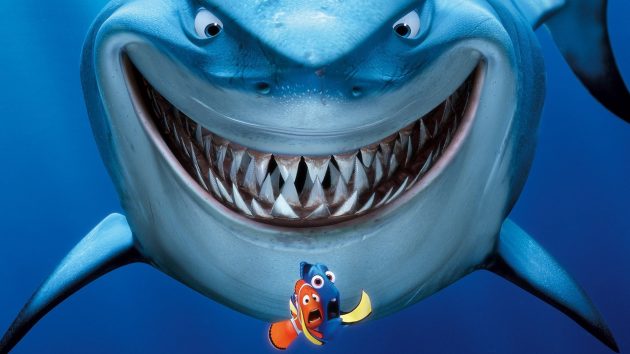
Whether single-parent (Nemo’s mother), large families (turtle migrations), adoptive (the aquarium’s overlooked), or lost (Dory), family remains the heart of the film. A lesson in courage that proves no one is ever truly alone, and a radiant father-to-child love letter.
The bad: Finding Nemo is likely one of Disney-Pixar’s least “funny” films. Beyond a forgetful fish who forgets things every few seconds (a repetition gag that becomes tiresome after 30 minutes), the jokes don’t spring up as often as in other films. The film doesn’t exude the same magical, fairy-tale energy as Pixar’s other works. And despite an engaging premise, the story meanders too long, creating a noticeable rhythm gap.
4. WALL-E
- Release: 2008
- Runtime: 1h37

The idea: In a distant future, Earth is a gigantic junkyard, and humanity has vanished. Wall-E, a lone compacting robot, meets Eve, a unit probably released by a nearby Apple factory. Love and adventure ensue.
The good: Wall-E is, above all, a colossal gamble that pays off: a tribute to silent cinema while generating genuine human emotions—love, connection, longing—through a nonverbal character. It follows up the Toy Story legacy with a prophecy of lonely modern life, and it hits with remarkable depth.
Wall-E is a misfit robot, alone in his “real world trash desert,” trying to cope with loneliness by hoarding objects from a bygone era with obsessive devotion. The film crafts a powerful meditation on our relationship to others, to ourselves, and to the world around us. Only the animation could carry such a profound message.
The bad: As a concept-driven story, Wall-E is almost its own enemy: a movie that must carry its weight aesthetically and technically. If the first half stands strong on its own terms, the second act can feel like a regression into familiar territory. When Wall-E boards the human ship, the film returns to familiar chaos. If Wall-E’s first act stood alone, it would perhaps be Pixar’s best; the second act tends to dip. It’s a little sad that the film would be best served as a standalone piece.
3. MONSTERS, INC.
- Release: 2002
- Runtime: 1h32

The idea: Monstropolis is a city of monsters whose main power comes from the screams of children—gleaned by an elite monster squad that terrorizes kids at night to harvest their screams—until a little girl wanders into the monster world.
The good: Pete Docter’s first major achievement in animation, Monsters, Inc. instantly proves Pixar’s storytelling talent. Technically, the film is a knockout and offers many dizzying sequences, including the unforgettable door chase in the final act.
Moreover, the characters are superb, from the duet of Sully and Mike to the villainous Randall and the memorable supporting players, like the charming old geriatric Germaine. The film’s pace and emotional range—laughter, tears, calm, astonishment—mirror the arc of a child drifting to sleep.
The bad: Over time, the animation may show a few aging textures, and the plot can feel a bit predictable. Still, the film remains a landmark in its overall effect and resonance.
2. UP
- Release: 2009
- Runtime: 1h35

The idea: A widower named Carl is about to lose his house. To prevent that, he ties hundreds of balloons to his house and launches toward the Amazon. The catch: he accidentally brings along Russell, a plucky boy scout.
The good: Pixar’s blend of melancholy and tenderness is palpable here. Since Toy Story, the studio has balanced a generally sunny world with deeply human emotions. The opening ten minutes, in particular, remain one of the most memorable cinematic openings: Carl’s life, his love story with his wife, their modest but happy home, the grief, the sorrow, the loneliness. In a single sequence, Docter and Peterson capture the essence of life and love, presenting some of animation’s most luminous characters and launching a thrilling, funny adventure.
The bad: The film’s opening is devastatingly strong, which raises expectations for the rest of the journey. If it succeeds, you can fault the later momentum on a few predictable beats. The lightness in the middle can feel like a retreat from the emotional power of the opening. Still, the overall quality remains extraordinary—technically and dramaturgically.
1. THE INCREDIBLES
- Release: 2004
- Runtime: 2h03
The idea: The daily life of a family of superheroes who must balance the secrecy of their powers with a normal suburban life.
The good: Brad Bird is a giant. He brings to life a movie with a perfect blend of metaphor and unmatched technical prowess. It’s as if bold, Kirby-esque concepts take shape before your eyes, while the script remains taut and precise. The characters are crafted with depth, Edna Mode is a standout, and the ensemble’s empathy, clarity, and efficiency are exemplary.
The bad: It’s nearly unbearable to watch a major Marvel-like movie after seeing The Incredibles, as it feels like Pixar has produced one of the best superhero films ever made—only to see it followed by inferior entries like The Fantastic Four.
