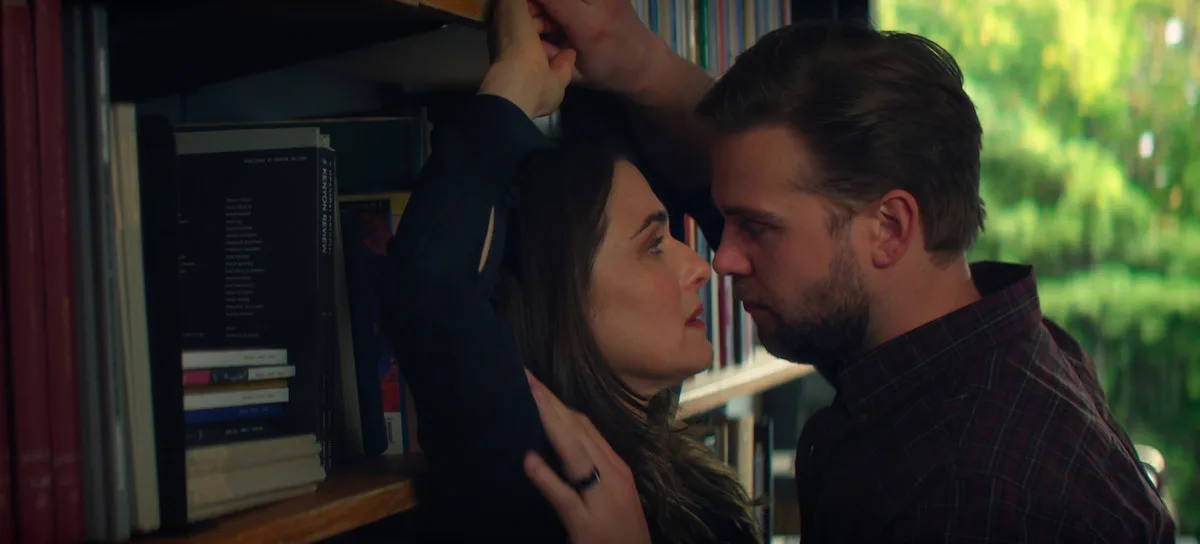
If you crave mysterious tension served with just the right hint of suggestion, you’re in for a treat: Netflix’s mini-series Le Délicieux Professeur V has quickly proven to be a gripping watch that unsettles in just a handful of episodes.
A Subtly Disturbing Atmosphere
First released on March 5, 2026, Le Délicieux Professeur V established itself as a standout in the Netflix catalog, offering a finely tuned balance of intimate unease and tightly wound suspense. The series relies less on sudden scares and more on suggestion, letting unease creep in through understated storytelling. Early previews teased an intimate tale marked by unspoken desire and power dynamics that quietly upend everyday routines. The tension is insidious, never blatant, drawing viewers in with a slow, persistent pull.
Meet Le Délicieux Professeur V
This eight-episode limited series, adapted from the novel by Julia May Jonas, follows a fiftysomething literature professor. She’s brilliant, respected, but finds herself destabilized when a new colleague joins the university faculty. Rachel Weisz plays the protagonist, a woman grappling with vulnerability, opposite Leo Woodall, whose character introduces both intrigue and tension to her world.
Stirred Desires, Shaky Ground
At the story’s outset, the main character is facing a profound period of self-doubt. Her writing career has stalled, her courses no longer fill as they once did, and her connection with her daughter has grown distant. Even her long-standing, seemingly open marriage now moves along more by habit than passion. While everything on the surface appears intact, there’s a palpable absence of vitality.
It’s into this precarious state that Vladimir enters—a young, charismatic writer newly recruited to the faculty, played by Leo Woodall. His presence becomes a catalyst for the professor, rekindling desires and creative impulses she thought were lost. The arrival of Vladimir triggers a wave of longing and renewed energy in a woman adrift, stirring up obsession and creativity just as she struggles to hold onto her sense of self.
Subjective Storytelling and Academic Intrigue
One of the show’s most distinctive features is its deeply subjective perspective. The narrative plunges viewers into the heroine’s thoughts, fantasies, and projections, with no secure outside point of view. Reality and imagination constantly blend together, mirroring the character’s inner confusion. This approach sets the audience into a state as uneasy—and captivating—as the protagonist’s own.
Rachel Weisz often breaks the fourth wall, addressing the camera directly. The technique echoes Fleabag and its French counterpart Mouche, but here it’s more restrained, with the heroine carefully curating which parts of her story are shared. She narrates, directs, and shapes what the viewer sees, maintaining a strong grip on her version of events.
The university campus functions as much more than a backdrop. It’s portrayed as a closed-off microcosm, a breeding ground for intellectual rivalries, shifting power plays, and ideological friction. The stakes rise further when the protagonist’s husband—himself a professor, portrayed by John Slattery—becomes embroiled in a legal matter connected to his past, shaking a balance that was already fragile.
Rachel Weisz has explained that the series addresses themes of desire, obsession, sexuality, and domination within modern academia, exploring both personal and institutional boundaries. The show’s subtly disturbing mood recalls series like Babygirl with Nicole Kidman, promising a narrative that lingers long after its eight episodes conclude.
If you’re looking for a series as psychologically intense as it is artistically crafted, Le Délicieux Professeur V delivers. With blurred lines between reality and fantasy, reawakened desire, and shifting power structures, this is a miniseries that leaves a mark—and might have you replaying scenes in your mind well after the credits fade.

![[Valid HTML 4.01]](/images/vh401)
![[Valid CSS]](/images/vcss)
![[Unicode encoded]](/images/unicode)
![[Created with Vim]](/images/vim)
![[Powered by Apache]](/images/apache)