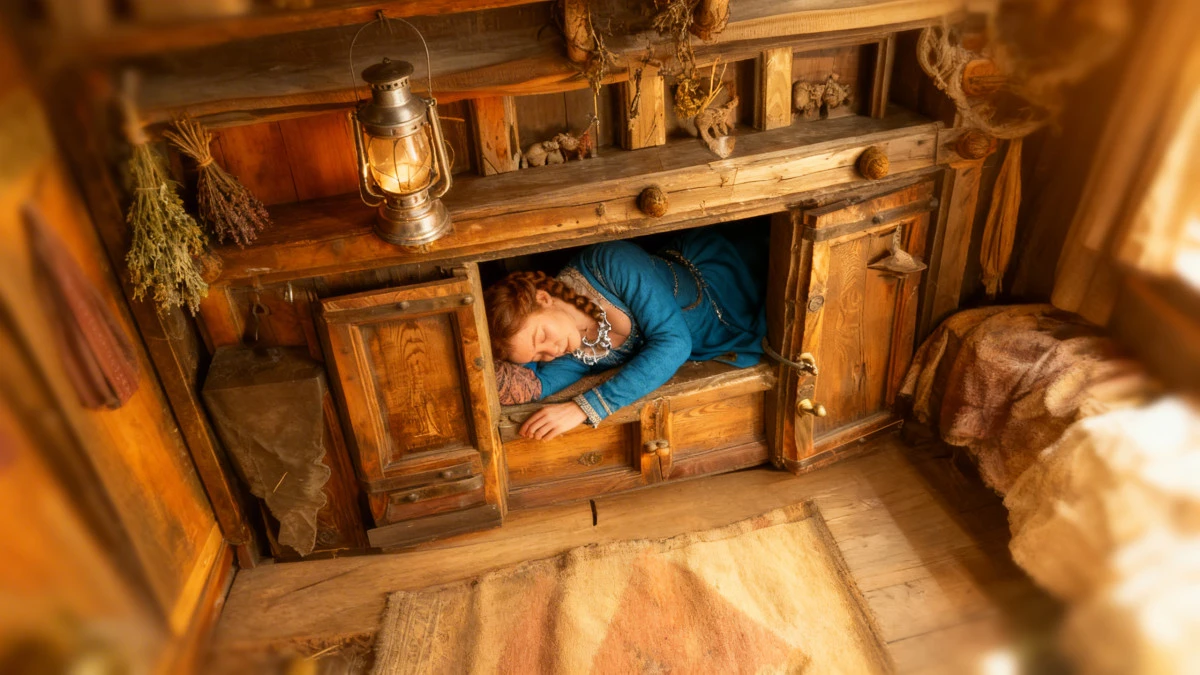
Sleeping in cupboards? The bizarre medieval habit that will shock you
Picture this: it’s the middle of winter, your home barely keeps out the cold, and the fireplace only warms a tiny corner. Would you curl up inside a wooden cupboard to sleep? As odd as it may sound, for centuries, many Europeans did just that—and not as a strange custom, but as a clever solution to the realities of daily life before modern comforts. The bed cupboard wasn’t a legend or an oddity. From the Middle Ages until the early 20th century, these enclosed wooden beds were popular for good reason.
From necessity to coziness: Why did people sleep in wooden cupboards?
Imagine life in medieval Europe: homes were usually small, poorly insulated, and heated mainly by a central hearth that rarely warmed the whole room. With harsh, endless winters, sleeping in an enclosed space made sense. Bed cupboards, with their solid wood panels, trapped body heat and blocked out the cold drafts, creating a warm, personal microclimate. If you’ve ever layered blankets in a chilly room, you can relate to the appeal of this built-in cocoon.
More than warmth: The versatility of bed cupboards
These beds weren’t just about staying warm. During the day, they could be closed up to save space—a game-changer in crowded homes where families often shared a single room. At night, they became snug retreats. Some included drawers and compartments, doubling as storage and furniture. Long before the term “multifunctional furniture” was coined, bed cupboards offered adaptability for busy homes. Crucially, they provided privacy in homes where personal space was scarce. Their doors could shut—and sometimes lock—allowing people a rare retreat to read, pray, or just rest in peace. Both nobles and commoners appreciated these woody sanctuaries.
The decline and surprising return of bed cupboards
As new home designs brought better insulation, central heating, and private bedrooms, the need for bed cupboards faded. By the early 1900s, they were mostly historical artifacts—links to a time when warmth and privacy were hard to come by. Changing attitudes about comfort and cleanliness also contributed. What had once felt safe and cozy eventually seemed cramped and less sanitary. Open bed frames and innovations like spring mattresses and light duvets took over, making expansive sleeping arrangements the new aspiration.
Yet in today’s cities, where every square foot counts, the concept behind the medieval bed cupboard has made a comeback. Capsule hotels, Murphy beds, and modular furniture have renewed interest in compact, functional sleeping solutions. Many modern beds focus as much on style and technology as on saving space, appealing to urbanites who need to maximize their living quarters. The same ingenuity that inspired medieval families is being echoed in today’s design trends.
The lesson of the bed cupboard: Redefining cozy for our times
The medieval bed cupboard isn’t just a quirky historical footnote. Its legacy offers real inspiration for solving modern challenges in small living spaces. Sometimes, looking back helps us dream up smarter ways to live comfortably in the future.
Want more stories where history meets technology? Visit Glass Almanac for the latest on tech, science, and entertainment—where innovation and everyday life connect.

![[Valid HTML 4.01]](/images/vh401)
![[Valid CSS]](/images/vcss)
![[Unicode encoded]](/images/unicode)
![[Created with Vim]](/images/vim)
![[Powered by Apache]](/images/apache)