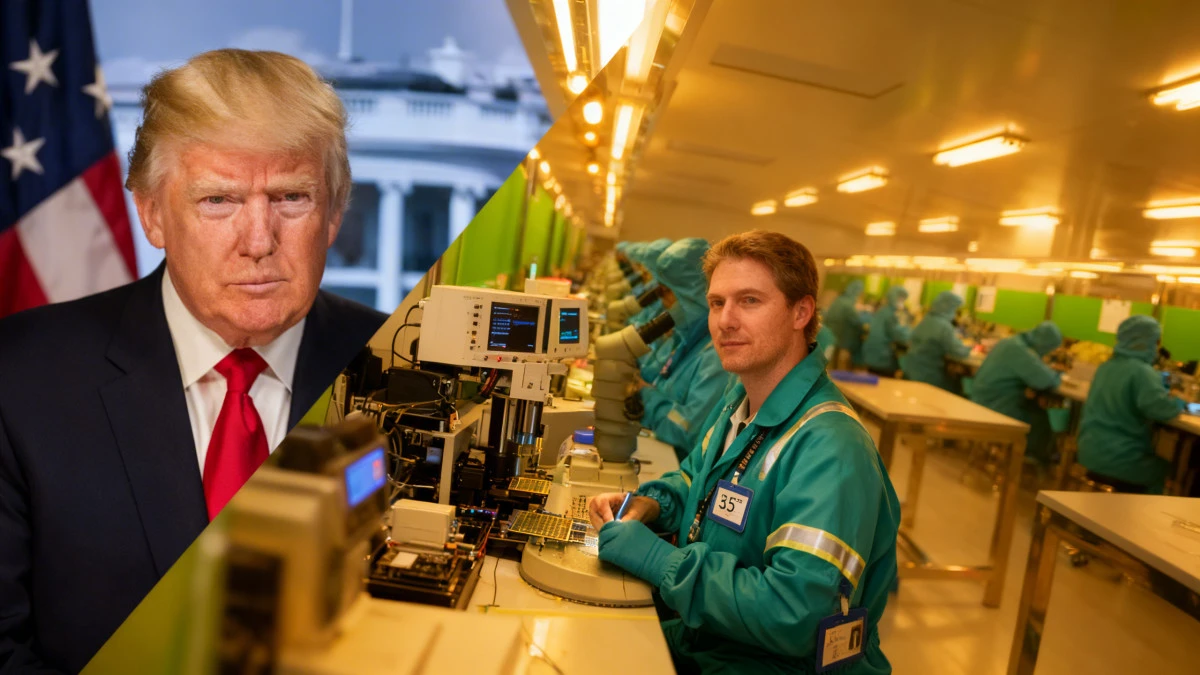
What happens when one superpower tries to pull the plug on another’s technological ambitions? As Washington tightened restrictions on China’s biggest tech players, Beijing didn’t merely endure—it doubled down on innovation. In the years that have followed, Chinese tech giants Huawei and Xiaomi have made significant leaps in semiconductor development, prompting new questions in Washington about global technology leadership.
The Semiconductor Showdown: From Sanctions to Self-Reliance
For years, the United States led the world in technological advancement, with semiconductors as a central pillar. However, since 2019, China has been rapidly closing the gap. The turning point came when the US imposed tough sanctions on Chinese companies, especially Huawei, restricting their access to critical components from American companies like Qualcomm and Intel. The aim was to slow China’s progress—and safeguard the US advantage in chip production—but the actual outcome was far different.
Sanctions Sparked China’s Push for Independence
Instead of stalling progress, US restrictions accelerated China’s drive for self-reliance. The Chinese government invested billions of yuan (worth hundreds of millions of US dollars) into domestic chip manufacturing, research, and the development of local talent. The push wasn’t just about replacing Western technology—it was about ensuring that China could stand on its own. While China’s chips haven’t yet matched the 3-5 nanometer products coming out of Taiwan and South Korea, they represent a major step forward in reducing dependence on foreign technology.
Huawei and Xiaomi: At the Heart of the Revolution
Huawei became a symbol of resilience, creating the Kirin 9000S processor, which powered its Mate 60 Pro smartphone. Manufactured at SMIC (Semiconductor Manufacturing International Corporation) in Shanghai, the chip demonstrated that China could produce advanced semiconductors on its own soil, even under strict US export restrictions.
Xiaomi made its move as well, developing its own chips for energy management and camera systems. Although Xiaomi’s chips have not yet overtaken those from leading US firms such as Qualcomm or Apple, their advancements have ended China’s total reliance on foreign suppliers for vital components.
This shift extends beyond a few top companies. The Chinese government has established research institutes, poured funding into domestic foundries like SMIC, and prioritized innovative chip designs, including open-source options such as RISC-V. This approach has allowed China to set its own technology standards and further reduce dependence on Western industry leaders.
Ripple Effects and the Future of Global Technology
China’s advances have caught the world’s attention. US officials have grown increasingly concerned as Huawei, Xiaomi, and others continue to innovate. As of 2026, the US no longer enjoys uncontested dominance in the semiconductor sector.
Some experts have speculated that within the decade, China could be producing top-tier chips without needing foreign technology at all. If that happens, whole global industries may need to adapt, and the balance of technological power could be redrawn.
Ironically, the US embargo, meant to slow China down, ended up catalyzing homegrown innovation. America’s position as the sole leader in chipmaking now faces serious competition from China’s rapidly strengthening capabilities.
The race is still wide open. Taiwan, South Korea, and the US remain leading players. But the rapid progress of Huawei and Xiaomi signals that the United States can no longer take its lead for granted in this critical industry.
As competition in technology heats up throughout 2026, one point is clear: China is no longer lagging behind. The coming years promise fierce rivalry, and every advance in chipmaking will carry global consequences. For those watching the future of tech, the next moves could change everything.

![[Valid HTML 4.01]](/images/vh401)
![[Valid CSS]](/images/vcss)
![[Unicode encoded]](/images/unicode)
![[Created with Vim]](/images/vim)
![[Powered by Apache]](/images/apache)